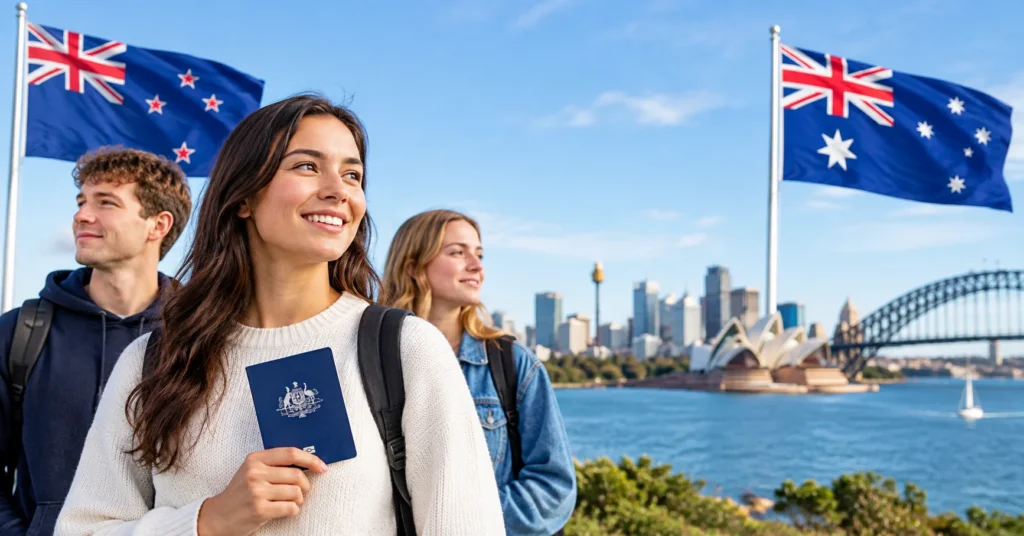
At the 2021 Census, 83.8% of Australians who answered the citizenship question said they were Australian citizens. Scroll down to the New Zealand-born population specifically, and that figure collapses to just 34.2%. The gap is not a citizenship crisis; it is a quirk of one very specific visa arrangement that has let New Zealanders live and work in Australia indefinitely without ever needing to naturalize. Citizenship data in Australia is full of exactly this kind of nuance, and reading it correctly means keeping it separate from birthplace, ancestry and ethnicity, all of which measure something different entirely.
What Does Citizenship Tell Us About Australia’s Population?
Citizenship is a legal status, granted either by birth or by a formal naturalization process, that confers rights including voting, an Australian passport and unrestricted return to the country. It is the only one of Australia’s core demographic variables that carries direct legal consequence.
Ancestry, ethnicity and country of birth describe identity, heritage or history; citizenship describes a person’s formal relationship with the Australian state, and it is the variable most directly shaped by policy rather than personal identity.
Citizenship vs Country of Birth vs Ancestry
| Concept | What it measures | Can change over a lifetime? |
|---|---|---|
| Citizenship | Legal status and rights within Australia | Yes, through naturalization or renunciation |
| Country of birth | Where a person was physically born | No, fixed at birth |
| Ancestry | Self-reported cultural or family origin | Can shift in self-identification across generations |
| Indigenous status | Whether a person identifies as Aboriginal and/or Torres Strait Islander | Self-identified, generally stable |
| Language | Language used at home | Can change with circumstances |
A person born overseas can become an Australian citizen; a person born in Australia can, in rare cases, hold only foreign citizenship if they were born to non-citizen, non-permanent-resident parents. None of these categories substitute for one another, and conflating them, treating “overseas-born” as equivalent to “non-citizen,” or “citizen” as equivalent to “Australian ancestry,” produces a fundamentally inaccurate picture of the population.
Australian Citizens vs Non-Citizens
At the 2021 Census, among people who answered the citizenship question, 21,306,662 people, or 83.8% of respondents, identified as Australian citizens, while 2,808,214 people, or 11.0%, identified as not Australian citizens, with the remainder either not stated or not applicable. Citizenship status varies enormously depending on birthplace.
Among Australian-born residents, 98.5% held citizenship, effectively universal, since citizenship by birth has applied automatically or near-automatically to children born in Australia for most of the country’s post-war history.
Among overseas-born residents, the citizenship rate was markedly lower at 61.9%, reflecting the mix of recent arrivals who have not yet completed the residency requirement for naturalization, temporary visa holders, and permanent residents who have simply not applied for citizenship.
Overseas-Born Australians and Citizenship
Being born overseas does not mean a person is not an Australian citizen, and the data makes this clear: almost two in three overseas-born Australians, 61.9%, held citizenship at the 2021 Census. That rate varies substantially by country of birth and, most importantly, by how long a person has lived in Australia.
Longer-established migrant communities post-war European arrivals from Italy, Greece and Germany in particular, show citizenship rates approaching or exceeding the overseas-born average, reflecting decades of residency. Canada-born residents, for example, recorded a 63.1% citizenship rate, close to the overseas-born average, while more recently arrived or transient populations tend to sit lower.
The Path to Australian Citizenship
Since 1987, a child born in Australia gains citizenship automatically if at least one parent is an Australian citizen or permanent resident, or if the child has lived in Australia continuously for the first ten years of their life. Adult migrants seeking citizenship generally must first hold a permanent visa, then meet residency requirements, pass a citizenship test covering knowledge of Australia and English proficiency in most cases, and complete a formal citizenship ceremony.
In 2024-25, a total of 165,193 people became Australian citizens by conferral, representing over 190 different countries of former nationality, illustrating both the scale and the diversity of ongoing naturalization. Australia permits dual citizenship, meaning migrants do not need to renounce their original citizenship to naturalize, a policy that has likely supported higher naturalization rates than a renunciation-based system would produce.
Australia’s Major Migrant-Origin Populations
Country of birth serves as the most useful supporting variable for understanding Australia’s citizenship composition, since citizenship itself does not indicate cultural or national origin once naturalized. Among permanent migrants who arrived in Australia between 2000 and 2021, more than half, 58%, were granted a permanent visa as their very first visa, while the remaining 42% held a temporary visa, most commonly a student visa, before transitioning to permanent residency.
By the time of the 2021 Census, more than half of the roughly 3 million permanent visa holders who arrived in that window had already become Australian citizens. India, China, England, the Philippines and South Africa supplied the largest numbers of permanent migrants over this period, broadly tracking the same countries that dominate Australia’s overall country-of-birth rankings.
Citizenship and Australia’s Migration System
Australia’s migration system channels arrivals through several distinct visa streams, each with a different typical path to citizenship. The Skilled visa stream, Australia’s largest permanent migration category, draws heavily on Business, Human Resources and Marketing occupations among its arrivals and generally features some of the fastest progression toward permanent residency and eventual citizenship.
The Family visa stream, covering partners, parents and other relatives of Australian citizens or residents, and the Humanitarian visa stream both show a notably higher concentration of workers in caring and support occupations, with 10% of Family-stream migrants and 14% of Humanitarian-stream migrants employed as Carers and Aides.
Temporary Residents vs Permanent Residents
Temporary visa holders form a distinct and substantial part of Australia’s resident population without being citizens or, in most cases, permanent residents. In August 2021, there were 1,639,000 temporary visa holders in Australia, comprising 1,614,000 temporary residents and 25,000 overseas visitors, though this figure was significantly suppressed by COVID-19 border closures at the time of counting.
Temporary residents are markedly more highly educated than the general population: 39% held a Bachelor degree or higher, compared with 29% of the total Australian population aged 15 and over, rising to 65% among Temporary Skilled visa holders specifically. Most temporary residents concentrate in capital cities, with 26% in Greater Sydney, 24% in Greater Melbourne and 13% in Greater Brisbane as of the 2021 Census.
Citizenship by State and Territory
Citizenship rates track closely with each state’s overseas-born population share and the age of its migrant communities. States with a higher proportion of long-established migrants, and a lower proportion of recently arrived temporary visa holders and international students, tend to show higher overall citizenship rates among their overseas-born populations.
Capital cities, which absorb the large majority of temporary visa holders and recent arrivals, particularly Greater Sydney and Greater Melbourne, generally show somewhat lower citizenship rates among their overseas-born residents than regional areas, where a larger share of the overseas-born population tends to consist of longer-settled migrants.
Citizenship and Generational Change
Citizenship status compounds strongly across generations. First-generation migrants show the widest spread in citizenship rates, ranging from newly arrived temporary visa holders with no citizenship claim at all through to long-settled naturalized citizens.
Second-generation Australians, the Australian-born children of migrant parents, are citizens at a rate of 98.5%, virtually indistinguishable from the rate for Australians with Australian-born parents, since birthright citizenship rules apply equally regardless of parental birthplace. This pattern illustrates how quickly citizenship, unlike ancestry or cultural identity, converges toward universality within a single generation of being born in Australia.
How Australia’s Citizenship Profile Has Changed
Australia’s naturalization numbers have remained substantial and consistent in recent years, with 165,193 people conferred citizenship in 2024-25 alone. The broader trend reflects Australia’s growing overseas-born population: as the overseas-born share of the total population rose from 29.1% in 2021 to 32.0% in 2025, the absolute pool of people eligible to naturalize, permanent residents who have met the residency requirement, has grown correspondingly. Dual citizenship, which Australia has permitted since 2002, has almost certainly supported sustained naturalization rates by removing the requirement that migrants give up their original citizenship.
Future Citizenship Trends
Three forces will shape Australia’s citizenship profile over the coming decade. Continued strong net overseas migration, running at roughly 300,000 people a year in the mid-2020s, will keep expanding the pool of overseas-born residents, a meaningful share of whom will progress to citizenship over time as they meet residency requirements.
The generational handover already visible in country-of-birth data, away from aging post-war European migrant communities and toward younger South and South-East Asian migration streams, will likely be reflected in citizenship conferral statistics as India, China and the Philippines continue to supply large numbers of new citizens each year. And policy settings, including any future changes to residency requirements, the citizenship test, or dual citizenship rules, remain the single largest lever capable of shifting naturalization rates independent of migration volume itself.
What Citizenship Data Can and Cannot Tell Us
Citizenship data reliably shows legal status, and it is precise where ancestry and ethnicity data are inherently self-reported and imprecise. But it cannot be used as a proxy for cultural background, since citizens include people from every ancestry and country of birth once naturalized. It cannot be used as a measure of length of residency on its own, since some long-term permanent residents choose never to naturalize while some recent arrivals with citizen parents gain citizenship automatically.
And it should never be conflated with country of birth, since the New Zealand-born population alone demonstrates how dramatically citizenship rates can diverge from birthplace patterns for reasons rooted entirely in visa policy rather than identity or integration.
Key Findings
- 83.8% of Australians who answered the 2021 Census citizenship question identified as Australian citizens; 11.0% identified as not citizens
- Citizenship is near-universal among Australian-born residents (98.5%) but sits at 61.9% among overseas-born residents
- Only 34.2% of New Zealand-born residents hold Australian citizenship, reflecting the Special Category Visa arrangement rather than lower integration
- 165,193 people became Australian citizens by conferral in 2024-25, representing over 190 countries of former nationality
- More than half of the roughly 3 million permanent migrants who arrived 2000-2021 had become citizens by the time of the 2021 Census
- Australia has permitted dual citizenship since 2002, likely supporting sustained naturalization rates
- Temporary visa holders, distinct from both citizens and permanent residents, numbered 1.64 million in August 2021 and skew significantly more educated than the general population
Frequently Asked Questions
1. What percentage of Australia’s population are Australian citizens?
83.8% of people who answered the citizenship question at the 2021 Census identified as Australian citizens.
2. Are overseas-born Australians usually citizens?
Most are, but at a lower rate than the Australian-born population: 61.9% of overseas-born residents held Australian citizenship at the 2021 Census, compared with 98.5% of Australian-born residents.
3. Why do so few New Zealand-born residents hold Australian citizenship?
Because New Zealand citizens can live and work in Australia indefinitely under a Special Category Visa without needing to naturalize, so only 34.2% had taken up citizenship at the 2021 Census.
4. How many people became Australian citizens in the most recent year?
165,193 people were conferred Australian citizenship in 2024-25, representing over 190 different countries of former nationality.
5. Can Australian citizens hold citizenship of another country too?
Yes. Australia has permitted dual citizenship since 2002, so migrants do not need to renounce their original citizenship to naturalize.
6. How does a child born in Australia become a citizen?
Automatically, since 1987, if at least one parent is an Australian citizen or permanent resident, or if the child has lived in Australia continuously for the first ten years of their life.
7. What is the difference between a permanent resident and a citizen?
A permanent resident can live and work in Australia indefinitely but lacks certain rights such as voting and an Australian passport, which are reserved for citizens; permanent residents can apply for citizenship after meeting residency requirements.
8. How many temporary visa holders were in Australia at the last count?
1,639,000 in August 2021, comprising 1,614,000 temporary residents and 25,000 overseas visitors, though this figure was affected by COVID-19 border closures at the time.
9. Is citizenship the same as country of birth?
No. Citizenship is a legal status that can be acquired or changed, while country of birth is fixed. A large share of overseas-born residents are Australian citizens, and a small number of Australian-born residents are not.
10. Which countries supply the most permanent migrants to Australia?
India, China, England, the Philippines and South Africa were the largest source countries for permanent migrants who arrived between 2000 and 2021.
Sources
- Australian Bureau of Statistics, 2021 Census Country of Birth QuickStats, Australia, New Zealand and Canada
- Australian Bureau of Statistics, Permanent migrants in Australia methodology, 2021
- Australian Bureau of Statistics, Temporary visa holders in Australia, 2021
- Australian Bureau of Statistics, Australian Citizenship Standard, 2025
- Department of Home Affairs, Australian citizenship statistics, 2024-25
- Absolute Immigration, More than half of Australia’s permanent residents are now citizens