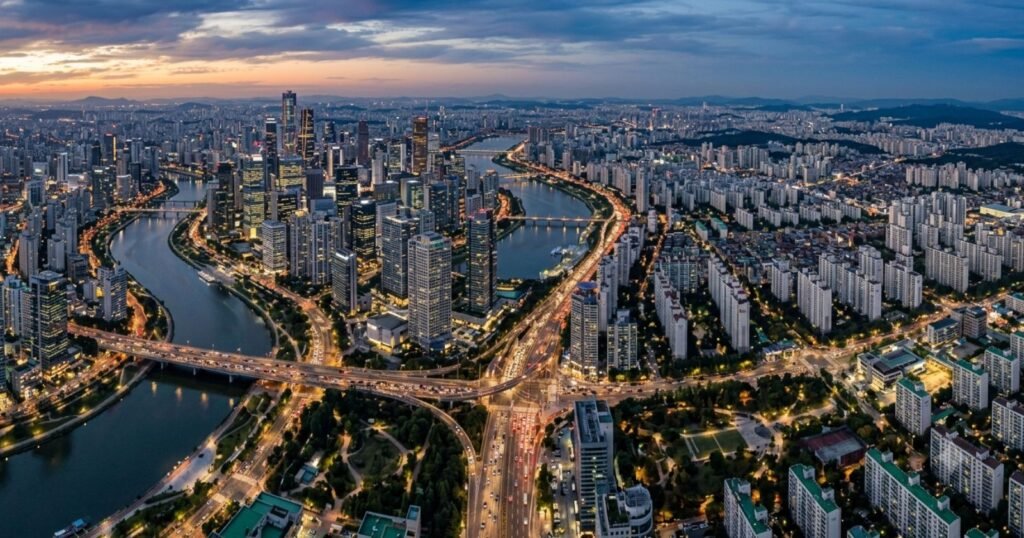
Eight. That was the entire world’s population of megacities in 1975. By 2025, the count has quadrupled to 33, and depending on which organization’s boundary definitions you trust, some counts run as high as 37 to 44. India alone now has more megacities than the entire world had fifty years ago. This is not a story about a handful of famous metropolises growing somewhat larger; it is a story about an entirely new category of human settlement, cities the size of mid-sized countries, becoming a routine feature of the global urban landscape rather than a rare exception.
What Is a Megacity?
The United Nations defines a megacity as an urban agglomeration with 10 million or more inhabitants, a threshold now widely adopted across most international demographic reporting, though it is worth noting explicitly that this specific figure is a convention rather than a natural or universally agreed boundary. Some sources apply thresholds as low as five to eight million instead, which is one of the main reasons total megacity counts vary so widely between different published lists, alongside the underlying disagreement over which city boundary definition, city proper, agglomeration, metropolitan area, or satellite-derived built-up area, to apply in the first place.
How Many Megacities Are There?
Using the UN’s own 2025 World Urbanization Prospects report, the current official count stands at 33 megacities worldwide, more than half of them located in Asia specifically. That figure has grown from just eight in 1975, a more than fourfold increase over 50 years, and the UN’s own projections anticipate it reaching 37 by 2050. Other organizations applying somewhat different boundary methodologies report figures ranging from 37 up to 44 megacities for the current period, underscoring again how sensitive the total count is to definitional choices rather than reflecting genuine disagreement about underlying urban growth trends.
Megacity Count Over Time
| Year | Number of Megacities (UN, 10M+ threshold) |
|---|---|
| 1975 | 8 |
| 2025 | 33 |
| 2050 (projected) | 37 |
Source: UN DESA, World Urbanization Prospects 2025: Summary of Results.
The World’s Largest Megacities
As detailed in the companion piece on the world’s largest cities, the specific ranking of the biggest megacities depends heavily on boundary methodology. Under the UN’s 2025 agglomeration-based figures, Jakarta (approximately 42 million), Dhaka (approximately 37 million) and Tokyo (approximately 33 million) currently top the list, a significant reshuffling from 2000, when Tokyo alone led the world with 30.3 million and Jakarta did not yet rank among the largest handful of cities at all.
Largest Megacities, UN 2025 Agglomeration Basis
| Rank | City | Country | Population |
|---|---|---|---|
| 1 | Jakarta | Indonesia | ~42 million |
| 2 | Dhaka | Bangladesh | ~37 million |
| 3 | Tokyo | Japan | ~33 million |
| 4 | Delhi | India | ~34 million (varies by source) |
Source: UN DESA, World Urbanization Prospects 2025; Deccan Herald summary.
Where Are the World’s Megacities?
Geographic concentration is stark: 19 of the world’s 33 megacities are in Asia, and 27 of the 33 are located in the Global South more broadly, meaning fewer than a fifth of all megacities worldwide are found in Europe, Northern America, Japan and Oceania combined. Africa currently hosts a smaller number of megacities than Asia, but its largest cities, Cairo (25.5 million), Lagos (12.7 million), Luanda (11.7 million) and Kinshasa (10.9 million), are collectively growing faster than megacities on any other continent, positioning the region to add substantially to the global megacity count over coming decades.
Which Countries Have the Most Megacities?
India and China together account for roughly half of the world’s entire megacity population, though the exact per-country count varies depending on which of several overlapping city-boundary definitions a given source applies.
Megacity Count by Country (Approximate, Varies by Source)
| Country | Megacities (Selected Examples) | Approx. Count |
|---|---|---|
| India | Delhi, Mumbai, Kolkata, Bengaluru, Chennai (some counts add Hyderabad) | 5-6 |
| China | Shanghai, Guangzhou, Beijing, Shenzhen (broader counts add Chongqing, Tianjin, Chengdu, Wuhan) | 4-7 |
| Brazil | São Paulo, Rio de Janeiro | 2 |
| United States | New York, Los Angeles | 2 |
| Japan | Tokyo | 1 (but the world’s third-largest) |
| Pakistan | Karachi, Lahore (Lahore approaching threshold) | 1-2 |
Source: UNRIC (“World’s Largest Cities: How Megacities Will Change by 2050”); Expatriate Group, “The World’s Next Megacities.”
The exact count for China and India shifts noticeably between sources: narrower UN agglomeration-based counts put India at five megacities and China at four, while broader lists using looser boundary definitions credit China with as many as seven, adding Chongqing, Tianjin, Chengdu and Wuhan, and India with six, adding Hyderabad. Both approaches agree on the underlying point: these two countries alone account for roughly half of all megacities on Earth.
How Megacities Have Grown
Individual megacity growth trajectories vary enormously even among cities that started at similar sizes. Shanghai, home to just 14 million residents in 2000, is projected to become the world’s third-largest city by 2050, with nearly 35 million residents, more than doubling over the 50-year span. Guangzhou’s growth, measured by satellite-derived built-up area rather than administrative agglomeration, has been even more extreme: a 1,948% increase since 1975 once its neighboring manufacturing cities are counted as part of a single continuous urban footprint. At the opposite end, Tokyo, the world’s largest city for most of the late twentieth and early twenty-first centuries, is now essentially flat or slightly declining, a direct reflection of Japan’s aging population and low birth rate.
Selected Megacity Growth Trajectories
| City | 2000 Population | Projected 2050 Population | Trajectory |
|---|---|---|---|
| Shanghai | ~14 million | ~35 million | more than doubling |
| Dhaka | — | 50+ million (with Jakarta, world’s two largest by 2050) | rapid sustained growth |
| Jakarta | — | 50+ million | rapid sustained growth |
| Tokyo | 30.3 million (world’s largest) | projected to fall to around 7th rank | plateau/decline |
| Luanda | ~9 million (recent) | ~14.6 million | +62% by 2050 |
Source: UNRIC, “World’s Largest Cities: How Megacities Will Change by 2050,” July 2026.
By 2050, UN-based projections anticipate Dhaka and Jakarta becoming the world’s two largest cities, each exceeding 50 million residents, following decades of sustained rapid growth, a scale of individual urban agglomeration that has no clear historical precedent.
Why Cities Become Megacities
Several forces combine to push a large city across the 10 million threshold and keep it growing well beyond it:
- Sustained rural-to-urban migration driven by employment concentration, particularly in South and Southeast Asian and African megacities still in an earlier phase of their urban transition.
- High rates of natural increase, meaning births outpacing deaths among a city’s existing population, a significant factor in continued growth across South Asian and African megacities with comparatively young population structures.
- Metropolitan and administrative boundary expansion, formally or informally absorbing neighboring towns and cities into a single continuous urban region, the dominant mechanism behind Guangzhou’s extraordinary satellite-measured growth.
- Climate-driven displacement, documented specifically in Dhaka’s case, where between 300,000 and 500,000 rural migrants arrive annually, driven by rising sea levels, riverbank erosion and soil salinization affecting Bangladesh’s agricultural regions.
- Economic concentration as a national or regional hub, drawing migration disproportionately relative to smaller cities within the same country.
The Demographic Structure of Megacities
Megacity population growth rates vary sharply by region even among cities of comparable size. Dhaka’s population has been growing at roughly 3% annually and Delhi’s at around 2.5%, both substantial rates for cities already in the tens of millions, while some African megacities, notably Kinshasa, are recorded growing even faster, at roughly 5% annually. These growth rates translate into enormous absolute numbers of new residents each year even at seemingly modest percentage rates, simply because of the scale involved: a 3% annual growth rate applied to a 20-million-person city adds roughly 600,000 new residents in a single year, comparable to adding an entire mid-sized city’s population every twelve months.
What Megacity Growth Means for Infrastructure
Cities crossing and then substantially exceeding the 10 million threshold face infrastructure and governance demands that scale in ways smaller cities do not encounter. Housing, transport, water and sanitation systems designed for a much smaller population base come under acute strain in rapidly growing megacities, particularly across Africa and South Asia, where growth has frequently outpaced planned infrastructure investment. The emergence of megacities projected to exceed 50 million residents, as anticipated for Dhaka and Jakarta by 2050, poses what the United Nations has described as a significant challenge to achieving broader Sustainable Development Goals, since governance, service delivery and environmental management at that scale exceed the operational experience of nearly any city in human history to date.
The Future Megacity Map
UN-based projections anticipate the total megacity count rising from 33 today to 37 by 2050, with growth continuing to concentrate disproportionately in the same seven countries expected to drive most of the world’s broader urban population increase: India, Nigeria, Pakistan, the Democratic Republic of the Congo, Egypt, Bangladesh and Ethiopia. Ahmedabad, India, currently at approximately 8.5 million, is frequently cited as one of the most likely cities to cross the megacity threshold next, with growth of roughly 54% projected by 2050 that would take it to around 13 million. These projections should be read as one plausible trajectory rather than a certainty, since megacity growth rates are sensitive to economic conditions, climate impacts and national urban policy choices that can shift meaningfully over a 25-year projection horizon.
Key Findings
- The world’s megacity count has grown more than fourfold since 1975, from 8 to 33 under the UN’s official count, with projections anticipating 37 by 2050.
- Nineteen of the world’s 33 megacities are in Asia, and 27 of the 33 are in the Global South, leaving fewer than a fifth of all megacities in Europe, Northern America, Japan and Oceania combined.
- India and China together account for roughly half of the world’s total megacity population, though the exact per-country count ranges from 4-5 to 6-7 depending on boundary methodology.
- By 2050, Dhaka and Jakarta are projected to become the world’s two largest cities, each exceeding 50 million residents, a scale with no clear historical precedent.
- Tokyo, the world’s largest city for most of the late twentieth century, is now experiencing a population plateau tied to Japan’s aging demographics, while Shanghai is projected to more than double from 14 million in 2000 to nearly 35 million by 2050.
- Luanda, Angola, is projected to grow 62% by 2050 as it approaches and likely crosses the megacity threshold, driven by among the fastest urban growth rates recorded anywhere in the world.
Frequently Asked Questions
1. How many megacities are there?
The United Nations counts 33 megacities worldwide as of its 2025 World Urbanization Prospects report, though other sources using different boundary definitions report figures as high as 37 to 44.
2. What is the largest megacity?
By the UN’s 2025 agglomeration-based methodology, Jakarta is the largest megacity at approximately 42 million people, followed by Dhaka and Tokyo. By satellite-derived built-up area, Guangzhou’s combined Pearl River Delta footprint is larger still.
3. What qualifies as a megacity?
The United Nations defines a megacity as an urban agglomeration with 10 million or more inhabitants, though some other organizations apply lower thresholds of five to eight million, contributing to varying total counts across different sources.
4. Which country has the most megacities?
India and China both have among the highest megacity counts of any country, together accounting for roughly half of the world’s total megacity population, though the exact per-country count varies from four to seven depending on which boundary definitions are applied.
5. Will there be more megacities in the future?
Yes. UN projections anticipate the global megacity count rising from 33 today to 37 by 2050, with growth concentrated disproportionately in India, Nigeria, Pakistan, the Democratic Republic of the Congo, Egypt, Bangladesh and Ethiopia.
6. Which megacities are growing fastest?
Kinshasa, Democratic Republic of the Congo, is growing at roughly 5% annually, among the fastest rates recorded for any megacity, while Dhaka grows at about 3% and Delhi at about 2.5%.
7. Is Tokyo still the world’s largest city?
No, not under most current agglomeration-based rankings. Tokyo’s population has plateaued due to Japan’s aging demographics and has been overtaken by Jakarta and, in some datasets, Dhaka.
8. What percentage of the world’s population lives in megacities?
Roughly 14% of the world’s total population lived within a top-tier megacity as of the mid-2020s, up from about 10% around 2010.
9. Which cities are expected to become the world’s largest by 2050?
UN-based projections anticipate Dhaka and Jakarta becoming the world’s two largest cities by 2050, each exceeding 50 million residents.
10. Which city might become the next megacity?
Ahmedabad, India, currently at approximately 8.5 million people, is frequently cited as a strong candidate to cross the 10 million megacity threshold in the coming decades, with growth of roughly 54% projected by 2050.
Sources
- United Nations Department of Economic and Social Affairs (UN DESA), Population Division, World Urbanization Prospects 2025: Summary of Results, November 2025
- UNRIC (United Nations Regional Information Centre), “World’s Largest Cities: How Megacities Will Change by 2050,” July 2026
- Deccan Herald, “33 megacities and counting: the global urban explosion you didn’t see coming,” citing UN World Urbanization Prospects 2025
- Expatriate Group, “The World’s Next Megacities”
- Kids World Travel Guide / Blue Marble Citizen, “2025 Megacities,” citing World Population Review and UN sources
- Visual Capitalist, “Ranked: The 5 Largest Megacities in 2025, Based on Built-Up Area”