
According to United Nations Population Division data, the world is not currently overpopulated. Earth is estimated to be capable of sustainably supporting between 9 and 10 billion people under efficient resource use, and current population of roughly 8.2 billion remains within that range. Growth is also slowing sharply, with the UN projecting a peak near 10.3 billion around the 2080s before a gradual decline begins.
Key Takeaways
- Global population reached approximately 8.2 billion in 2024, according to UN World Population Prospects.
- Global fertility has fallen from about 5.0 children per woman in 1950 to roughly 2.3 today.
- The UN projects world population will peak near 10.3 billion around the 2080s, then decline.
- Food and resource scarcity issues stem largely from distribution and waste, not absolute shortage.
- More than half of global population growth through 2050 will come from just eight countries, mostly in Africa.
- Some nations, including Japan and South Korea, already face population decline rather than overpopulation.
- Sustainability depends more on consumption patterns than raw population count.
The world is not overpopulated in the strict scientific sense, though the question remains one of the most searched topics in demography. With more than 8.2 billion people alive today, many assume Earth has exceeded its natural limits. In reality, the evidence shows that resource distribution, waste, and policy failures are bigger drivers of scarcity than sheer human numbers.
Understanding Overpopulation
Overpopulation refers to a state where a population exceeds the carrying capacity of its environment, meaning available resources can no longer sustainably support it. The concept dates to Thomas Malthus in 1798, who predicted food supply would fail to keep pace with population growth. Malthusian predictions have repeatedly been proven wrong due to agricultural innovation and technology.
A common misconception is that population size alone causes hunger and resource shortages. In practice, global food production already exceeds what is needed to feed everyone, yet inequality in distribution creates hunger in some regions alongside surplus in others.
Global Overview
World population has grown from roughly 2.5 billion in 1950 to over 8.2 billion today. Growth rates have fallen steadily since peaking near 2.1 percent annually in the late 1960s to under 1 percent today. Asia and Africa account for the vast majority of current population, while Europe and parts of East Asia are already shrinking.
Latest Statistics
| Year | World Population | Annual Growth Rate |
|---|---|---|
| 1950 | 2.5 billion | 1.8 percent |
| 1990 | 5.3 billion | 1.8 percent |
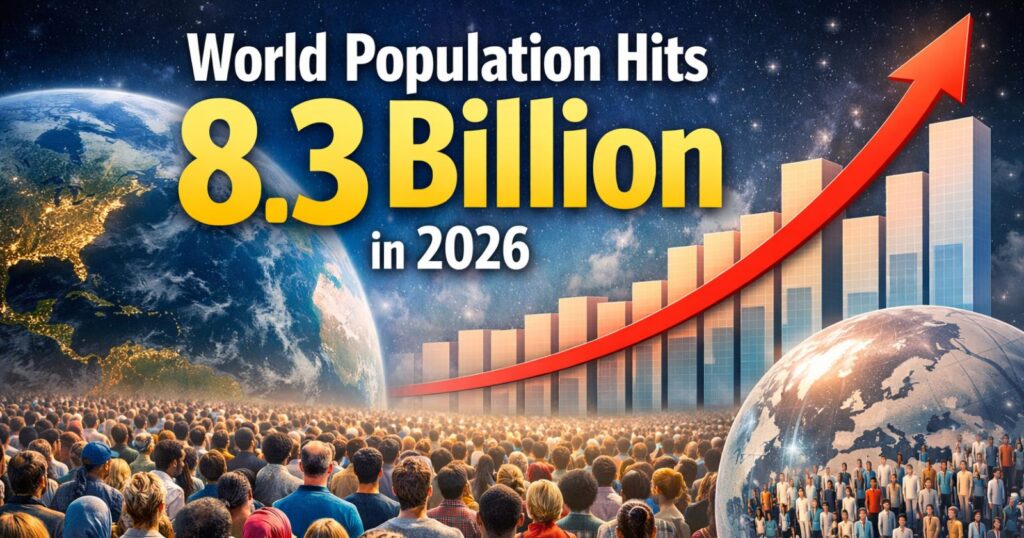
| 2024 | 8.2 billion | 0.9 percent |
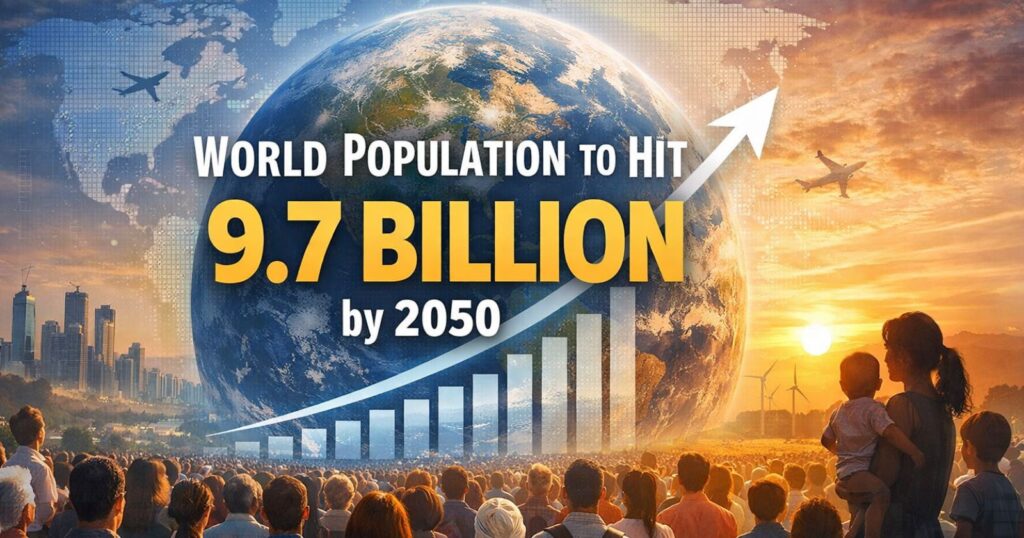
| 2050 (projected) | 9.7 billion | 0.5 percent |
| 2084 (projected peak) | 10.3 billion | near 0 percent |
Source: UN World Population Prospects 2024 Revision.
Main Causes of Population Growth
Population growth results from the balance between births, deaths, and migration. Falling child mortality, longer life expectancy, and improved healthcare have extended lifespans globally. Fertility remains higher in regions with limited access to education and family planning. Urbanization and rising incomes tend to reduce fertility over time.
Positive Effects of a Large Population
A large population expands the labor force, drives innovation, and enlarges consumer markets, supporting economic growth in developing nations with youthful demographics.
Negative Effects
Rapid, unmanaged growth can strain infrastructure, housing, and public services, particularly in fast growing cities across Africa and South Asia where planning has not kept pace with demand.
Economic Impact
Population growth affects labor supply, tax revenue, and consumer demand. Countries with young, growing populations often experience a demographic dividend, boosting productivity, while aging societies face rising healthcare costs and shrinking workforces.
Social Impact
Large populations strain education and healthcare systems in developing regions while offering economies of scale in service delivery. Urban crowding and housing affordability are common social pressures tied to population density rather than global totals.
Environmental Impact
Environmental strain is driven more by consumption levels than population alone. High income countries with smaller populations often have larger per capita carbon footprints than densely populated developing nations.
Expert Opinions:
The United Nations Population Division maintains that overpopulation is not an imminent global crisis, citing slowing growth rates. The World Bank and OECD emphasize that resource management, not population size, determines sustainability outcomes. The World Health Organization highlights maternal health and family planning access as key factors shaping future fertility trends.
Regional Comparison
| Region | 2024 Population | Growth Trend |
|---|---|---|
| Asia | 4.8 billion | Slowing |
| Africa | 1.5 billion | Fastest growing |
| Europe | 745 million | Declining |
| North America | 380 million | Slow growth |
| South America | 435 million | Slowing |
| Oceania | 45 million | Moderate growth |
Country Comparison
India leads global population at over 1.44 billion, followed by China at approximately 1.41 billion and declining. Nigeria, with rapid growth, is projected to become the third most populous nation by 2050. The United States continues moderate growth driven largely by immigration, while Japan and Germany face shrinking native populations.
Common Myths
| Myth | Fact |
|---|---|
| The world will run out of food due to overpopulation | Global food production already exceeds nutritional needs |
| Population growth is accelerating | Global growth rate has been declining since the 1960s |
| All countries are overpopulated | Many countries, including Japan and Italy, face population decline |
| More people always means more pollution | Consumption patterns matter more than headcount |
| Population will grow forever | UN projections show a peak followed by decline |
| Africa’s growth threatens global resources | Africa contributes a small share of global emissions |
| Overpopulation causes all poverty | Poverty is driven by governance and inequality, not numbers alone |
| Family planning alone solves overpopulation | Education and economic development matter equally |
| Earth cannot support 10 billion people | Most estimates place capacity above 9 billion with efficient use |
| Immigration causes overpopulation in host countries | Migration mainly redistributes population, not adds to global totals |
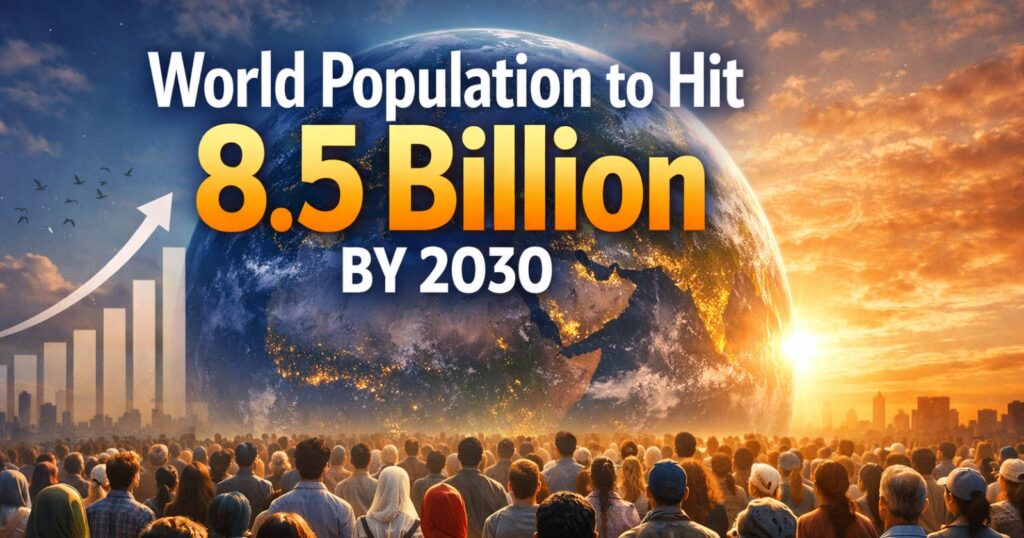
By 2030, world population is expected to reach roughly 8.5 billion. By 2050, projections point to 9.7 billion, with growth increasingly concentrated in Africa. By 2100, UN estimates suggest a range between 9 and 11 billion depending on fertility trends, with several major scenarios showing decline beginning before the century ends.
Conclusion
Current evidence does not support the claim that the world is overpopulated. Global population growth is slowing, fertility rates are falling nearly everywhere, and most sustainability challenges stem from consumption and distribution rather than absolute numbers. The practical takeaway is that policy should focus on equitable resource management and sustainable development rather than population control alone.
Frequently Asked Questions
Is Earth overpopulated in 202?
No. The current population of approximately 8.2 billion remains within most scientific estimates of sustainable carrying capacity, though distribution and consumption challenges persist regionally.
What is the carrying capacity of Earth?
Estimates vary widely, generally ranging from 8 to 12 billion people depending on assumed consumption levels, technology, and resource efficiency.
Which continent is most overpopulated?
Asia holds the largest population, but density and resource strain vary significantly by country rather than continent alone.
Will overpopulation cause famine?
Current food scarcity results mainly from distribution inefficiencies and conflict, not global production shortfalls.
Is population growth slowing worldwide?
Yes. Global growth rate has fallen from over 2 percent annually in the 1960s to under 1 percent today.
When will world population peak?
The UN projects a peak near 10.3 billion around the 2080s, followed by gradual decline.
Does China still have the largest population?
No. India surpassed China in population in 2023 and now holds the top position.
Are developed countries overpopulated?
Most developed countries have low or negative population growth and are not considered overpopulated.
How does urbanization relate to overpopulation?
Urbanization concentrates population density in cities, which can create localized strain even when national population is stable.
Can technology solve overpopulation concerns?
Agricultural and energy technology have historically expanded capacity to support larger populations sustainably.