
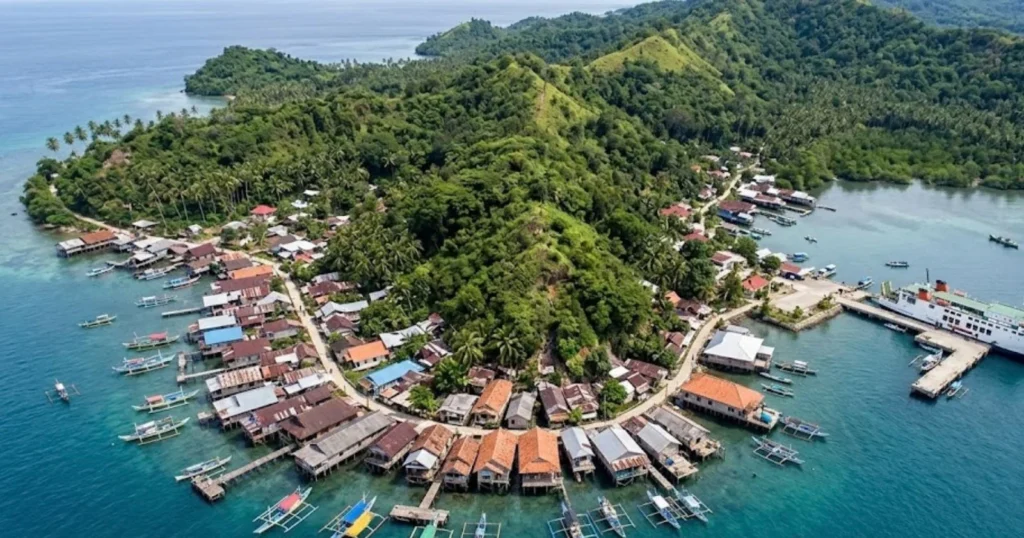
More than 156 million people live on Java, an island that makes up roughly 7 percent of Indonesia’s total land area but holds nearly 56 percent of its 283 million people. That single statistic captures the central fact of Indonesian demography better than any other: this is a country of more than 17,000 islands, yet the overwhelming majority of its population, economy, and political power sits on one of them.
The imbalance is not a minor footnote. Java’s effective population density, comparable in places to Bangladesh, sits alongside vast stretches of Kalimantan, Papua, and eastern Indonesia that remain sparsely populated despite covering the majority of the country’s land area. Indonesia’s government considers this distortion serious enough that it is now in the process of relocating its national capital away from Jakarta entirely, in one of the most ambitious attempts at demographic and economic redistribution attempted anywhere in the world this century.
Indonesia’s Population Is Concentrated on a Few Major Islands
Population by Island (First Semester 2024)
| Island / Region | Population | Share of National Total |
|---|---|---|
| Java | 157.4 million | 55.9% |
| Sumatra | 61.6 million | 21.8% |
| Sulawesi | 20.8 million | 7.4% |
| Kalimantan | 17.5 million | 6.2% |
| Bali and Nusa Tenggara | 15.7 million | 5.6% |
| Papua | 5.7 million | 2.0% |
| Maluku | 3.1 million | 1.2% |
Indonesia’s total population reached approximately 282.5 million in the first half of 2024, split between 142.6 million males and 139.9 million females, and has since grown to an estimated 285 to 288 million by 2025-2026, making Indonesia the fourth most populous country in the world after India, China, and the United States.
The population growth rate has slowed to approximately 0.7 to 0.76 percent annually as of the mid-2020s, down from 1.25 percent average annual growth recorded in the decade leading up to the 2020 census, reflecting the long-term success of Indonesia’s historical family planning programs alongside continuing urbanization and rising education levels.
Why Java Became Indonesia’s Population Core
Java’s demographic dominance is the product of centuries of overlapping forces rather than any single cause. Java’s volcanic soil made it exceptionally productive for wet-rice agriculture long before Dutch colonization, supporting dense agricultural settlement patterns that predate the modern Indonesian state by centuries. Dutch colonial administration then concentrated infrastructure, administrative capacity, and economic investment on Java far more heavily than on the outer islands, a pattern that independent Indonesia inherited and, in many respects, continued to reinforce through the 20th century.
Post-independence economic development compounded this concentration: Jakarta became the undisputed center of national government, finance, and industry, drawing internal migration from across the archipelago even as Java’s own rural population continued growing. West Java alone added more than five million people during the 2010-2020 census decade, the largest population increase of any single province in the country, reflecting continued in-migration to the greater Jakarta metropolitan region even as national population growth slowed overall.
Indonesia’s Major Islands Have Very Different Population Profiles
Sumatra, the second most populous island group at roughly 60 to 61.6 million people, hosts significant population clusters particularly in the south near the Sunda Strait and along the northeastern coast around Medan, North Sumatra’s largest city. Sulawesi’s approximately 20 to 21 million residents rely heavily on fisheries and agriculture, with Makassar functioning as the island’s major urban and economic center.
Kalimantan, Indonesia’s portion of Borneo, holds roughly 17.5 to 18 million people across a land area far larger than Java’s, with Banjarmasin as a key population center, while vast interior stretches of the island remain sparsely settled forest and agricultural land.
Papua, the western half of the island of New Guinea, tells the starkest story of demographic-geographic mismatch in the entire country: its approximately 5.7 to 6.2 million residents occupy some of Indonesia’s most biodiverse and geographically extensive territory, including the UNESCO-listed Lorentz National Park spanning more than 25,000 square kilometers, yet make up only about 2 percent of the national population. Papua has also been administratively subdivided into several new provinces in recent years, including Central Papua, Highland Papua, South Papua, and Southwest Papua, partly in response to the region’s unique demographic, cultural, and political circumstances.
Population Density Changes the Economic Geography of Indonesia
The concentration of population on Java has produced correspondingly concentrated economic activity, infrastructure, and public services. Roughly 60 percent of all Indonesians live on the combined territory of Java and Bali, which together represent only about 7 percent of the country’s total land area, according to figures compiled from the 2020 Indonesian census.
Jakarta itself, at the center of this concentration, records a population density exceeding 15,700 people per square kilometer within the city proper, among the highest of any major city in the world, with the broader Jakarta metropolitan region home to more than 30 million people.
This concentration cuts both ways economically. Java’s dense population supports correspondingly dense networks of schools, hospitals, and internet infrastructure that remote provinces in eastern Indonesia often lack, contributing to persistent regional disparities in human development indicators.
At the same time, Java’s overcrowding drives chronic traffic congestion, estimated to cost the Jakarta economy several billion dollars annually, along with severe environmental strain, including land subsidence that has made Jakarta one of the fastest-sinking major cities on Earth, with some northern districts dropping as much as 25 centimeters per year.
Urbanization Is Reshaping the Island Distribution
Indonesia’s poverty data offers a useful lens on how population concentration and economic opportunity interact regionally. As of March 2025, Indonesia’s national poverty rate stood at 8.47 percent, or approximately 23.85 million people, the lowest level recorded in the past decade.
Yet nearly half of that poor population, about 46 percent, or 10.9 million people, was concentrated in the three Javanese provinces of East Java, West Java, and Central Java, a reflection not of unusually severe poverty on Java relative to other provinces, but simply of Java’s sheer population scale: even a below-average provincial poverty rate on Java can produce a very large absolute number of poor residents given the island’s population base.
Indonesia’s New Capital and the Attempt to Shift Population Geography
Indonesia’s most ambitious response to its Java-centric population imbalance is the ongoing relocation of its national capital from Jakarta to a newly constructed city called Nusantara, located more than 1,000 kilometers away in East Kalimantan province on Borneo.
Construction began in July 2022 under an estimated total project cost of $32 to $45 billion, with the explicit stated goals of relieving Jakarta’s overcrowding and environmental crisis while creating a new center of economic gravity to help redistribute development toward the outer islands.
Progress has been uneven and politically contested. President Prabowo Subianto’s administration, which took office in October 2024, downgraded Nusantara’s designation from full national capital to specifically a political capital in 2025, with a target of 2028 for relocating executive, legislative, and judicial government functions, according to Presidential Regulation No. 79/2025.
State funding for the project fell sharply under the new administration, from approximately $2 billion allocated in 2024 to roughly $300 to $370 million for 2026, an 85 percent reduction that has raised concerns among observers about whether Nusantara can avoid becoming what some critics describe as a largely empty government outpost rather than a genuine population and economic center.
Indonesia’s Ministry of National Development Planning projects Nusantara’s population could reach nearly 2 million by 2045, with an estimated 4.3 to 4.5 million jobs created in East Kalimantan province by that date, though these remain long-range planning targets rather than current outcomes, and economic analysts, including those at Oxford Economics, do not expect the relocation to produce a mass exodus from Jakarta itself.
Environmental and Infrastructure Pressures
Java’s population concentration intersects directly with some of Indonesia’s most severe environmental challenges. Jakarta’s land subsidence crisis, driven substantially by excessive groundwater extraction to serve its dense population, has led credible estimates to suggest large portions of the city could be submerged by 2050 absent significant intervention.
Beyond Jakarta, Java’s dense agricultural and urban land use has intensified competition between food production, housing, and industrial development on an island that already supports population densities among the highest in the world for a landmass of its size.
Migration Between Indonesian Islands
Internal migration has shaped Indonesia’s population geography for decades, both through government-sponsored transmigration programs, historically encouraging movement from densely populated Java and Madura to less populated outer islands such as Central Sumatra and East Kalimantan, and through more recent economically-driven migration toward urban centers. This migration pattern has proven only partially successful at rebalancing the national population distribution: while transmigration programs did establish new agricultural communities on the outer islands across the 20th century, Java’s population share has remained remarkably stable in the roughly 55 to 60 percent range for decades, suggesting that natural population growth on Java itself has largely offset whatever redistributive effect outward migration achieved.
What Indonesia’s Population Geography Could Look Like by 2050
Indonesia’s population growth rate has continued its long-term deceleration, from over 1.2 percent annually in the 2010-2020 census decade to under 0.8 percent by the mid-2020s, suggesting the country’s overall population will continue growing but at a steadily slowing pace in the decades ahead. Whether that growth continues concentrating on Java or begins genuinely redistributing toward the outer islands will depend heavily on the success, or failure, of the Nusantara relocation project and broader infrastructure investment in eastern Indonesia.
Given the scale of funding cuts to Nusantara as of 2026 and the historical stability of Java’s population share despite decades of prior redistribution efforts, most demographic analysts view continued Java-centric concentration, even if it moderates somewhat, as the more probable near-term trajectory rather than a fundamental geographic realignment.
Frequently Asked Questions
1. Which Indonesian island has the largest population?
Java has by far the largest population of any Indonesian island, with approximately 157.4 million residents as of 2024, representing 55.9 percent of Indonesia’s total population despite covering only about 7 percent of the country’s land area.
2. Why is Java so crowded?
Java’s population concentration stems from centuries of highly productive volcanic-soil agriculture, intensive Dutch colonial-era infrastructure investment, and post-independence government concentration of political and economic power in Jakarta, all of which reinforced continuous internal migration toward the island.
3. What percentage of Indonesians live on Java?
Approximately 56 percent of Indonesians live on Java, and roughly 60 percent live on the combined territory of Java and Bali, which together make up only about 7 percent of Indonesia’s total land area.
4. Which Indonesian island is least populated relative to its size?
Papua has the starkest mismatch between land area and population among Indonesia’s major islands, holding only about 2 percent of the national population, roughly 5.7 to 6.2 million people, despite covering a substantial share of Indonesia’s total territory.
5. Is Indonesia’s population becoming more urban?
Indonesia has urbanized substantially over recent decades, with the Jakarta metropolitan area alone now home to more than 30 million people, though internal migration toward Java’s urban centers has not meaningfully reduced Java’s overall share of the national population, which has remained stable for decades.
6. Will Nusantara reduce Jakarta’s population?
Economic analysts, including those at Oxford Economics, do not expect the relocation of government functions to Nusantara to produce a mass population exodus from Jakarta, since Jakarta’s private-sector economic base is expected to remain largely in place even as government administrative functions relocate.
7. Where is Indonesia’s population growing fastest?
West Java recorded the largest absolute population increase of any Indonesian province during the 2010-2020 census decade, adding more than five million people, reflecting continued migration into the greater Jakarta metropolitan region.
8. How densely populated is Java?
Java’s population density rivals that of Bangladesh in some districts, with Jakarta city proper recording a density exceeding 15,700 people per square kilometer, among the highest of any major city in the world.
Sources
- Directorate General of Population and Civil Registration (Dukcapil), Indonesian Ministry of Home Affairs, population by island data, first semester 2024.
- Statistics Indonesia (Badan Pusat Statistik), provincial and national population estimates, 2020 census and 2025 updates.
- United Nations, Department of Economic and Social Affairs, Population Division. World Population Prospects 2024 Revision.
- Oxford Economics, “A capital is born: The impact of Indonesia moving its capital city,” analysis, 2026.
- Indonesia’s Nusantara Capital Authority (OIKN) and Presidential Regulation No. 79/2025, 2025 Government Work Plan Update.
- Databoks/Katadata, Indonesia population and poverty distribution compilations, 2024-2025.





