
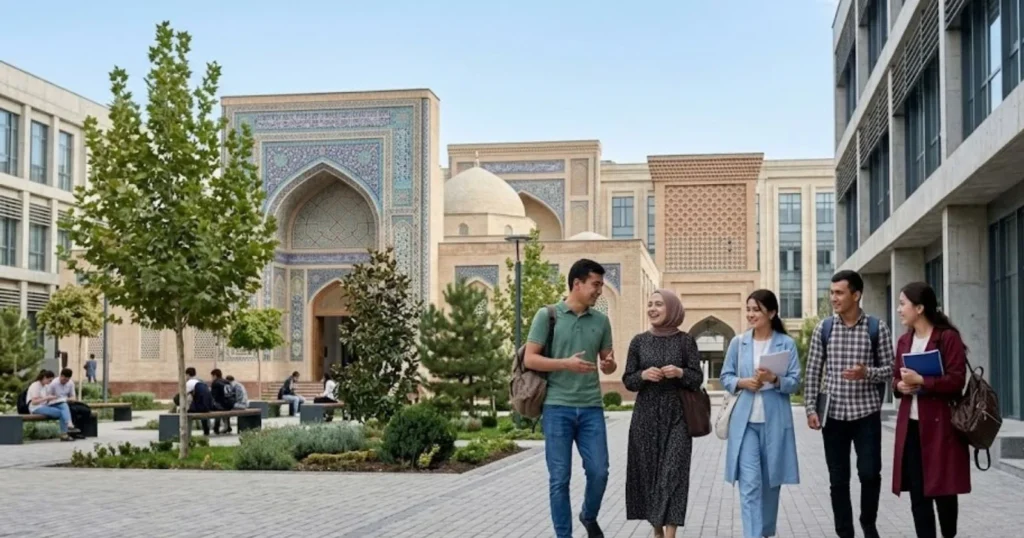
Uzbekistan’s population crossed 38.3 million by early 2026, making it not only the largest country in Central Asia by population but also, in relative terms, one of the youngest of any country of its size outside Sub-Saharan Africa. With a median age of just 27 to 27.9 years and a fertility rate still running at approximately 3.4 to 3.5 children per woman, Uzbekistan is entering a phase that Uzbek and international demographers alike describe using the same language applied to Iraq and Egypt elsewhere in this series: a demographic dividend window, in which a rapidly expanding working-age population, if matched with sufficient jobs, education, and economic development, could become the foundation for a substantially larger economic role in Central Asia over the coming two to three decades.
Uzbekistan’s population growth rate of approximately 1.88 to 1.9 percent annually, adding roughly 700,000 people each year, makes it the demographic center of gravity for a region, Central Asia, whose combined economic and political weight has historically lagged behind its population size.
Uzbekistan Is Central Asia’s Demographic Giant
Population at a Glance
- Total population (early 2026): approximately 38.3 million
- Median age: 27.0 to 27.9 years (2024-2026 estimates), up from 22.1 years in 1960
- Population aged 0-14: approximately 30.1 to 31.3%
- Population aged 15-64 (working age): approximately 58.7 to 63%
- Population aged 65 and older: approximately 5.3 to 5.9%
- Total fertility rate: approximately 3.4 to 3.5 children per woman (2023-2024), well above the 2.1 replacement level
- Population growth rate: approximately 1.88 to 1.9% annually
- Life expectancy: approximately 72.4 to 75.3 years
- Population density: approximately 81 to 89 people per square kilometer
- Age dependency ratio: 57.6 dependents per 100 working-age people (2023), down from 61.5% in 2004
Sources: UN World Population Prospects 2024 revision; Our World in Data; CIA World Factbook; Eurasian Research Institute (ERI) demographic profile.
Uzbekistan’s median age has climbed only modestly, from 22.1 years in 1960 to approximately 27.9 years by 2024, a pace of roughly 2.4 years of median age increase per decade, according to demographic compilations, a gradual trajectory that stands in sharp contrast to Iran’s much faster aging documented elsewhere in this series. This slower pace of aging reflects Uzbekistan’s fertility rate remaining considerably higher than Iran’s for a much longer period, though Uzbekistan’s fertility has itself declined substantially from far higher historical levels.
Why Uzbekistan Has Such a Young Population
Uzbekistan’s continued relatively high fertility, at 3.4 to 3.5 children per woman, reflects a demographic transition that has proceeded more slowly and incompletely than in several of its Central Asian neighbors, notably Kazakhstan, whose fertility rate sits closer to 2.8, as documented in this series’ companion article.
Contributing factors commonly cited by demographic researchers include Uzbekistan’s later and more gradual urbanization relative to Kazakhstan, continued strong social and cultural emphasis on larger family sizes, particularly in rural areas that still house a substantial share of Uzbekistan’s population, and a slower expansion of female higher education and labor force participation relative to some regional peers, though Uzbekistan has made significant strides in these areas, particularly since major economic reforms began in 2017.
Millions of Young People Are Entering Working Age
Uzbekistan’s population structure is often described using the demographic concept of “population momentum”: because roughly 30 to 31 percent of the population is under age 15, a very large cohort of children and young teenagers is already guaranteed to move into the working-age bracket over the next 15 years, regardless of what happens to fertility rates going forward.
This built-in growth trajectory means Uzbekistan’s working-age population will continue expanding substantially in absolute terms even if the country’s fertility rate continues its gradual decline, creating what demographers researching Uzbekistan’s population pyramid describe as a genuine demographic dividend opportunity, provided the country’s economy and institutions can absorb and productively employ this expanding labor pool.
Uzbekistan’s dependency ratio has already begun improving in a direction favorable to this dividend: age dependency fell from 61.5 percent in 2004 to 57.6 to 58.6 percent by 2023-2024, according to World Bank-sourced compilations, reflecting a shrinking child dependency burden relative to the working-age population even as fertility remains elevated by regional standards.
Education and Skills Will Determine the Demographic Dividend
As with Iraq’s youth bulge covered elsewhere in this series, Uzbekistan’s demographic dividend is not automatic; it depends on whether the country’s education and labor market institutions can convert a large youth cohort into a genuinely productive workforce. Uzbekistan has pursued substantial education sector reforms since 2017 as part of broader economic liberalization efforts under President Shavkat Mirziyoyev’s administration, including expanded access to higher education, which had previously been constrained by strict enrollment quotas under earlier governments, and growing investment in vocational and technical training aimed at aligning graduate skills with labor market demand, particularly in textiles, agriculture processing, and increasingly information technology and services sectors that the government has prioritized for economic diversification away from Uzbekistan’s traditional reliance on cotton production, natural gas, and gold exports.
Migration Is Already Part of Uzbekistan’s Labor Market
Unlike Iraq, Uzbekistan already has a well-established pattern of significant outbound labor migration, primarily to Russia and, to a lesser extent, other post-Soviet states and increasingly South Korea, reflecting decades of established migration networks dating to the Soviet era and continuing after independence in 1991.
Uzbekistan’s net migration rate of approximately -1.78 migrants per 1,000 population as of 2022 estimates indicates the country remains a substantial net exporter of labor, with remittances from these migrant workers forming a meaningful component of household income and the broader Uzbek economy, a pattern that echoes, though at a smaller relative scale, the Philippines’ much larger overseas labor migration system documented elsewhere in this series.
This existing migration channel provides Uzbekistan with a partial outlet for its expanding youth labor force even as domestic job creation continues developing, though heavy reliance on Russian labor markets specifically has periodically exposed Uzbek migrant workers and the broader Uzbek economy to volatility tied to Russian economic conditions and, since 2022, geopolitical circumstances surrounding Russia’s war in Ukraine.
Regional Demographic Differences Inside Uzbekistan
Uzbekistan’s urbanization remains comparatively modest relative to some regional peers, with roughly 43.8 percent of the population living in towns and 41.6 percent in cities as of 2020 data, against just 14.6 percent classified as rural, though more recent estimates suggest the urban population share overall has climbed toward approximately 51 percent by the mid-2020s.
Tashkent, the capital and by far Uzbekistan’s largest city, anchors the country’s most economically developed and educated population center, while the Fergana Valley, one of Central Asia’s most densely populated agricultural regions, spanning parts of Uzbekistan, Kyrgyzstan, and Tajikistan, maintains some of Uzbekistan’s highest population densities and, historically, some of its highest fertility rates, tied to its strong agricultural economic base and more traditional social structures relative to Tashkent.
Uzbekistan’s Population Could Increase Its Regional Influence
Uzbekistan’s demographic scale, at 38.3 million and growing by roughly 700,000 people annually, already substantially exceeds every other Central Asian state: Kazakhstan’s population sits at approximately 20.5 million, as documented in this series’ companion article, while Kyrgyzstan, Tajikistan, and Turkmenistan are each considerably smaller still.
This population scale gives Uzbekistan a natural position as Central Asia’s largest domestic consumer market and, potentially, its largest labor force, both factors that could translate into greater regional economic and political weight over the coming decades if matched by continued economic reform and infrastructure development.
Uzbekistan’s central geographic position, bordering all four other Central Asian states, further reinforces its potential role as a regional economic hub for trade and labor flows within Central Asia itself, a role explored in more detail in this series’ dedicated Central Asia regional comparison article.
Population Outlook Through 2050
United Nations projections cited in Uzbek demographic research put the country’s median age on a trajectory toward approximately 39.9 years by 2100, a substantial increase from the current 27 to 28 years but one that unfolds over a much longer timeframe than the compressed aging trajectories documented for Iran or Thailand elsewhere in this series. In the nearer term,
Uzbekistan’s population momentum, driven by the roughly 30 percent of the population currently under 15, ensures continued population growth for at least the next two to three generations regardless of any near-term fertility changes, according to demographic analysis of Uzbekistan’s current age structure.
This gives Uzbekistan a considerably longer runway to plan for eventual aging than several of the other countries profiled in this series, while placing more immediate pressure on the country’s capacity to create jobs, expand education access, and build infrastructure fast enough to keep pace with its still-rapidly-growing working-age population over the next 15 to 20 years.
Frequently Asked Questions
1. How young is Uzbekistan’s population?
Uzbekistan’s median age is approximately 27.0 to 27.9 years as of the mid-2020s, with roughly 30 to 31 percent of the population under age 15, making it one of the youngest large populations outside Sub-Saharan Africa.
2. What percentage of Uzbekistan is under 30?
While precise under-30 figures vary by source, Uzbekistan’s median age of approximately 27 to 28 years indicates roughly half the population is younger than that age, and demographic profiles note that about 61.8 percent of the population falls within the broader 0-34 age bracket.
3. Why is Uzbekistan’s population growing?
Uzbekistan’s population continues growing due to a fertility rate of approximately 3.4 to 3.5 children per woman, well above the 2.1 replacement level, combined with population momentum from the large youth cohort already born and moving through the age structure.
4. Does Uzbekistan have a demographic dividend?
Uzbekistan is considered to be entering a demographic dividend phase, with a large and growing working-age population share, currently 58.7 to 63 percent, and a declining age dependency ratio, down from 61.5 percent in 2004 to approximately 57.6 to 58.6 percent by 2023-2024, though realizing the dividend’s full economic benefit depends on continued investment in education, job creation, and governance.
5. How many Uzbek workers migrate abroad?
Uzbekistan’s net migration rate stood at approximately -1.78 migrants per 1,000 population as of 2022 estimates, reflecting substantial outbound labor migration primarily to Russia and, increasingly, South Korea and other destinations, with remittances forming a meaningful part of the Uzbek economy.
6. What are Uzbekistan’s biggest youth employment challenges?
Uzbekistan faces the challenge of creating sufficient jobs and skills training to absorb a rapidly growing working-age population, requiring continued investment in education reform, vocational training, and economic diversification away from traditional reliance on cotton, natural gas, and gold exports, a process that has accelerated since 2017 reforms.
7. Which Uzbek regions have the most people?
Tashkent, the capital, is Uzbekistan’s largest and most economically developed population center, while the Fergana Valley, one of Central Asia’s most densely populated agricultural regions, maintains some of the country’s highest population densities and historically higher fertility rates.
8. How large could Uzbekistan’s population become?
Given current population momentum from its large youth cohort and a fertility rate well above replacement level, Uzbekistan’s population is set to continue growing substantially over the next two to three generations, with UN projections suggesting continued gradual aging toward a median age of approximately 39.9 years by 2100.
Sources
- United Nations, Department of Economic and Social Affairs, Population Division. World Population Prospects 2024 Revision.
- Our World in Data, Population and Demography Country Profile: Uzbekistan, drawing on UN WPP 2024.
- CIA World Factbook, Demographics of Uzbekistan, 2022-2026 estimates.
- Eurasian Research Institute (ERI), “A Brief Review of Uzbekistan’s Demographic Profile.”
- UNFPA World Population Dashboard, Uzbekistan country data, 2025.
- Georank.org, Uzbekistan demographics compilation, sourced from World Bank and UN WPP data, 2026.