More people are displaced within their own countries than are refugees who have crossed an international border. At the end of 2025, 68.7 million people were internally displaced due to conflict or violence, according to combined UNHCR and Internal Displacement Monitoring Centre (IDMC) figures, compared with 41.6 million refugees over the same period. That gap, nearly 30 million people, represents one of the least understood facts about global displacement: crossing no international border does not make a crisis smaller.
Internal displacement fell alongside the refugee population in 2025, driven largely by returns in the Democratic Republic of the Congo, Sudan, and Syria. As with refugee returns, many of these movements occurred under adverse and unstable conditions rather than representing a genuine resolution to the underlying crisis.
What Is Internal Displacement
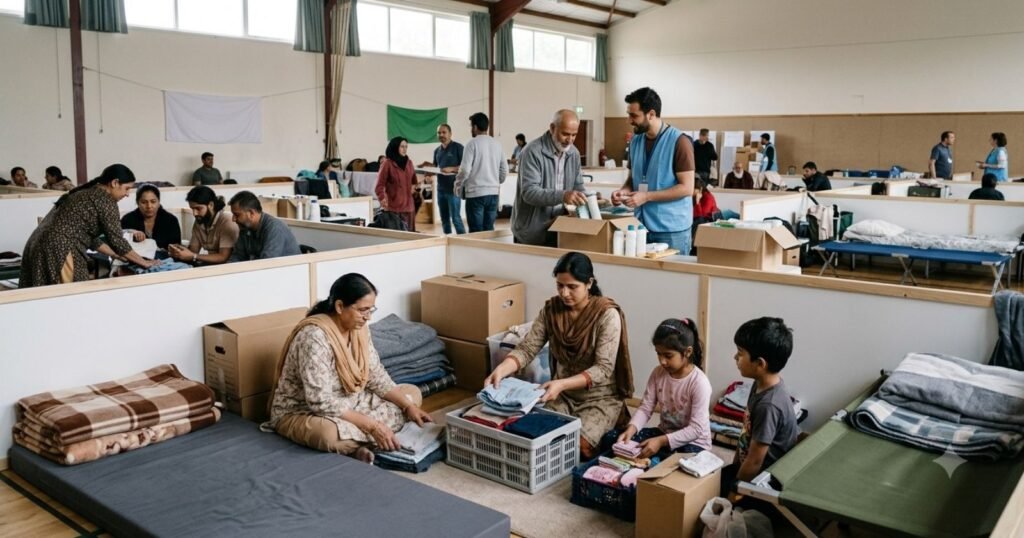
An internally displaced person, or IDP, has been forced to flee their home due to conflict, violence, human rights violations, or disaster, but has not crossed an international border. This single distinction, remaining within national territory, excludes IDPs from the specific legal protections of the 1951 Refugee Convention, even though the practical circumstances of internal displacement, loss of home, livelihood, and access to services, are often indistinguishable from those facing refugees.
How Many Internally Displaced People Are There
| Metric | Figure | Year |
|---|---|---|
| IDPs due to conflict or violence | 68.7 million | End of 2025 |
| Total forcibly displaced worldwide (incl. IDPs) | 117.8 million | End of 2025 |
| Global refugee population, for comparison | 41.6 million | End of 2025 |
Source: UNHCR Global Trends 2025 and IDMC. IDMC separately maintains its own Global Report on Internal Displacement (GRID), which additionally tracks disaster related displacement events, a distinct and typically much larger figure than the conflict linked IDP stock reported above, since disaster displacement includes shorter term movements from events like floods and storms that may resolve within weeks or months.
Why Are People Internally Displaced
Conflict and Violence
The dominant driver of the 68.7 million figure. Sudan’s civil war, ongoing conflict in the Democratic Republic of the Congo, and continued instability in Syria and Afghanistan together account for a large share of the world’s conflict displaced population.
Disasters
Floods, storms, earthquakes, and wildfires displace tens of millions more people each year, though disaster displacement is typically shorter-term than conflict displacement and IDMC tracks it separately as new displacement events rather than as a persistent stock of displaced people.
Climate Related Hazards
Overlapping with both conflict and disaster displacement, slow onset climate stress increasingly compounds existing vulnerability, particularly in the Sahel and parts of the Horn of Africa where conflict, drought, and displacement interact.
Development-Related Displacement
A smaller and less comprehensively tracked category, covering people displaced by large infrastructure projects such as dams or urban redevelopment, included here only where reliable data exists.
Conflict Displacement Versus Disaster Displacement
These two categories differ meaningfully in duration and geography. Conflict displacement tends to be protracted, often lasting years or decades, and concentrated in specific crisis countries. Disaster displacement is typically shorter in duration, since many people are able to return home once floodwaters recede or a storm passes, but it can occur across a far broader set of countries each year, including wealthy nations with strong infrastructure, since no country is fully immune to disaster driven displacement events.
Where Are the World’s Largest IDP Populations
Sudan, the Democratic Republic of the Congo, Syria, Colombia, and Yemen have historically ranked among the countries with the largest internally displaced populations, reflecting a mix of active conflict, protracted post conflict instability, and, in Colombia’s case, one of the longest running internal displacement crises in the world stretching back decades.
How Long Do People Remain Internally Displaced
Protracted displacement, lasting years or even decades, is the norm rather than the exception in major conflict driven IDP situations. Return movements recorded in 2025 in the DRC, Sudan, and Syria illustrate that even when large scale returns do occur, they frequently happen under insecure conditions, meaning a meaningful share of those counted as “returned” in official statistics may face renewed displacement if conditions deteriorate again.
Who Is Most Vulnerable
Children, women, older people, and people with disabilities face disproportionate risk during internal displacement, often losing access to education, healthcare, and social support networks simultaneously. Rural households with limited savings or assets face particular difficulty rebuilding livelihoods after displacement, especially when displacement stretches from a temporary emergency into a years long, unresolved situation.
What Happens After Displacement
Durable solutions to internal displacement generally take one of three forms: safe and sustainable return to the place of origin, local integration into the community where displacement occurred, or settlement in a different part of the country. Achieving any of these durable solutions typically requires stable security conditions, functioning housing and land rights systems, and access to livelihoods, all of which remain elusive in many of the world’s largest and most protracted IDP situations.
Key Findings
- 68.7 million people were internally displaced due to conflict or violence at the end of 2025, nearly 30 million more than the global refugee population.
- Internal displacement fell in 2025 primarily due to returns in the Democratic Republic of the Congo, Sudan, and Syria, though many occurred under unstable conditions.
- IDPs fall outside the legal protections of the 1951 Refugee Convention because they have not crossed an international border, despite facing comparable practical hardship to refugees.
- Disaster related displacement is tracked separately from conflict related IDP stock and is typically shorter in duration but can affect a much broader range of countries each year.
- Colombia’s internal displacement crisis is among the longest running in the world, spanning decades of internal conflict.
Frequently Asked Questions
1. How many internally displaced people are there worldwide?
68.7 million people were internally displaced due to conflict or violence at the end of 2025, according to combined UNHCR and IDMC data.
2. What is the difference between an IDP and a refugee?
An IDP has fled their home due to conflict, violence, or disaster but remains within their own country’s borders, while a refugee has crossed an international border, a distinction that determines which legal protections apply.
3. Which country has the most internally displaced people?
Sudan, the Democratic Republic of the Congo, and Syria have historically ranked among the countries with the largest IDP populations, driven by prolonged conflict and instability.
4. Why are there more IDPs than refugees globally?
Crossing an international border requires resources, safe transit routes, and often documentation that many people fleeing conflict or disaster do not have, meaning displacement frequently stops at the nearest safe location within the same country.
5. How long do people typically remain internally displaced?
Protracted displacement lasting years or decades is common in major conflict situations, though disaster driven displacement is often shorter, sometimes resolving within weeks or months once conditions allow safe return.
6. What causes internal displacement?
Conflict and violence are the largest drivers of the persistent global IDP stock, while disasters and climate related hazards drive a separate, often shorter term, category of displacement events tracked by IDMC.
7. Are IDP returns in 2025 a sign the crises are resolving?
Not necessarily. UNHCR notes that many returns in the DRC, Sudan, and Syria occurred under adverse conditions in areas where insecurity persists and services remain limited, raising concerns about the sustainability of these returns.
8. How does development related displacement differ from conflict displacement?
Development related displacement stems from infrastructure projects like dams or urban redevelopment rather than conflict, and is tracked less comprehensively at a global level due to inconsistent reporting standards across countries.
9. What is the total number of forcibly displaced people worldwide?
117.8 million people were forcibly displaced worldwide at the end of 2025, combining refugees, asylum seekers, and internally displaced people.
10. What does a durable solution to internal displacement look like?
A durable solution can be a safe and sustainable return, local integration where displacement occurred, or settlement in a different part of the country, all of which require stable security, functioning housing and land systems, and access to livelihoods to succeed.
Sources
- UNHCR, Global Trends 2025
- Internal Displacement Monitoring Centre (IDMC), Global Report on Internal Displacement
- Norwegian Refugee Council, Global Displacement Figures 2025