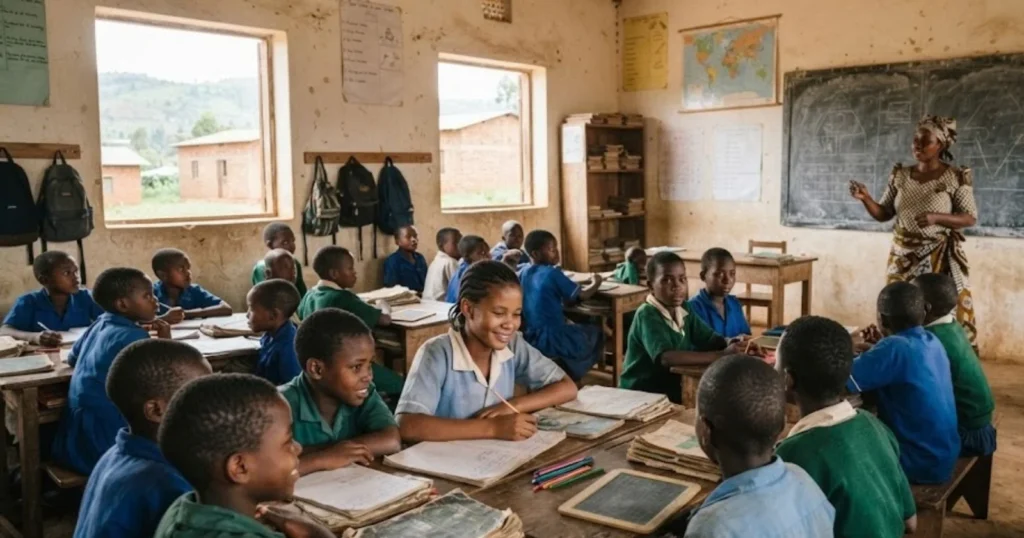
Burundi’s population reached approximately 14.39 million in 2025, and its demographic profile is defined by a combination rarely seen at this intensity anywhere else: a median age of just 16.6 years, a fertility rate near 4.8 to 5.0 children per woman, and a national population density of roughly 574 people per square kilometer, one of the highest in Africa. Nearly two-thirds of Burundians are under 25, and about 90 percent of the population still relies on subsistence agriculture in a country where land is already scarce and heavily subdivided. Burundi’s demographic story is, more than most, a direct test of whether a young population can become an economic asset when the land, capital and job creation needed to employ it remain in short supply.
Burundi Has a Strongly Youthful Population Structure
Burundi’s age structure ranks among the youngest of any country globally. As of recent estimates, roughly 42.7 to 43.8 percent of the population is under 15, the working-age population (15-64) makes up roughly 54 percent, and just over 3 percent is 65 or older. The median age, at 16.6 years as of 2026 estimates, places Burundi alongside Uganda, Niger and a small handful of other countries with the world’s youngest population structures.
Burundi Key Facts
| Metric | Figure | Year |
|---|---|---|
| Population | 14.39 million | 2025 |
| Median age | 16.6 years | 2026 |
| Total fertility rate | 4.77-5.03 | 2022-2024 |
| Population density | 574/km² | 2026 |
| Population under 25 | ~65% | current |
| Total dependency ratio | 95.2 | 2021 |
Fertility Is Central to Burundi’s Demographic Story
Burundi’s total fertility rate, estimated between 4.77 and 5.03 children per woman depending on the source and year, remains among the highest in the world, ranking 160th out of 195 countries by one recent estimate, meaning Burundi sits toward the high-fertility end of the global distribution even as fertility has declined modestly over recent decades.
Burundi’s population grew 538.2 percent between 1950 and 2025, illustrating the sustained, compounding effect of fertility that, while gradually falling, has remained well above replacement level for the entire period.
This fertility pattern reflects, according to CIA World Factbook analysis, a lack of reproductive health services that has prevented a significant reduction in Burundi’s fertility and maternal mortality rates, both among the highest in the world.
Life expectancy, at approximately 63.7 to 67.4 years depending on the source, combined with continued high fertility, sustains a total dependency ratio of 95.2, meaning for every roughly 100 working-age Burundians, there are close to 95 dependents, overwhelmingly children given the youth dependency ratio of 90.4 against an elderly dependency ratio of just 4.8.
A Young Population Creates Sustained Demand for Services
Burundi’s youth-heavy population structure places substantial demand on health and education systems that already face severe resource constraints. Chronic malnutrition affects an estimated 60 percent of children in Burundi, according to CIA World Factbook data, reflecting the combined pressures of food insecurity, poverty and limited clean water access that a rapidly growing, land-constrained population intensifies.
Infant mortality, at approximately 37.8 deaths per 1,000 live births as of 2022 estimates, and under-five mortality, at 4.7 percent as of 2024 Our World in Data figures, remain elevated, underscoring the health system capacity challenges that accompany Burundi’s sustained high birth rate of roughly 27 to 35 births per 1,000 population.
Youth Employment Is the Economic Pressure Point
With close to two-thirds of Burundi’s population under 25, generating employment for young Burundians entering the labor market represents one of the country’s most acute economic challenges. Approximately 90 percent of Burundi’s population relies on subsistence agriculture, according to CIA World Factbook data, meaning the overwhelming majority of Burundi’s working-age population, including much of its youth cohort, is engaged in low-productivity farming rather than formal wage employment.
With land already scarce and subject to subdivision among sons and redistribution to returning refugees, resulting in smaller, overworked and less productive plots, the agricultural sector that currently absorbs most of Burundi’s labor force faces its own structural constraints on absorbing continued population growth.
Population Density and Land Pressure
Burundi’s population density reached 574 people per square kilometer as of 2026 estimates, calculated across a total land area of just 25,680 square kilometers, ranking Burundi among Africa’s most densely populated countries. The CIA World Factbook specifically notes that population concentrations are heaviest in the north and along the northern shore of Lake Tanganyika, where most people live on farms near fertile volcanic soil, illustrating how Burundi’s population distribution follows agricultural land quality closely in a country where land scarcity and poverty combine to place a large share of the population at risk of food insecurity.
Urbanization Is Gradually Changing Population Distribution
Burundi remains overwhelmingly rural, with the vast majority of the population still engaged in agriculture rather than concentrated in urban centers. Bujumbura, Burundi’s largest city and former capital, along with Gitega, the current political capital, serve as the country’s primary urban centers, though urbanization has proceeded more gradually in Burundi than in several neighboring East African countries, reflecting the continued dominance of Burundi’s agricultural economy and the land-based livelihoods that the large majority of the population still depends on.
Could Burundi Capture a Demographic Dividend?
Burundi’s current demographic profile, characterized by a total dependency ratio of 95.2, sits far from the conditions typically associated with an active demographic dividend window. A demographic dividend requires the working-age population share to rise substantially relative to dependents, a shift that in Burundi’s case would require considerably more fertility decline than has occurred to date.
Until Burundi’s fertility rate falls further, meaningfully reducing the youth dependency ratio that currently stands at 90.4, the country’s demographic profile is better characterized as facing a demographic burden, an unusually large dependent child population relative to a comparatively small working-age base, rather than approaching a realized dividend opportunity.
Burundi’s Long Term Demographic Transition
Long-range UN projections cited by Our World in Data place Burundi’s population at 37.87 million by 2100, up from 13.69 million in 2023, implying continued substantial population growth across the coming decades even as fertility is expected to decline further from current levels.
Given Burundi’s existing land constraints, already among the most severe in Africa relative to population, this projected growth trajectory raises significant questions about how the country’s agricultural land base, health and education systems, and nascent formal employment sectors will need to expand and diversify to keep pace, questions that current data suggests remain substantially unresolved.
Conclusion
Burundi’s demographic data describes a country facing an unusually direct version of the young-population question: a population growing quickly, a land base that is not, and a dependency ratio that leaves relatively little slack for absorbing continued growth without substantial changes to agricultural productivity, health system capacity and formal job creation.
The demographic dividend framework that offers cautious optimism for countries like Bolivia or Paraguay applies to Burundi only in a much earlier, more constrained form, since the country’s youth dependency ratio remains too high and its fertility rate too elevated for the favorable working-age window that framework depends on to have meaningfully opened yet.
Key Findings
- Burundi’s population reached approximately 14.39 million in 2025, with a median age of just 16.6 years, among the youngest in the world.
- Burundi’s total fertility rate stands between 4.77 and 5.03 children per woman depending on the estimate, well above replacement level and among the highest globally.
- Burundi’s total dependency ratio reached 95.2 as of 2021 estimates, with youth dependency at 90.4, reflecting an extremely large dependent child population relative to the working-age base.
- Population density reached 574 people per square kilometer as of 2026, among the highest in Africa, concentrated heavily around fertile volcanic soil in the north and along Lake Tanganyika’s northern shore.
- Approximately 90 percent of Burundi’s population relies on subsistence agriculture, a sector facing its own land scarcity and productivity constraints.
- UN projections cited by Our World in Data suggest Burundi’s population could reach 37.87 million by 2100, up from 13.69 million in 2023.
Frequently Asked Questions
1. Why is Burundi’s population so young?
A sustained high fertility rate, between 4.77 and 5.03 children per woman depending on the estimate, has produced a population structure where nearly two-thirds of Burundians are under 25 and the median age is just 16.6 years.
2. Does Burundi have a demographic dividend opportunity?
Not currently in a realized sense. Burundi’s total dependency ratio of 95.2, driven by a youth dependency ratio of 90.4, indicates the country remains far from the favorable working-age-to-dependent ratio that defines an active demographic dividend window, and would require substantial further fertility decline to approach one.
3. How does population density affect Burundi’s development?
Burundi’s population density of 574 people per square kilometer, among Africa’s highest, combines with land scarcity to constrain agricultural productivity, since roughly 90 percent of the population relies on subsistence farming on plots that have grown smaller through generational subdivision.
4. What is Burundi’s total population?
Burundi’s population reached approximately 14.39 million in 2025, according to population pyramid estimates based on UN World Population Prospects 2024 data.
5. What is Burundi’s fertility rate?
Estimates place Burundi’s total fertility rate between 4.77 and 5.03 children per woman depending on the source and year, among the highest in the world.
6. How does Burundi’s youth population affect employment?
With close to two-thirds of the population under 25 and roughly 90 percent of the population engaged in subsistence agriculture, generating formal employment for Burundi’s growing youth cohort represents a central and largely unresolved economic challenge.
7. What is Burundi’s dependency ratio?
Burundi’s total dependency ratio stood at 95.2 as of 2021 estimates, meaning close to 95 dependents for every 100 working-age Burundians, overwhelmingly driven by youth dependency (90.4) rather than elderly dependency (4.8).
8. Where is Burundi’s population concentrated?
Population concentrations are heaviest in the north and along the northern shore of Lake Tanganyika, where fertile volcanic soil supports the farming that most Burundians depend on for their livelihoods.
9. How does Burundi’s demographic profile compare with Rwanda’s?
Burundi and Rwanda share broadly similar characteristics as small, densely populated, historically agrarian Great Lakes countries, though Burundi’s fertility rate and dependency ratio remain higher, reflecting a somewhat less advanced position in the regional demographic transition.
10. What is Burundi’s population projected to be by 2100?
UN projections cited by Our World in Data suggest Burundi’s population could reach 37.87 million by 2100, up from 13.69 million in 2023, implying substantial continued growth even as fertility rates are expected to decline further.
Sources
- Worldometer, Burundi Population and Demographics, based on UN World Population Prospects 2024 Revision
- Wikipedia/Demographics of Burundi, compiled from CIA World Factbook data
- CIA World Factbook, Burundi, People and Society
- Our World in Data, Burundi Population and Demography Country Profile
- Population Pyramids, Burundi 2025 demographic profile
- United Nations Population Fund (UNFPA), Burundi Population 2025 data sheet