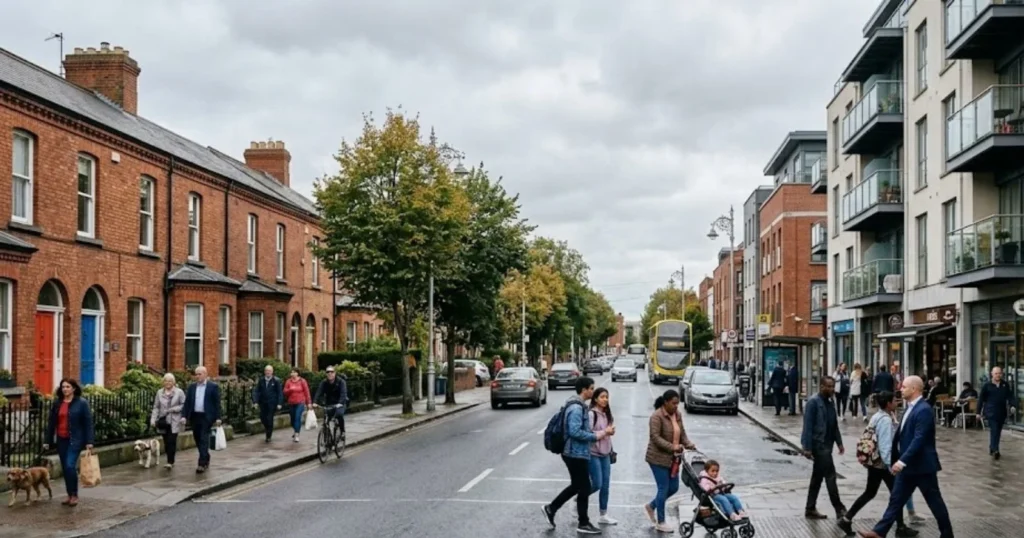
Ireland’s population passed 5.5 million in the year to April 2026, reaching 5,525,600, according to the Central Statistics Office (CSO). It is a milestone that looks unremarkable until set against Irish history: this is the first time Ireland’s population has been this high since before the Great Famine of the 1840s, a demographic recovery that took over 170 years to complete.
Ireland’s Population Has Passed 5.5 Million
The CSO’s Population and Migration Estimates, released August 24, 2026, put Ireland’s population at 5,525,600, up 66,900 people, or 1.2 percent, over the twelve months to April 2026. The growth rate has moderated from the previous year, when the population increased by 78,300, a slowdown of 14.6 percent in the pace of annual growth, though the underlying direction remains firmly upward.
Ireland’s population history makes the current figure especially striking. The island’s population peaked at 6.53 million in 1841, just before the Famine and subsequent mass emigration cut that number by more than half over the following century, to a low of 2.82 million by 1961. Ireland did not return to its 1851 post-Famine level of 5.11 million until 2021, when the CSO recorded the population crossing 5 million for the first time since that year. Just five years later, it has already added another half million.
Ireland’s Population Recovery, Selected Years
| Year | Population | Note |
|---|---|---|
| 1841 | 6.53 million | Pre-Famine peak |
| 1851 | 5.11 million | Post-Famine, after mass death and emigration |
| 1961 | 2.82 million | Historic low point |
| 2021 | 5.01 million | First time above 5 million since 1851 |
| 2026 | 5.53 million | Current CSO estimate |
What Is Driving Ireland’s Population Growth?
The CSO’s data separates Ireland’s growth into two components: natural increase (births minus deaths) and net migration. In the year to April 2026, natural increase contributed nearly 19,000 people, while net migration contributed 48,100, meaning migration accounted for roughly 72 percent of the year’s total population growth.
This is a reversal of Ireland’s twentieth-century demographic identity as a country defined by emigration; Ireland has now recorded net inward migration in most years since the mid-1990s, with the current period extending a now well-established pattern.
Immigration Has Become a Major Population Driver
An estimated 110,600 people immigrated to Ireland in the twelve months to April 2026, a 12 percent decrease from the prior year but still the fifth consecutive year in which immigration exceeded 100,000 people. Emigration also fell, for the second consecutive year, to an estimated 62,500 people, down 5 percent, or 3,100 people, from the year before. The resulting net migration figure of 48,100 was itself down 19 percent from 59,700 the year prior, indicating that while Ireland’s migration-driven growth continues, its pace is beginning to ease from the exceptional levels of recent years.
Of the 110,600 immigrants recorded, approximately 27 percent, or 30,200 people, were returning Irish citizens, 19 percent were other EU citizens, and the remainder came from outside the EU. On the outflow side, 35,400 Irish citizens left to live abroad during the same period, meaning more Irish citizens emigrated than returned, even as total immigration from all sources kept overall net migration strongly positive.
Components of Ireland’s Population Change, Year to April 2026
| Component | Figure |
|---|---|
| Immigrants | 110,600 |
| Emigrants | 62,500 |
| Net migration | +48,100 |
| Natural increase (births minus deaths) | ~19,000 |
| Total population change | +66,900 |
| Returning Irish citizens (of immigrants) | 30,200 |
| Irish citizens who emigrated | 35,400 |
Ireland’s Age Structure Is Changing
Ireland’s growth has coincided with a clear generational shift. The number of people aged 65 and over rose to 891,100 in April 2026, up from a population share of 14.4 percent in 2020 to 16.1 percent in 2026, an increase of 165,000 people in the older cohort over six years.
At the same time, the number of people aged 0 to 14 fell below 1 million, to 992,400, for the first time since 2014, a decline in population share from 20 percent in 2020 to 18 percent in 2026, a loss of 21,300 children even as the country’s total population grew substantially.
Births have been declining for over a decade and a half. The number of babies under age one living in Ireland in April 2026 stood at approximately 55,000, down 19,900, or 27 percent, from sixteen years earlier, a decline the Irish Times and CSO data both link to the broader trend of falling births that has been underway in Ireland since 2010.
Dublin and Regional Population Growth
Dublin’s share of Ireland’s population continues rising. The capital’s population reached 1,597,700 in April 2026, representing 28.9 percent of the state’s total population, up from 28.3 percent in 2020. That concentration reflects both Dublin’s role as Ireland’s primary economic and employment hub and the disproportionate draw the city exerts on incoming migrants, a pattern that has intensified pressure on the capital’s housing stock even as the country’s overall population growth has moderated somewhat from its recent peak.
Ireland’s Fertility Trend
The decline in births under age one, down 27 percent over sixteen years, sits alongside Ireland’s broader fertility trend, which has followed the general Western European pattern of falling below replacement level even as absolute births remain higher than in several comparably sized European countries because of Ireland’s relatively younger population base built up over recent decades of strong net migration.
The fall in the under-15 population below 1 million for the first time since 2014 is the clearest single indicator that Ireland’s declining birth trend is now visible in the country’s core youth population figures rather than only in annual birth statistics.
Population Growth and Housing Demand
Coverage of the CSO’s August 2026 release consistently linked the population data directly to Ireland’s ongoing housing and infrastructure pressures. Irish Building Magazine’s analysis of the release noted that even with growth moderating from the previous year’s pace, the addition of almost 67,000 people in a single year continues to place a strong emphasis on the delivery of new homes and the transport, utilities, healthcare, and education infrastructure required to support an expanding population, particularly concentrated in and around Dublin.
How Ireland Compares With Europe
Ireland’s population growth rate of 1.2 percent for the year to April 2026 remains among the highest recorded by any Western European country, driven overwhelmingly by net migration in a pattern that resembles Spain’s recent trajectory more closely than it resembles the population stagnation or decline seen in Germany, Italy, or several Eastern European states. Unlike Spain, however, Ireland’s natural increase remains positive, meaning Ireland is growing from both births exceeding deaths and migration simultaneously, even as both components show early signs of moderating from recent peaks.
Ireland’s Demographic Outlook
CSO statistician Conor J. Crowley’s commentary accompanying the August 2026 release highlighted the dual signal in the data: continued overall population growth alongside a population structure that is visibly aging, evidenced by the rising 65-and-over share and the under-15 population dipping below the million mark for the first time in over a decade. Whether Ireland’s growth rate stabilizes near its current pace or continues moderating will depend largely on migration trends that have already shown meaningful deceleration over the two most recent years of CSO data, even as the underlying trajectory remains positive.
Conclusion
Ireland’s 2026 population data marks the completion of a demographic recovery that began with catastrophe: a country that lost more than half its population to famine and emigration by 1961 has, within a single generation’s worth of sustained migration and natural increase, returned to population levels not recorded since before the 1840s.
That recovery now carries its own new tension, a population growing overall while the specific cohort of children under 15 shrinks, a combination that will shape Ireland’s schools, housing, and labor market in ways quite different from the population growth of a century and a half ago.
Key Findings
- Ireland’s population reached 5,525,600 in April 2026, the highest level since before the Great Famine of the 1840s, a recovery that took over 170 years.
- Net migration accounted for approximately 72 percent of Ireland’s population growth in the year to April 2026, with 110,600 immigrants against 62,500 emigrants.
- The under-15 population fell below 1 million for the first time since 2014, down 21,300 people since 2020, while the 65-and-over population grew by 165,000 over the same period.
- Dublin’s share of Ireland’s total population rose to 28.9 percent in 2026, up from 28.3 percent in 2020, concentrating housing and infrastructure demand in the capital.
- Both immigration (down 12%) and net migration (down 19%) eased in the most recent year of data, suggesting Ireland’s exceptional recent growth pace may be beginning to moderate.
Frequently Asked Questions
1. What is Ireland’s population in 2026?
Ireland’s population was estimated at 5,525,600 as of April 2026, according to the Central Statistics Office, an increase of 66,900 people over the preceding twelve months.
2. Why is Ireland’s population growing?
Ireland’s growth comes from a combination of positive net migration, which accounted for about 72 percent of the increase, and natural increase, births exceeding deaths, which contributed the remaining share.
3. Is Ireland’s population aging?
Yes. The 65-and-over population share rose from 14.4 percent in 2020 to 16.1 percent in 2026, while the under-15 population fell below 1 million for the first time since 2014.
4. How many people immigrated to Ireland in 2026?
An estimated 110,600 people immigrated to Ireland in the twelve months to April 2026, the fifth consecutive year immigration exceeded 100,000, though this was a 12 percent decrease from the prior year.
5. Are more Irish citizens leaving or returning?
More Irish citizens emigrated (35,400) than returned (30,200) in the year to April 2026, though total immigration from all sources, including non-Irish nationals, kept overall net migration strongly positive.
6. What share of Ireland’s population lives in Dublin?
Dublin’s population reached 1,597,700 in April 2026, representing 28.9 percent of the country’s total population, up from 28.3 percent in 2020.
7. Is Ireland’s population higher now than before the Great Famine?
Not yet for the Republic alone; the pre-Famine island-wide population peaked at 6.53 million in 1841. The Republic’s current population of 5.53 million, combined with Northern Ireland’s roughly 1.93 million, puts the island’s total population at approximately 7.5 million, above the pre-Famine figure.
8. Is Ireland’s birth rate falling?
Yes. The number of babies under age one in Ireland fell 27 percent over sixteen years, to approximately 55,000 in April 2026, continuing a decline in births that has been underway since 2010.
9. Is Ireland’s population growth slowing down?
The pace has eased somewhat: population growth of 1.2 percent in the year to April 2026 was down from 2020’s stronger rate, and both immigration and net migration figures declined compared with the prior twelve-month period.
10. How does Ireland’s growth compare with the rest of Europe?
Ireland’s 1.2 percent annual growth rate remains among the highest in Western Europe, driven predominantly by migration in a pattern closer to Spain’s recent trajectory than to the stagnation or decline seen in Germany, Italy, or several Eastern European countries.
Sources
- Central Statistics Office (CSO) Ireland, Population and Migration Estimates, April 2026, released August 24, 2026
- CSO, Statistical Yearbook of Ireland 2021, Demography chapter, historical population series
- The Irish Times, “Population rises to 5.5m but the number of births continues to decline,” August 24, 2026
- RTÉ, “Population of Ireland exceeds 5.5 million people,” August 24, 2026
- Irish Building Magazine, “Ireland’s population exceeds 5.5m as demand for housing and infrastructure continues,” August 2026
- The European Migration Network Ireland, “CSO data shows a 12% decrease in immigration to Ireland in the year to April 2026,” August 2026