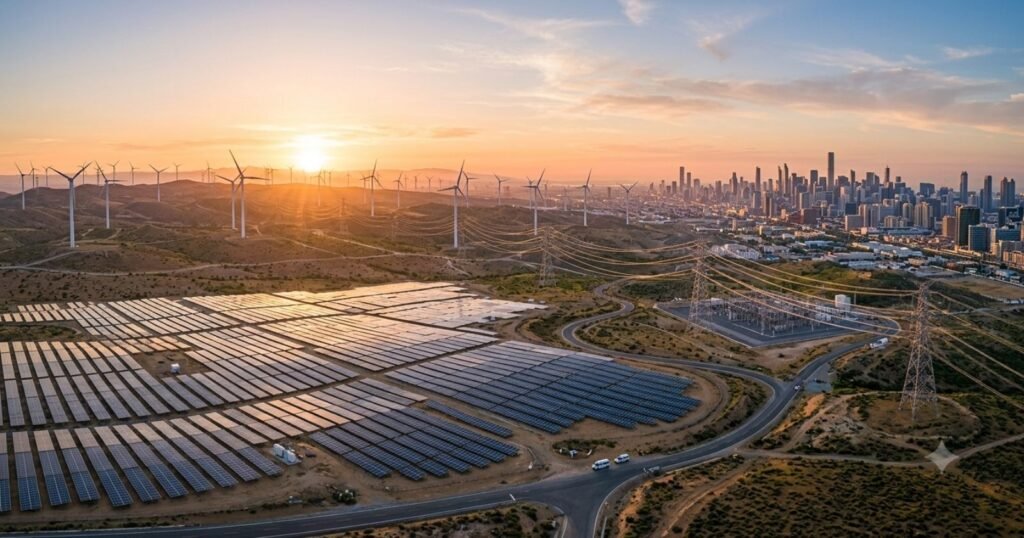
Global energy demand grew by 1.3% in 2025, according to the International Energy Agency’s 2026 Global Energy Review, with solar photovoltaic capacity alone contributing more than a quarter of the total growth in primary energy demand. The world’s population, meanwhile, is projected by the IEA’s own modeling to rise from about 8.1 billion in 2024 to 9.6 billion by 2050. Those two numbers rarely move in lockstep, because how much energy the world needs depends as much on income, electrification, and technology as on the number of people using it.
Does a Larger Population Automatically Mean Higher Energy Demand
Not proportionally. Per-capita energy consumption varies enormously across the world, from a fraction of a tonne of oil equivalent per person annually in the lowest-income countries to more than 6-7 tonnes per person in some of the wealthiest, energy-intensive economies. A country adding population without rising incomes sees a much smaller increase in total energy demand than a country adding the same number of people while also industrializing and electrifying rapidly.
How Population Growth Changes Energy Demand
More people directly translate into more households requiring lighting, cooking, and heating or cooling; more vehicles and transport infrastructure; more buildings requiring construction materials and ongoing energy use; and more industrial capacity to supply goods and services to a larger population. Each of these channels adds to electricity and overall energy demand, though the scale of the increase depends heavily on the pace of urbanization and economic development accompanying population growth.
Why Rising Incomes Can Matter More Than Population
Historically, energy demand growth has tracked economic growth (measured by GDP) more closely than population growth, because rising incomes drive increased vehicle ownership, appliance use, air conditioning adoption, and industrial activity, all of which are far more energy-intensive per person than subsistence-level consumption. This is why energy demand in rapidly industrializing but slower-population-growth countries, such as much of East and Southeast Asia over recent decades, has often outpaced energy demand growth in countries with faster population growth but slower income growth.
Electricity Demand Is Becoming Especially Important
Electricity demand is now growing faster than overall energy demand in many parts of the world, driven by electrification of transport (electric vehicles), the spread of air conditioning as incomes and average temperatures both rise, growing digital infrastructure including data centers, and the broader shift away from direct fossil fuel use toward electrified end uses. The IEA’s 2026 Global Energy Review highlights electricity as one of the fastest-growing components of global final energy consumption, a trend expected to continue as more countries electrify transport and heating.
Where Will Future Energy Demand Grow
The IEA’s demographic assumptions attribute around three-fifths of projected global population growth to 2050 to Africa, making the continent central to any long-term view of global energy demand growth, even though its current per-capita energy consumption remains among the lowest in the world.
India, along with other rapidly industrializing and urbanizing economies across South and Southeast Asia, is also expected to be a major source of future energy demand growth, combining still-rising population with rapidly rising incomes and electrification.
| Region | Population Growth Contribution to 2050 (approx.) | Energy Demand Outlook |
|---|---|---|
| Africa | ~60% of global population growth | Rising from a low per-capita base; access expansion is a major driver |
| India / South Asia | Large, still-growing population | Rapid growth in electricity and overall energy demand |
| Southeast Asia | Moderate population growth | Strong energy demand growth tied to industrialization |
| China | Population declining | Energy demand growth slowing, shifting toward electricity and cleaner sources |
| Europe / Japan | Population declining | Energy demand flat to declining, offset partly by efficiency losses |
| United States | Slow population growth | Moderate demand growth, increasingly driven by data centers and electrification |
Population growth contribution reflects IEA demographic assumptions used in its Global Energy and Climate Model; regional energy demand outlooks are drawn from IEA scenario analysis.
Why Energy Demand Is Falling or Stagnating in Some Aging Economies
In countries with declining or stagnant populations, particularly Japan and much of Europe, overall energy demand growth has slowed or reversed even as per-capita consumption in these economies remains among the highest in the world.
Efficiency improvements, industrial structural shifts away from heavy manufacturing, and demographic decline all combine to produce flat or falling total energy demand in these regions, even though this pattern is not observed everywhere aging is occurring, since some aging, wealthy economies continue to see rising electricity demand from data centers, cooling, and electrification even as their populations shrink.
Population, Energy Access, and Development
Access to modern energy remains deeply unequal. Hundreds of millions of people, concentrated overwhelmingly in Sub-Saharan Africa, still lack access to electricity, meaning a substantial share of future energy demand growth in the region will come not from rising per-capita consumption among existing users but from extending basic access to a growing population that currently has none at all.
This is an important distinction from energy demand growth in wealthier regions, which is driven primarily by rising consumption among populations that already have full access.
Can Efficiency Offset Population and Income Growth
Energy intensity, meaning the amount of energy required to produce a unit of economic output, has been declining globally for decades as economies become more efficient, partially offsetting the combined effects of population and income growth on total energy demand.
The IEA’s modeling consistently shows that efficiency improvements are one of the most important levers available for moderating energy demand growth, though they have not been sufficient to offset demand growth entirely in fast-growing, industrializing economies.
Population Growth and the Energy Transition
Rising energy demand does not necessarily mean rising fossil fuel demand at the same pace. The IEA’s 2026 Global Energy Review found that solar photovoltaic capacity alone accounted for more than a quarter of the growth in global primary energy demand in 2025, reflecting how a growing share of new demand, including demand driven by population and economic growth in fast-growing regions, is increasingly being met by renewable sources rather than fossil fuels, though fossil fuels still supply the majority of global energy.
What Could Global Energy Demand Look Like in 2050
Under the IEA’s central scenario assumptions, incorporating a global population rising to 9.6 billion by 2050, overall energy demand is expected to keep growing over the coming decades, though at a slower pace than historical rates, with an increasing share of that demand met through electricity and renewable sources rather than direct fossil fuel combustion.
The pace and shape of that growth will depend heavily on how quickly fast-population-growth regions, particularly Africa, are able to expand energy access and industrialize, and how quickly efficiency and clean energy deployment can offset demand growth elsewhere.
Key Findings
- Global energy demand grew 1.3% in 2025, with solar PV contributing more than a quarter of the increase in global primary energy demand, per the IEA’s 2026 Global Energy Review.
- The IEA’s population assumption projects global population rising from about 8.1 billion in 2024 to 9.6 billion by 2050, with Africa accounting for roughly three-fifths of that growth.
- Historically, energy demand has tracked GDP growth more closely than population growth, since rising incomes drive vehicle ownership, appliance use, and industrial activity far more than population size alone.
- Electricity demand is growing faster than overall energy demand in many regions, driven by electric vehicles, air conditioning, and data centers.
- Countries with declining populations, including Japan and much of Europe, are seeing flat or falling total energy demand despite maintaining some of the highest per-capita consumption levels in the world.
- Hundreds of millions of people, concentrated in Sub-Saharan Africa, still lack electricity access, meaning future demand growth there partly reflects extending access rather than rising consumption among existing users.
Frequently Asked Questions
1. Does population growth increase energy demand?
Yes, but not proportionally; rising incomes, electrification, and industrialization typically drive energy demand growth more strongly than population size alone.
2. Which regions will consume more energy in the future?
Africa, India, and other rapidly industrializing economies across South and Southeast Asia are expected to be the largest sources of future energy demand growth, combining population growth with rising incomes and electrification.
3. Why is electricity demand growing so fast?
Electrification of transport, growing air conditioning use, expanding digital infrastructure including data centers, and the broader shift from direct fossil fuel use toward electrified end uses are all driving faster growth in electricity demand than in overall energy demand.
4. Will Africa drive future energy demand?
Africa is expected to account for roughly three-fifths of global population growth through 2050 under IEA assumptions, making it central to long-term energy demand growth, even from a currently low per-capita consumption base.
5. Can renewable energy meet growing demand?
Renewable sources, particularly solar photovoltaic capacity, are already meeting a growing share of new energy demand; solar PV alone contributed more than a quarter of global primary energy demand growth in 2025, though fossil fuels still supply the majority of global energy.
6. How much did global energy demand grow in 2025?
Global energy demand grew by 1.3% in 2025, according to the IEA’s 2026 Global Energy Review.
7. Why is energy demand falling in some countries?
In aging, shrinking-population economies like Japan and much of Europe, declining population combined with efficiency gains and structural economic shifts away from heavy industry has led to flat or falling total energy demand.
8. What is energy intensity and why does it matter?
Energy intensity measures how much energy is required to produce a unit of economic output; declining energy intensity, driven by efficiency improvements, helps offset the combined effects of population and income growth on total energy demand.
9. How many people lack access to electricity today?
Hundreds of millions of people, concentrated overwhelmingly in Sub-Saharan Africa, still lack access to electricity, meaning a portion of future regional energy demand growth reflects extending basic access rather than rising consumption among existing users.
10. What population figure does the IEA use for its energy projections?
The IEA’s Global Energy and Climate Model uses a population assumption based on UN projections, rising from about 8.1 billion in 2024 to roughly 9.6 billion by 2050.
Sources
- International Energy Agency, Global Energy Review 2026 (iea.org)
- International Energy Agency, “Macro drivers” methodology note, Global Energy and Climate Model (iea.org)
- United Nations, World Population Prospects 2024 (population.un.org)