Key Findings
- Eritrea has never conducted an official government census, and population estimates range from 3.6 million to 6.7 million depending on the source and methodology used.
- Eritrea’s fertility rate of 3.58 children per woman sits well above the global average, yet its population growth rate is among the lowest in the world due to sustained large-scale emigration.
- The net migration rate stood at approximately negative 10.11 migrants per 1,000 population as of 2022, an exceptionally high outward migration rate by global standards.
- An estimated 1.5 to 2 million Eritrean-born individuals live abroad, roughly one-third of the country’s broader estimated population of 6 million.
- Over 683,000 Eritreans were formally registered as refugees or asylum seekers worldwide as of 2024 UNHCR data.
- Indefinite national service has been identified by diaspora researchers as a primary driver of emigration, particularly among younger Eritreans.
- The under-15 population share is projected to decline from around 38% currently to approximately 32.8% by 2043, reflecting both moderating fertility and continued emigration.
Eritrea has never conducted an official government census, which means every population figure cited for the country carries an unusual degree of uncertainty. Estimates for Eritrea’s resident population range from as low as 3.6 million to as high as 6.7 million, with most current UN and demographic tracking services converging on a figure near 3.6 to 3.9 million for the mid-2020s, while separate diaspora research puts Eritrea’s domestic population closer to 6 million. That range alone tells a story: Eritrea is one of the more difficult countries in the world to measure demographically, and migration is central to understanding why.
What is not in dispute is that Eritrea’s population growth rate is unusually low for a country with fertility well above the global average. Research from the Institute for Security Studies’ African Futures project explains the paradox directly: Eritrea’s fertility rate is much higher than the world average, yet its population growth rate is among the lowest globally, because sustained emigration outweighs the fertility-driven growth that would otherwise be expected. Understanding Eritrea’s demographic profile means understanding this migration story as much as its birth and death rates.
Eritrea’s Population at a Glance
| Metric | Figure | Year |
|---|---|---|
| Resident population (most-cited estimate) | 3.6 to 3.9 million | 2024-26 |
| Alternative population estimates | as low as 3.6 million to as high as 6.7 million | various |
| Population growth rate | approximately 1.0% to 1.9% | 2022-25 |
| Median age | 19.5 years | 2026 |
| Total fertility rate | 3.58 children per woman | 2022 |
| Population under 15 | 38.23% | 2022 |
| Net migration rate | approximately -10.1 migrants per 1,000 population | 2022 |
| Life expectancy at birth | 66.85 years | 2022 |
| Estimated Eritrean-born diaspora | 1.5 to 2 million | 2024-25 |
| Registered refugees and asylum seekers worldwide | over 683,000 | 2024 |
Sources: UN World Population Prospects 2024 Revision, Wikipedia Demographics of Eritrea, Institute for Security Studies African Futures, Eritrea Today diaspora profile, UNHCR.
The gap between Eritrea’s fertility rate, well above the world average, and its actual population growth rate, among the lowest recorded anywhere, is explained almost entirely by sustained, large-scale emigration, a pattern ISS Africa Futures attributes directly to conditions inside the country under the government of President Isaias Afwerki, in power since Eritrea’s 1993 independence.
Eritrea’s Age Structure and Fertility
Eritrea’s population pyramid follows a broad-based pattern typical of countries still early in the demographic transition: 38.23% of the population was under 15 as of 2022, with a median age of approximately 19.5 years as of 2026. Fertility, at 3.58 children per woman as of 2022, sits well above the global average of roughly 2.2, and life expectancy has improved substantially over recent decades, reaching 66.85 years by 2022, with PopulationPyramids.org projecting continued improvement toward 74.2 years by 2050 and 82 years by 2100 under UN medium-variant scenarios, among the larger projected life expectancy gains recorded for any country in the current dataset.
Despite this relatively high fertility and improving life expectancy, both of which would normally be expected to drive strong natural population growth, Eritrea’s overall growth rate has remained modest, reflecting the significant demographic drag created by sustained emigration described below.
Why Migration Is Central to Eritrea’s Demographic Story
ISS Africa Futures’ assessment is unusually direct about the cause of Eritrea’s suppressed population growth: many people have fled the country under the increasingly repressive regime of President Afwerki, a pattern that has continued for decades since independence and has been reinforced by Eritrea’s system of indefinite national service, which researchers focused on the Eritrean diaspora describe as a primary driver of departure, particularly among younger Eritreans seeking to avoid conscription that can extend for years or even decades beyond its officially stated term.
CIA World Factbook data compiled by Wikipedia puts Eritrea’s net migration rate at approximately negative 10.11 migrants per 1,000 population as of 2022, an exceptionally high outward migration rate by global standards, and one that directly explains why a country with fertility well above replacement level nonetheless records one of the world’s lowest overall population growth rates.
Eritrea’s Population Distribution
Eritrea’s population concentrates in the country’s highlands around Asmara, the capital, where cooler temperatures and more reliable agriculture have historically supported denser settlement, in contrast to the hotter, more arid lowlands stretching toward the Red Sea coast and the borders with Sudan and Djibouti. This highland concentration pattern is broadly similar to that of neighboring Ethiopia, with which Eritrea shares significant cultural, linguistic, and historical ties despite having fought a prolonged and costly border war between 1998 and 2000, and having maintained tense relations for years afterward before a 2018 peace agreement.
Migration, Diaspora and Population Measurement
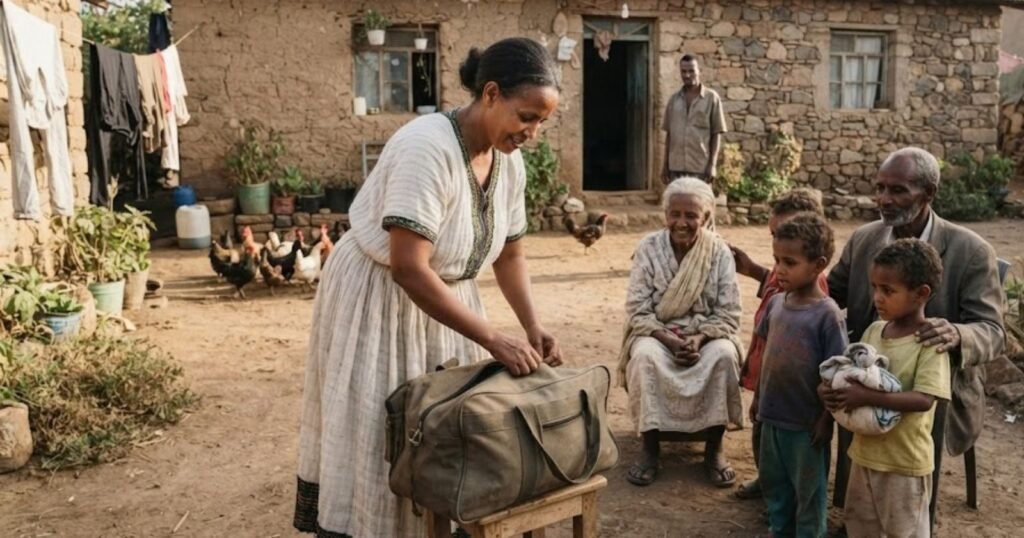
The scale of Eritrea’s diaspora is central to why the country’s population figures vary so widely between sources. Research focused specifically on Eritrean migration estimates the domestic, resident population at around 6 million as of 2025, with approximately one-third of all Eritrean-born individuals, roughly 2 million people, living abroad, encompassing refugees, asylum seekers, economic migrants, and their descendants.
Of this diaspora population, UNHCR data from 2024 recorded over 683,000 formally registered refugees and asylum seekers worldwide, a substantial figure for a country of Eritrea’s size, though it represents only a portion of the broader estimated diaspora, which researchers put at 1.5 to 2 million Eritrean-born individuals as of 2024 estimates.
This is an important methodological distinction for anyone using Eritrean population data: figures describing Eritrea’s resident, domestic population, typically in the 3.6 to 3.9 million range according to UN and Worldometer-style tracking, should not be conflated with broader estimates that attempt to capture the full global Eritrean-born population, including diaspora communities, which run notably higher. Neither figure is more correct than the other; they simply measure different things, and the absence of an official Eritrean government census means neither can be verified with full confidence.
Economic and Social Effects of Migration
The Eritrean diaspora plays a significant economic role for the country, with remittances described as a resource that fuels Eritrea’s domestic economy even as diaspora communities themselves navigate resettlement challenges across Africa, Europe, the Middle East, and North America.
Recent developments have added further pressure to this migration system: the war in Sudan, which displaced an estimated 13 million people by 2025, forced additional onward movement among Eritreans who had previously sought refuge there, while Ethiopia repatriated over 600 Eritreans between December 2024 and February 2025, and the suspension of certain U.S. resettlement programs has added further uncertainty to established diaspora migration pathways.
Analysts tracking the situation have also flagged potential Ethiopia-Eritrea tensions related to Red Sea access as a factor that could drive renewed outflows from Eritrea if regional relations deteriorate, underscoring how closely tied Eritrea’s demographic future remains to the broader political and security dynamics of the Horn of Africa.
Eritrea’s Future Population
ISS Africa Futures projects that Eritrea’s under-15 population share will continue declining on its current trajectory, falling to approximately 32.8% by 2043, down from current levels near 38%, reflecting a combination of gradually moderating fertility and the ongoing demographic drag of sustained emigration. This projection assumes Eritrea’s current political and migration patterns persist broadly unchanged; any significant shift, whether toward greater political openness that reduced emigration pressure or toward renewed regional conflict that increased it, would materially alter this trajectory.
What is more certain is that Eritrea’s demographic future will continue to be defined by the relationship between its domestic, resident population and its substantial global diaspora, a dynamic that sets Eritrea apart from most of its Horn of Africa neighbors and makes migration data, rather than fertility and mortality data alone, essential to understanding where Eritrea’s population is heading.
Frequently Asked Questions
1. What is Eritrea’s population?
Eritrea’s resident population is most commonly estimated at 3.6 to 3.9 million for the mid-2020s, though broader estimates that include a different methodology put the domestic population closer to 6 million, and the country has never conducted an official census to resolve this uncertainty.
2. Why is migration so important to Eritrea?
Eritrea combines a fertility rate well above the global average with one of the world’s lowest population growth rates, a gap explained almost entirely by sustained, large-scale emigration driven by political repression and indefinite national service requirements.
3. How large is the Eritrean diaspora?
Estimates put the Eritrean-born diaspora at 1.5 to 2 million people as of 2024-25, roughly one-third of the country’s broader estimated population of 6 million, including refugees, asylum seekers, economic migrants, and their descendants living across Africa, Europe, the Middle East, and North America.
4. Where does Eritrea’s population live?
Eritrea’s population concentrates most heavily in the highlands around Asmara, the capital, where cooler temperatures support denser settlement, in contrast to the hotter, more arid lowlands toward the Red Sea coast and the Sudan and Djibouti borders.
5. What is Eritrea’s fertility rate?
Eritrea’s total fertility rate was estimated at 3.58 children per woman as of 2022, well above the global average of roughly 2.2, though this has not translated into correspondingly high population growth due to sustained emigration.
6. Why do Eritreans emigrate?
Diaspora researchers identify Eritrea’s system of indefinite national service, which can extend for years or decades beyond its officially stated term, alongside the broader political conditions under President Isaias Afwerki’s government, as primary drivers of Eritrean emigration.
7. How many registered refugees does Eritrea have abroad?
UNHCR recorded over 683,000 Eritreans formally registered as refugees or asylum seekers worldwide as of 2024, though this figure represents only part of the broader estimated diaspora of 1.5 to 2 million Eritrean-born individuals.
8. How has the Sudan conflict affected Eritrean migration?
Sudan’s civil war, which displaced an estimated 13 million people by 2025, forced additional onward movement among Eritreans who had previously sought refuge there, adding a new layer of displacement pressure to an already significant migration system.
9. Is Eritrea’s population growing?
Eritrea’s population growth rate has remained modest, estimated between 1.0% and 1.9% in recent years, well below what its fertility rate alone would suggest, due to the demographic drag created by sustained, large-scale emigration.
10. Why is Eritrea’s population data so uncertain?
Eritrea has never conducted an official government census, and estimates range from 3.6 million to 6.7 million depending on the source and whether diaspora populations are included, making it one of the more demographically uncertain countries to measure in the world.
Sources
- United Nations, Department of Economic and Social Affairs, Population Division, World Population Prospects: The 2024 Revision
- Wikipedia, Demographics of Eritrea
- Institute for Security Studies, African Futures, Eritrea country guide
- Eritrea Today, Eritrean Diaspora: A Profile of Displacement and Resilience
- UNHCR, global refugee and asylum seeker data
- PopulationPyramids.org, Eritrea Population Pyramid 2025
- Macrotrends, Eritrea Population 1950-2026