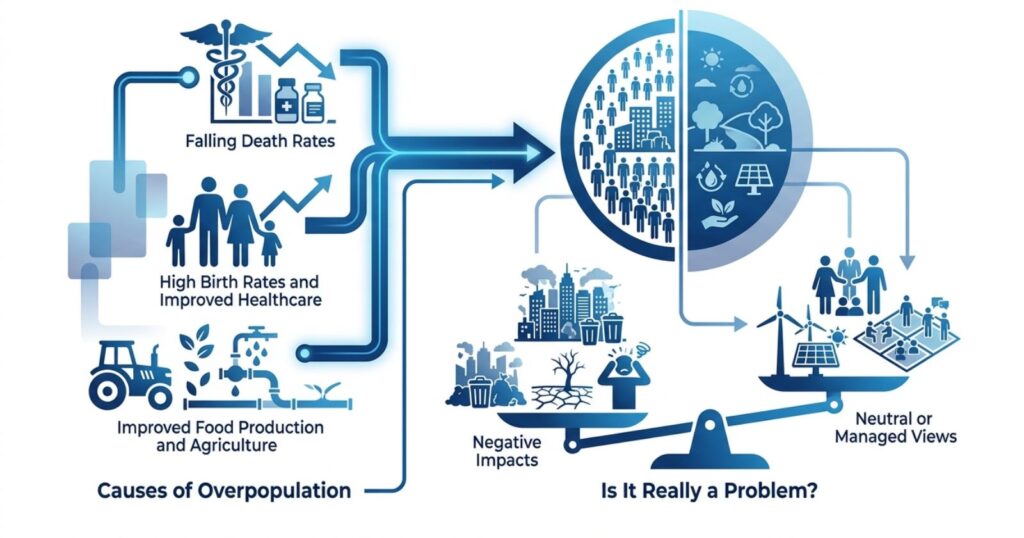
Few topics in global discourse generate more heat and less clarity than overpopulation. The word itself carries decades of ideological freight, from Paul Ehrlich’s 1968 prediction of mass starvation in The Population Bomb to today’s contradictory headlines about falling birth rates and collapsing labor forces.
Yet the underlying science of overpopulation, the real causes, consequences, and whether it constitutes an existential threat, remains poorly understood by most people who invoke the term. Understanding what actually drives population growth requires moving past political talking points and into the evidence.
At its core, overpopulation does not simply mean “too many people.” Demographers define it as a condition in which a region’s population exceeds the carrying capacity of its environment, the threshold beyond which available food, water, energy, and ecological systems can no longer sustain the existing population at a stable quality of life.
That definition matters enormously because it shifts the conversation from raw headcount to resource distribution, consumption patterns, and governance structures. A country with 10 million people and a collapsed agricultural sector may be more “overpopulated” in practical terms than a densely settled nation with robust infrastructure and equitable food systems.
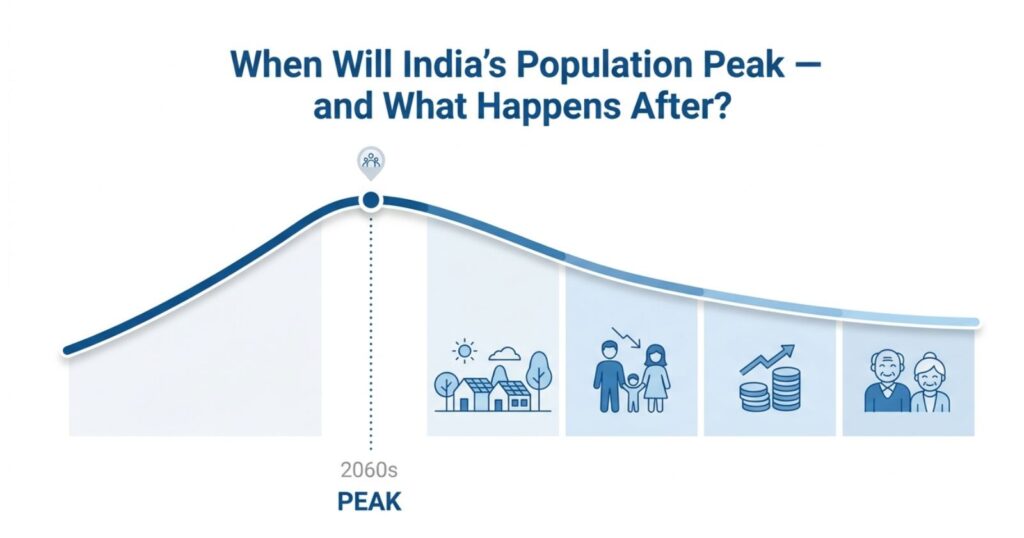
Global population crossed 8 billion in November 2022, according to the United Nations Population Fund. Projections suggest the figure will peak somewhere between 9.7 billion and 10.4 billion by 2080 before gradually declining. That trajectory is neither uniform nor inevitable; it is shaped by a complex web of demographic, economic, and public health forces that have been reshaping human societies since the Industrial Revolution. Examining those forces honestly is the only way to assess whether overpopulation is a genuine crisis, a regional challenge, or a problem that markets and policy have already begun to solve.
The Demographic Transition: Why Populations Surge Before They Stabilize
The most important framework for understanding population growth is the demographic transition model, a concept developed by American demographer Warren Thompson in the 1920s and refined over the following century. The model describes how societies move through four stages as they industrialize and develop: from high birth and death rates, through a period of declining mortality but continued high fertility, toward an eventual equilibrium of low birth and low death rates.
The explosive population growth of the 20th century was not caused by people suddenly having more children. It was caused by people dying far less frequently, particularly infants and children, who had historically accounted for enormous shares of mortality. The introduction of antibiotics, vaccines, oral rehydration therapy, and improved sanitation collapsed death rates in developing nations over a span of decades, not the centuries it had taken Europe and North America to achieve similar outcomes. Birth rates, shaped by culture, religion, education levels, and economic incentives, adjusted far more slowly.
This lag between falling mortality and falling fertility is the engine of overpopulation. In Sub-Saharan Africa, the total fertility rate, the average number of children per woman, remains above 4.5 in several countries, according to World Bank data. Meanwhile, under-five mortality rates, though still elevated relative to wealthier regions, have dropped dramatically since 1990. More children survive. Families, shaped by generations of expectation that many children would not reach adulthood, have not yet fully adjusted their fertility behavior to match the new reality. That adjustment takes generations, not years.
Primary Causes of Overpopulation Across Different Contexts
Understanding what actually causes overpopulation requires separating the phenomenon into its distinct drivers, which vary significantly by geography, income level, and institutional context.
Reduced Mortality Without Corresponding Fertility Decline
As described above, this is the dominant demographic mechanism. When death rates fall faster than birth rates, populations grow rapidly. The sharpest declines in child mortality, and therefore the sharpest population growth curves, have occurred in low-income countries with limited access to reproductive health education, family planning services, and economic opportunities for women. Niger, for example, has one of the world’s highest total fertility rates at approximately 6.8 children per woman, reflecting the persistence of high-fertility norms even as child survival rates have improved.
Limited Access to Reproductive Healthcare and Education
Access to family planning is not evenly distributed. The Guttmacher Institute has estimated that more than 218 million women in developing countries want to avoid pregnancy but are not using modern contraception, a gap driven by cost, geographic access, social stigma, and, in some cases, legal restriction. Where women cannot make autonomous decisions about reproduction, fertility rates remain high regardless of economic conditions. Conversely, countries that have invested heavily in female education and reproductive autonomy, Bangladesh, Iran, and Rwanda among them, have achieved dramatic fertility declines within a single generation without reaching the high-income thresholds that traditionally preceded such transitions.
Poverty, Child Labor, and Economic Incentives for Large Families
In agrarian economies without social safety nets, children are economically rational. They provide labor, assist with household subsistence, and serve as the primary old-age security system for parents who have no access to pension schemes or savings mechanisms. In contexts where children represent the primary hedge against destitution in old age, having many children is not irresponsible; it is a logical response to structural conditions. Development economists have repeatedly documented that fertility declines follow improvements in child survival rates, female economic participation, and access to financial services, not the other way around.
Urbanization and Its Counterintuitive Effects
Rapid urbanization tends to reduce fertility over time, as urban economies require education and specialized skills rather than agricultural labor, and urban housing costs make large families prohibitively expensive. However, rapid urbanization in countries where urban infrastructure lags far behind migration rates creates a transitional phase of overcrowding, sanitation stress, and resource strain that mirrors many symptoms of overpopulation even when national population growth rates are beginning to slow. Megacities in South and Southeast Asia, Lagos, Dhaka, and Kinshasa, are experiencing this transition precisely.
Is Overpopulation Actually the Problem It Was Once Thought to Be?
The framing of overpopulation as an imminent civilizational catastrophe, the lens through which it was understood in the 1960s and 1970s, has been substantially revised by subsequent evidence. Ehrlich’s predicted famines did not materialize on the scale he projected, largely because the Green Revolution, advances in crop genetics, irrigation, and fertilizer technology, dramatically increased agricultural yields across Asia and Latin America.
That revision, however, does not mean population pressures are trivial. It means they operate differently than originally theorized.
The Resource Consumption Asymmetry
Perhaps the most significant complication in the overpopulation debate is that population size and environmental impact are not the same variable. The carbon footprint of an average resident of the United States is approximately 14 to 16 metric tons of CO2 equivalent per year, compared to roughly 0.1 to 0.3 metric tons for a resident of Chad or Niger, some of the world’s most rapidly growing populations. Global ecological overshoot, the condition in which humanity uses more of the Earth’s biological resources than they regenerate in a given year, is driven overwhelmingly by consumption in high-income countries, not by birth rates in low-income ones.
This does not mean population growth in developing regions is environmentally neutral. As living standards rise, consumption rises with them. The trajectory of China’s carbon emissions over the past three decades illustrates precisely what happens when a large population rapidly industrializes. But it does mean that reducing birth rates in Sub-Saharan Africa would have a far smaller impact on global ecological sustainability than changing consumption and energy systems in North America, Europe, East Asia, and Australia.
The Emerging Demographic Reversal in Wealthier Nations
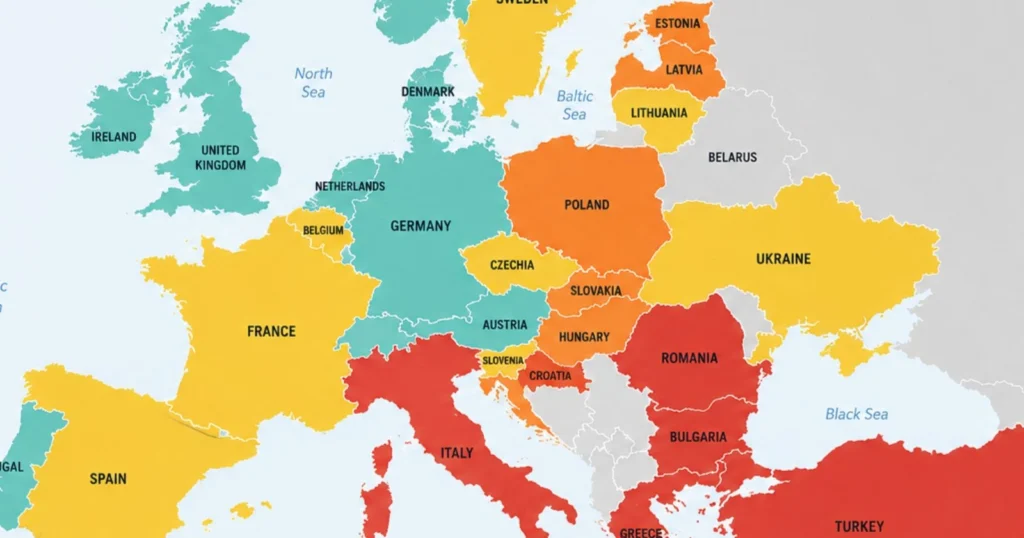
The conversation around overpopulation is further complicated by the fact that many of the world’s most developed economies are now confronting the opposite problem. Japan’s population has been declining since 2010. South Korea’s total fertility rate fell to a historic low of 0.72 in 2023, according to Statistics Korea, far below the 2.1 replacement rate needed for a stable population. Across the European Union, nearly every member state posts below-replacement fertility. These countries face shrinking workforces, rising dependency ratios, and structural fiscal pressures from aging populations, challenges that are, in some respects, just as destabilizing as rapid population growth.
The global population story is therefore not one of uniform crisis but of simultaneous divergence: some regions growing faster than their institutions can absorb, others aging faster than their economies can adapt.
Comparative Data: Population Growth, Fertility, and Resource Pressure by Region
| Region | Total Fertility Rate (2023 est.) | Population Growth Rate | Per Capita CO2 (metric tons) | Primary Demographic Challenge |
|---|---|---|---|---|
| Sub-Saharan Africa | 4.5 | 2.7% | 0.8 | High fertility, young population |
| South Asia | 2.1 | 0.9% | 1.9 | Slowing fertility, urban pressure |
| East Asia & Pacific | 1.6 | 0.4% | 6.5 | Below-replacement fertility, aging |
| Europe | 1.5 | 0.1% | 7.0 | Population decline, aging workforce |
| North America | 1.7 | 0.4% | 14.5 | Low fertility, high per-capita impact |
| Latin America & Caribbean | 1.9 | 0.8% | 3.1 | Transitional fertility decline |
Sources: UN World Population Prospects 2022, World Bank Development Indicators 2023, Global Carbon Project 2023
Food, Water, and the Real Limits of Carrying Capacity
The Earth’s carrying capacity is not a fixed number. It expands with technology and contracts with environmental degradation. Intensive agriculture has allowed food production to keep pace with population growth for decades, but at enormous cost to soil health, freshwater systems, and biodiversity. The United Nations Food and Agriculture Organization has estimated that approximately one-third of the world’s agricultural soils are moderately to severely degraded. Aquifer depletion, particularly in South Asia, the Middle East, and the American Great Plains, represents a more immediate constraint than is often acknowledged in mainstream population discussions.
Water scarcity already affects more than 2 billion people globally, according to the UN’s 2023 World Water Development Report, and that figure is projected to worsen regardless of population growth rates, simply because of how climate change is altering precipitation patterns and glacial melt. The intersection of population growth and climate-driven resource constraint, particularly in regions like the Sahel, Yemen, and South and Central Asia, represents one of the genuinely serious near-term consequences of unchecked demographic pressure.
What the Evidence Suggests About Solutions
The historical record on reducing fertility rates is reasonably consistent. The most effective interventions are not coercive, forced sterilization programs, as practiced in India during the 1970s Emergency period, or China’s one-child policy, both of which produced significant human rights violations and, in the longer term, contributed to demographic distortions that countries are still correcting. The interventions that have proven durable are structural and voluntary: expanding access to education, particularly for girls; increasing economic opportunities for women outside the home; improving child survival rates so families feel confident that fewer children will survive to adulthood; providing accessible and affordable family planning services; and building pension and social protection systems that reduce the economic need for large families.
These interventions are not population policies in the coercive sense. They are development policies with demographic consequences. The distinction is not semantic; it shapes how they are received, implemented, and sustained.
The Question of Whether Overpopulation Is “Really” a Problem
Framing overpopulation as either a catastrophic crisis or a demographic myth both miss the genuine complexity. The evidence points toward a more textured conclusion: rapid population growth in regions with fragile institutions, limited agricultural capacity, high climate vulnerability, and constrained access to education and healthcare does constitute a serious governance and humanitarian challenge. It amplifies poverty, strains public services, accelerates environmental degradation, and can destabilize political systems. These are not hypothetical harms.
At the same time, population growth globally is slowing, and the projections of indefinite exponential growth that animated mid-20th-century alarms have been revised substantially downward. The UN’s current median projection anticipates population peaking within this century and beginning a gradual decline. Whether the peak is manageable depends not on birth rates alone but on the pace of emissions reduction, agricultural innovation, water management, conflict prevention, and political will across dozens of countries simultaneously.
The honest answer to whether overpopulation is “really” a problem is: in specific places, for specific reasons, it is, and those places deserve targeted, evidence-based policy attention rather than generalized alarm or dismissal.
Key Conclusion and Analysis
The population question, stripped of ideology, is ultimately a question about institutions, equity, and governance. High fertility rates persist not because people in rapidly growing regions are unaware of contraception or indifferent to their circumstances, but because the structural conditions of their lives, economic insecurity, lack of female agency, absence of social safety nets, unreliable child survival, make large families rational.
Addressing those conditions, through investment in health systems, girls’ education, and economic development, has consistently produced demographic change as a byproduct. What makes population a genuinely difficult policy area is that the societies most affected by rapid growth are also those with the least institutional capacity and the fewest resources to implement the interventions that work.
Meanwhile, the societies with the greatest resource consumption and ecological footprint are the ones facing population decline, not growth. That structural irony defines the real challenge, and it cannot be solved by focusing on birth rates alone.
Frequently Asked Questions
What is the most accurate definition of overpopulation?
Overpopulation refers to a condition in which the number of people in a given area exceeds what the available natural resources, infrastructure, and ecological systems can sustainably support. It is not simply a measure of population density but of the relationship between human demand and environmental and institutional capacity.
What are the main causes of overpopulation in developing countries?
The primary drivers include declining child mortality without a corresponding drop in birth rates, limited access to family planning and reproductive healthcare, economic incentives for larger families in subsistence economies, and low levels of female education and autonomy. These factors are interconnected; addressing one typically influences the others.
Is the world actually overpopulated right now?
At the global level, the world has so far been able to produce enough food to feed its population, though distribution is deeply unequal. At the regional level, several areas, particularly parts of Sub-Saharan Africa and South Asia, are experiencing acute resource pressures driven partly by population growth. The answer depends on the geographic and resource lens applied.
How does education affect population growth?
Female education is one of the strongest predictors of lower fertility rates across cultures and income levels. As women gain access to secondary and higher education, they tend to delay marriage, have fewer children, and make more active use of family planning services. The effect is consistent and documented across dozens of countries.
Does overpopulation cause climate change?
Population size contributes to total emissions, but per-capita consumption is far more consequential than raw headcount. The world’s highest-emitting populations tend to be in low-fertility, high-income countries. Rapid population growth in low-income regions adds to global emissions, but is not the primary driver of the climate crisis; fossil fuel consumption by wealthier populations is.
What happened to the predictions of mass famine from overpopulation?
The mass famines predicted by demographers like Paul Ehrlich in the 1960s did not materialize as forecast, largely because agricultural productivity improved dramatically through the Green Revolution, advances in crop genetics, irrigation, and fertilizer use. However, environmental degradation, soil loss, and water scarcity now pose genuine long-term threats to food security that the Green Revolution did not permanently resolve.
Which countries are growing the fastest, and why?
Sub-Saharan African countries, including Niger, Mali, Chad, Angola, and the Democratic Republic of Congo, have the highest current population growth rates, driven by persistently high total fertility rates combined with declining child mortality. Limited access to reproductive healthcare, low female education levels, and economic structures that favor larger families all contribute.
What is the difference between overpopulation and overcrowding?
Overcrowding refers to physical density in a specific space, such as a city or housing unit, and is typically addressed through urban planning and infrastructure. Overpopulation is a broader ecological and economic concept that refers to the relationship between total population and available resources. A sparsely populated region can be “overpopulated” if its land and water cannot support even its small population.
Will the global population ever start to decline?
According to the United Nations’ median projections, the global population will peak somewhere between 9.7 and 10.4 billion around 2080 and then begin a gradual decline, driven by below-replacement fertility rates spreading across more regions as development levels rise. Some demographers believe the peak could come earlier and at a lower number if current fertility trends in East Asia and Latin America continue.
Are population policies effective at reducing overpopulation?
Voluntary policies that expand access to education, healthcare, and family planning have a strong track record of reducing fertility rates over time. Coercive policies, mandatory sterilization, and punitive restrictions on family size have generally produced human rights violations without achieving durable demographic results, and in some cases created secondary problems such as skewed sex ratios or accelerated population aging.