Flooding alone directly exposes an estimated 1.81 billion people, 23 percent of the world’s population, to the risk of a 1-in-100-year flood event, according to World Bank research updated in 2022. That is a sharp rise from an earlier 2020 estimate of 1.47 billion, or 19 percent, reflecting both better modeling and continued population growth in flood prone river deltas and coastal cities.
Exposure numbers like these are frequently misread as risk numbers, and the distinction matters enormously. A population can be heavily exposed to a hazard yet face comparatively low disaster risk, if strong infrastructure, early warning systems, and building codes are in place. The reverse is also true: a smaller exposed population with weak infrastructure can suffer a far more severe humanitarian and economic toll.
Exposure Is Not the Same as Disaster Risk
Disaster risk researchers separate the concept into distinct components. Hazard is the physical event itself, a flood, earthquake, or cyclone. Exposure is the number of people and assets located in the path of that hazard. Vulnerability is how susceptible those people and assets are to harm, shaped by income, housing quality, and health status. Capacity is the ability to prepare for, respond to, and recover from the event, shaped by governance, early warning systems, and financial resilience. Risk is the product of all four factors together, not exposure alone.
This is why a country like Japan, with extremely high earthquake and tsunami exposure, records far lower disaster mortality per capita than countries with comparable hazard exposure but weaker building codes and emergency infrastructure.
Which Natural Hazards Expose the Most People
| Hazard | Population Exposed (approx.) | Trend / Notes |
|---|---|---|
| Flooding (1-in-100-year event) | 1.81 billion (23% of world pop) | Up from 1.47 billion in 2020 estimate |
| Tropical cyclones | 1.6 billion | Up from 1.0 billion in 1975 |
| Earthquakes | Highest of any single hazard globally | JRC Global Human Settlement analysis |
| Drought (projected by 2050) | 75% of world population, some form | UNCCD 2024 projection |
Earthquake exposure is described by the European Commission’s Joint Research Centre as accounting for the highest number of people potentially exposed among all hazard types analyzed in its global risk atlas, reflecting how densely populated many seismically active regions, including much of East and South Asia, have become.
Flood Exposure by Region
South and East Asia together account for the overwhelming majority of global flood exposure. Of the 1.47 billion people identified in the 2020 World Bank baseline study, 1.36 billion were located in South and East Asia alone, with China (329 million) and India (225 million) together representing over a third of the entire global total. Low and middle income countries host 89 percent of the world’s flood exposed population, a pattern that compounds disaster risk because these same countries typically have less capacity to invest in flood defenses.
Flood Exposure and Poverty
| Poverty Threshold | Population Facing High Flood Risk |
|---|---|
| Under $1.90/day (extreme poverty, earlier line) | 132-170 million |
| Under $5.50/day | 587-780 million |
World Bank research found that of the population living in extreme poverty and facing high flood risk simultaneously, a large share, roughly 44 to 55 percent depending on the study year, is concentrated in Sub-Saharan Africa, illustrating how flood exposure and poverty compound rather than distribute evenly.
Tropical Cyclone Exposure Over Time
Population exposure to tropical cyclone winds has grown from an estimated 1 billion people in 1975 to 1.6 billion by 2015, according to the European Commission’s Joint Research Centre. This growth reflects both rising coastal population density and expanding cyclone tracks in some ocean basins, and it threatens 89 countries worldwide to some degree.
Where Multiple Hazards Overlap
Certain coastal and delta regions face compound hazard exposure rather than a single risk. Manila, Tokyo, Santiago, and Guatemala City are each exposed to four or five distinct hazard types when floods, earthquakes, cyclones, droughts, landslides, and volcanic activity are all considered together, according to UN DESA’s global cities disaster exposure assessment. Of the world’s 1,146 cities with populations above 500,000, 679, or close to three in five, were found to face high risk from at least one major hazard type, collectively representing about 1.4 billion people, roughly a third of the world’s total urban population.
Why Population Keeps Growing in Hazard Exposed Areas
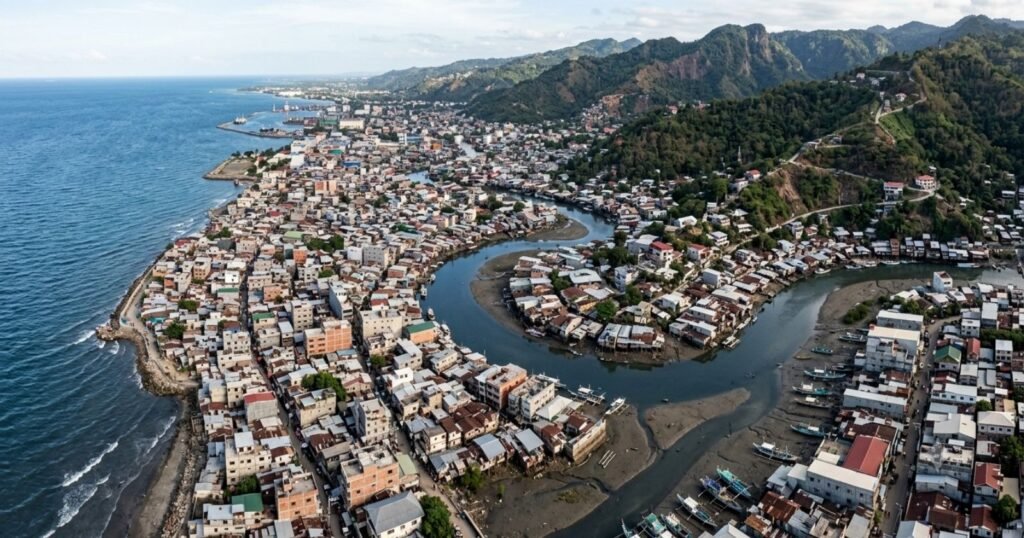
Coastal urbanization is the dominant driver. Fertile floodplains and coastal ports have historically offered superior economic opportunity, cheaper housing in some cases, and better transport access, all of which continue to attract migration even as climate risk rises. Many rapidly growing cities in flood exposed deltas, including several across South and Southeast Asia, are adding population faster than flood infrastructure investment can keep pace.
Why Exposure Does Not Affect Everyone Equally
Two populations facing an identical flood hazard can experience dramatically different outcomes. Income determines whether a household can afford flood resistant housing or relocate ahead of a warning. Infrastructure determines whether early warning systems reach a community in time. Age and disability affect the physical ability to evacuate quickly. Housing quality, particularly informal settlements built on floodplains or steep slopes because formal housing is unaffordable, concentrates vulnerability among lower income populations even when exposure itself is shared more broadly across a city or region.
Climate Change and Population Exposure
Established trends and future projections need to be kept separate here. It is already well documented that flood exposure has risen substantially between the 2020 and 2022 World Bank assessments, partly due to continued urban growth in flood zones.
Projections of further increases due to sea level rise and more intense rainfall carry more uncertainty, but multiple climate models agree on the general direction: coastal flood exposure and drought frequency are both expected to increase across most inhabited regions through mid-century, even as the exact magnitude remains a modeled projection rather than a settled fact.
Key Findings
- 1.81 billion people, 23 percent of the world’s population, are directly exposed to a 1-in-100-year flood event, up from 1.47 billion in a 2020 baseline study.
- China and India together account for over a third of global flood exposure, with 329 million and 225 to 390 million people exposed respectively across different study years.
- Tropical cyclone exposure grew from 1 billion people in 1975 to 1.6 billion by 2015.
- Earthquakes expose more people globally than any other single hazard type, according to the European Commission’s Joint Research Centre.
- Close to three in five cities worldwide with populations above 500,000 face high risk from at least one major natural hazard, together representing 1.4 billion people.
- 89 percent of the world’s flood exposed population lives in low and middle income countries, which typically have less capacity to invest in flood defenses.
Frequently Asked Questions
1. How many people are exposed to natural hazards worldwide?
There is no single combined figure across all hazard types, because exposure is measured separately per hazard and populations overlap across multiple risks. Flooding alone exposes 1.81 billion people, while cyclone winds expose 1.6 billion, and these figures are not simply additive since many people face more than one hazard.
2. What is the difference between exposure and disaster risk?
Exposure measures how many people are located in a hazard’s potential path. Risk combines that exposure with vulnerability, meaning how susceptible affected people are to harm, and capacity, meaning how well prepared a place is to respond and recover. A highly exposed but well prepared country can have lower disaster risk than a less exposed but poorly prepared one.
3. Which country has the highest flood exposure?
China and India have the largest absolute flood exposed populations, together accounting for over a third of the global total, though as a share of national population several smaller, low lying countries face proportionally greater exposure.
4. Which natural hazard affects the most people?
Earthquakes expose the largest number of people globally among individual hazard types, according to European Commission Joint Research Centre analysis, largely because so many densely populated regions sit on or near active fault lines.
5. Is flood exposure increasing?
Yes. World Bank estimates rose from 1.47 billion people exposed in a 2020 study to 1.81 billion in a 2022 update, reflecting both improved modeling and continued population growth in flood prone areas.
6. How does poverty relate to flood exposure?
Flood exposure and poverty compound rather than distribute evenly. Hundreds of millions of people living under $5.50 per day also face high flood risk, and a disproportionate share of those facing both extreme poverty and high flood risk live in Sub-Saharan Africa.
7. How many cities face high natural disaster risk?
Close to three in five cities worldwide with populations above 500,000, or 679 out of 1,146 assessed, face high risk from at least one major hazard type, together home to about 1.4 billion people.
8. Has cyclone exposure grown over time?
Yes, from an estimated 1 billion people exposed to tropical cyclone winds in 1975 to 1.6 billion by 2015.
9. Will climate change increase population exposure to hazards?
Most climate models project increasing coastal flood exposure and drought frequency through mid-century, though the exact magnitude remains uncertain and should be treated as a projection rather than a certainty.
10. Why do people keep moving into flood or hazard exposed areas?
Economic opportunity, established infrastructure, cheaper housing in some cases, and historical settlement patterns around ports and floodplains continue to draw population growth faster than hazard mitigation investment in many regions.
Sources
- World Bank, “People in Harm’s Way: Flood Exposure and Poverty in 189 Countries,” Policy Research Working Paper 9447, 2020, and 2022 update
- European Commission Joint Research Centre, Global Human Settlement disaster exposure atlas
- UN DESA, “The World’s Cities in 2018”
- UN Convention to Combat Desertification, drought projections, 2024