Roughly 38% of the world’s population lives within 100 kilometers of the coast, according to the UN’s World Ocean Assessment, a share that has held broadly steady even as the world’s total population has nearly doubled since the estimate first gained wide currency in the 1990s. That means well over 2.8 billion people today live close enough to the ocean that its weather, its economy, and increasingly its rising water level are a direct part of daily life. The precise figure, however, depends entirely on how “near the sea” is defined, and that definition matters more than most headline statistics let on.
The Short Answer
A large share of humanity, roughly a third to two-fifths depending on the distance threshold used, lives near a coastline, and that population is disproportionately concentrated in a relatively small number of large deltas, port cities, and island nations. The commonly cited 38% figure applies specifically to a 100-kilometer threshold; narrower definitions produce much smaller percentages, and broader ones produce larger ones, so any single number needs its boundary stated alongside it.
What Does Living Near the Sea Actually Mean
Coastal population studies use several different distance thresholds, and each produces a meaningfully different figure. Roughly 11% of the world’s population lives within 10 kilometers of a coastline, while around 38% lives within 100 kilometers, according to UN-cited estimates.
Some older, more expansive estimates using low-elevation coastal zone definitions and broader distance bands have put the figure closer to 50-60%, though these are generally considered less precise than the more commonly cited 100-kilometer benchmark used in UN reporting. Administrative coastal boundaries, which follow political jurisdictions rather than strict distance measurements, add a further layer of variation between studies.
| Distance From Coast | Approximate Share of World Population | Notes |
|---|---|---|
| Within 10 km | ~11% | Narrowest commonly used threshold |
| Within 50 km | ~25-30% (estimated) | Intermediate threshold, less consistently reported |
| Within 100 km | ~38% | Most widely cited UN benchmark |
| Within 200 km | Higher, less consistently defined | Captures much of Southeast and East Asia’s interior-coastal population |
Figures reflect UN World Ocean Assessment and related UN reporting; percentages for intermediate thresholds vary across studies and should be treated as approximate rather than precisely standardized.
Why Have Humans Concentrated Along Coastlines
Coastal settlement is one of the oldest and most consistent patterns in human geography, driven by access to fishing and maritime food sources, the role of ports in trade and transportation for most of recorded history, fertile agricultural land in river deltas that empty into the sea, tourism and recreation economies that depend directly on coastal access, and the practical advantages of coastal cities as hubs for both regional and international commerce. These forces have compounded over centuries, meaning coastal regions today carry not just historical settlement patterns but also the accumulated infrastructure, capital, and economic activity that reinforces continued concentration.
Where Are the World’s Largest Coastal Population Centers
East Asia, South Asia, and Southeast Asia together contain the largest coastal populations in the world, concentrated in and around major deltas and estuaries including the Yangtze River Delta in China, the Ganges-Brahmaputra Delta spanning Bangladesh and eastern India, and the string of major port megacities stretching from Tokyo and Shanghai through Jakarta and Manila.
Europe’s coastal population is smaller in absolute terms but represents a very high share of several individual countries’ populations, particularly in the Netherlands, where a large share of the population and economic activity sits at or below sea level in low-lying coastal and delta regions.
Coastal Population Density Is Higher Than Inland Density
The United Nations has reported that coastal population densities run substantially higher than inland densities globally, a pattern reflecting the concentration of ports, industry, and services along coastlines relative to more sparsely settled interior regions in many countries. This density gap compounds the exposure question, since a relatively small geographic strip of coastal land holds a disproportionately large share of national population and economic infrastructure in many countries.
Coastal Megacities and Urbanization
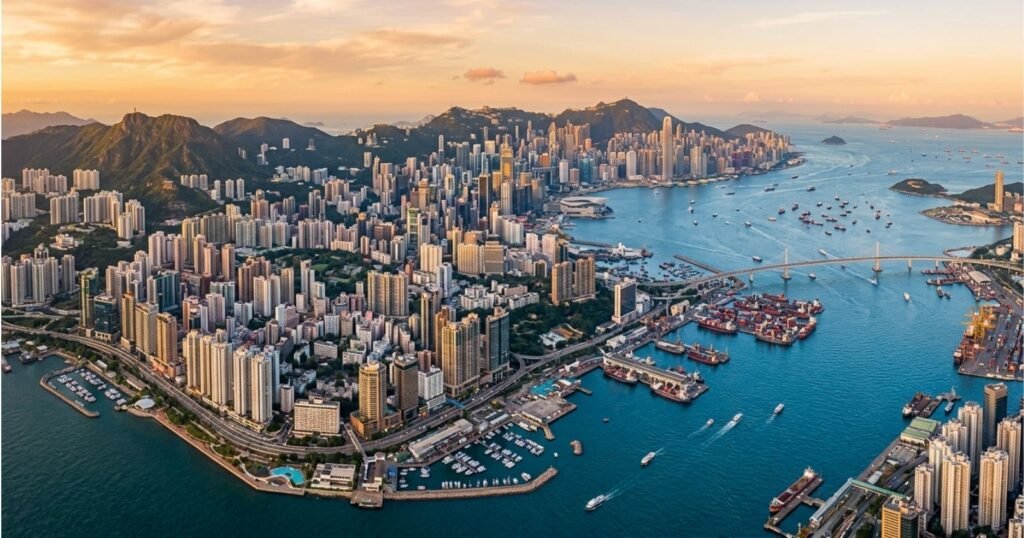
Thirteen of the world’s twenty megacities, defined as urban agglomerations with more than 10 million residents, are located on or near the coast, according to United Nations reporting, reflecting the historical and continuing economic advantages of coastal location for large urban centers. This concentration of megacities along coastlines means that a substantial share of the world’s largest concentrations of economic activity, infrastructure, and population sit within reach of coastal and delta flooding risks.
| Coastal Megacity Region | Example Cities | Notes |
|---|---|---|
| East Asia | Shanghai, Tokyo, Guangzhou | Major delta and estuary locations |
| South Asia | Mumbai, Dhaka, Kolkata | Delta and monsoon-exposed coastal cities |
| Southeast Asia | Jakarta, Manila | Rapidly urbanizing, high flood exposure |
| Americas | New York, Rio de Janeiro | Major port-origin metropolitan areas |
Illustrative list based on UN reporting that 13 of the world’s 20 megacities are coastal; specific city rosters shift slightly across sources and years as urban agglomerations grow.
Which Populations Are Most Exposed to Coastal Hazards
Sea level rise, storm surge from tropical cyclones, coastal flooding, and coastal erosion pose the most direct hazards to coastal populations, with exposure concentrated in low-lying delta regions across South and Southeast Asia, small island developing states in the Pacific and Caribbean, and low-elevation coastal cities more broadly.
Exposure, meaning how many people live in hazard-prone areas, is distinct from vulnerability, meaning how much harm those populations are likely to suffer given their infrastructure, wealth, and adaptive capacity, and conflating the two can produce misleading conclusions about which populations face the greatest actual risk.
Are Coastal Populations Still Growing
Coastal urbanization has continued even as awareness of climate-related coastal risk has grown, driven by the same economic forces, port access, trade, industry, and services, that have historically concentrated population along coastlines.
Migration toward coastal megacities in South and Southeast Asia in particular continues to outpace migration away from them despite documented flood and storm surge risk, reflecting the strength of economic opportunity as a pull factor relative to climate risk as a deterrent.
Why Coastal Population Does Not Automatically Mean Coastal Disaster Risk
A large coastal population does not translate uniformly into disaster risk, since outcomes depend heavily on infrastructure quality, elevation, wealth, governance, and the presence of early warning systems and adaptation measures.
The Netherlands, with a very high share of its population living below or near sea level, has invested in extensive flood defense infrastructure that substantially reduces its practical vulnerability compared with lower-income delta regions facing similar or lesser physical exposure, illustrating why exposure and vulnerability need to be assessed separately rather than treated as equivalent.
What Could Happen to Coastal Populations This Century
Sea level rise, projected to continue and potentially accelerate through the 21st century depending on the pace of global emissions reductions, will increase the frequency of nuisance flooding and the severity of storm surge events in many low-lying coastal areas, raising the practical cost and complexity of continued coastal habitation in the most exposed regions.
Continued coastal urbanization, adaptation investment including sea walls and managed drainage systems, and, in some of the most severely exposed low-lying areas, managed retreat from the highest-risk zones are all plausible parts of the picture, though large-scale, uniform relocation of coastal megacity populations is not considered a likely near-term outcome given the depth of existing economic and infrastructure investment concentrated there.
Key Findings
- Roughly 38% of the world’s population, or well over 2.8 billion people, lives within 100 kilometers of the coast, according to the UN World Ocean Assessment; about 11% lives within 10 kilometers.
- Thirteen of the world’s twenty megacities are located on or near the coast, concentrating a large share of global urban population and economic activity in flood-exposed locations.
- Coastal population densities are substantially higher than inland densities in most countries, reflecting the historical concentration of ports, trade, and industry along coastlines.
- East Asia, South Asia, and Southeast Asia together hold the largest absolute coastal populations, concentrated around major deltas including the Yangtze and the Ganges-Brahmaputra.
- Exposure to coastal hazards and vulnerability to their impacts are distinct measures; wealthy, well-defended coastal regions like the Netherlands can have high exposure but comparatively lower practical vulnerability than lower-income delta regions.
- Migration toward coastal megacities continues to outpace migration away from them in much of South and Southeast Asia, despite well-documented flood and storm surge risk.
Frequently Asked Questions
1. What percentage of the world’s population lives near the sea?
Roughly 38% of the world’s population lives within 100 kilometers of the coast, according to the UN World Ocean Assessment, though the figure varies depending on the distance threshold used.
2. How many people live within 100 km of the coast?
With a global population of roughly 8.2 billion, a 38% share equates to well over 2.8 billion people living within 100 kilometers of the coast.
3. Why do so many people live near coastlines?
Historical access to fishing, trade and ports, fertile river delta agricultural land, tourism, and the practical advantages of coastal cities as commercial hubs have all reinforced coastal settlement patterns over centuries.
4. Which countries have the largest coastal populations?
China, India, Bangladesh, Indonesia, and the Philippines hold some of the largest absolute coastal populations in the world, reflecting both their overall population size and the concentration of major deltas and port megacities along their coastlines.
5. Are coastal populations growing?
Yes; coastal urbanization has generally continued to outpace migration away from coastal areas, particularly in South and Southeast Asia, driven by continued economic opportunity in coastal cities.
6. How many people are exposed to sea level rise?
Precise global figures vary by study and by which sea level rise scenario and elevation threshold is used, but populations in low-lying delta regions across South and Southeast Asia and in small island developing states face the greatest documented exposure.
7. Are most megacities coastal?
Yes; the United Nations reports that 13 of the world’s 20 megacities are located on or near the coast.
8. Is coastal population density higher than inland density?
Yes; UN reporting indicates coastal population densities run substantially higher than inland densities in most countries, reflecting the historical concentration of ports, industry, and services along coastlines.
9. Does living near the coast automatically mean high disaster risk?
No; disaster risk depends on infrastructure, elevation, wealth, and governance as much as physical exposure, meaning wealthy, well-defended coastal regions can have lower practical vulnerability than lower-income areas facing similar exposure.
10. Will coastal populations relocate due to climate change?
Some managed retreat from the most severely exposed low-lying areas is plausible over the coming decades, but large-scale relocation of major coastal megacity populations is not considered a likely near-term outcome given the depth of existing economic and infrastructure investment in those areas.
Sources
- United Nations, World Ocean Assessment II, “The Ocean and Human Health” chapter (woa.un.org)
- United Nations, Sustainable Development Goal 14 reporting on coastal population and megacities (un.org)
- United Nations, World Population Prospects 2024 (population.un.org)