
Quick Answer
An aging population occurs when the median age of a country rises and the proportion of elderly residents grows relative to younger generations, typically due to falling birth rates and increasing life expectancy. This leads to a shrinking workforce, rising pension and healthcare costs, slower economic growth, and greater strain on public finances, as seen currently in Japan, Italy, and South Korea.
When a country has an aging population, it typically experiences a shrinking workforce, rising healthcare and pension costs, slower economic growth, and increasing demand for elder care services. This demographic shift, driven by falling birth rates and longer life expectancy, is already reshaping economies in Japan, much of Europe, and increasingly China. This article explains the causes, effects, and policy responses associated with aging populations worldwide.
Key Takeaways
- Aging populations result from falling birth rates combined with rising life expectancy.
- Japan has one of the world’s oldest populations, with median age near 49 years.
- Aging populations increase pressure on pension and healthcare systems significantly.
- Workforce shrinkage from aging can slow productivity and economic growth.
- Some countries use immigration and automation to offset aging related labor shortages.
- Rural areas often age faster than urban centers due to youth migration to cities.
- By 2050, one in six people globally is projected to be aged 65 or older.
Understanding Aging Populations
An aging population refers to a demographic structure where the share of older residents grows relative to younger age groups, typically measured by rising median age and increasing old age dependency ratios. A common misconception is that aging only affects wealthy countries. In reality, many middle income nations are aging rapidly as fertility falls faster than in earlier generations of developed countries.
Global Overview
Population aging is accelerating worldwide, driven by declining fertility and improved healthcare extending life expectancy. Japan and much of Europe lead this trend, but East Asia, including China and South Korea, is aging faster than any previous generation of countries in history.
Latest Statistics
| Country | Median Age (2024) | Population Aged 65 Plus |
|---|---|---|
| Japan | 49 years | 29 percent |
| Italy | 48 years | 24 percent |
| Germany | 46 years | 22 percent |
| South Korea | 45 years | 19 percent |
| China | 39 years | 14 percent |
| World average | 31 years | 10 percent |
Source: UN World Population Prospects 2024 Revision.
Main Causes of Population Aging
Population aging results from sustained low fertility rates combined with increasing life expectancy due to improved healthcare, nutrition, and medical technology. As fewer children are born relative to the existing population, the average age of the population naturally rises over time.
Positive Effects
Aging populations often bring accumulated economic experience, higher savings rates, and increased demand for healthcare and elder services, which can drive growth in specific economic sectors.
Negative Effects
Aging populations typically face shrinking workforces, rising healthcare and pension costs, slower economic growth, and increased fiscal pressure on younger taxpayers supporting a growing elderly population.
Economic Impact
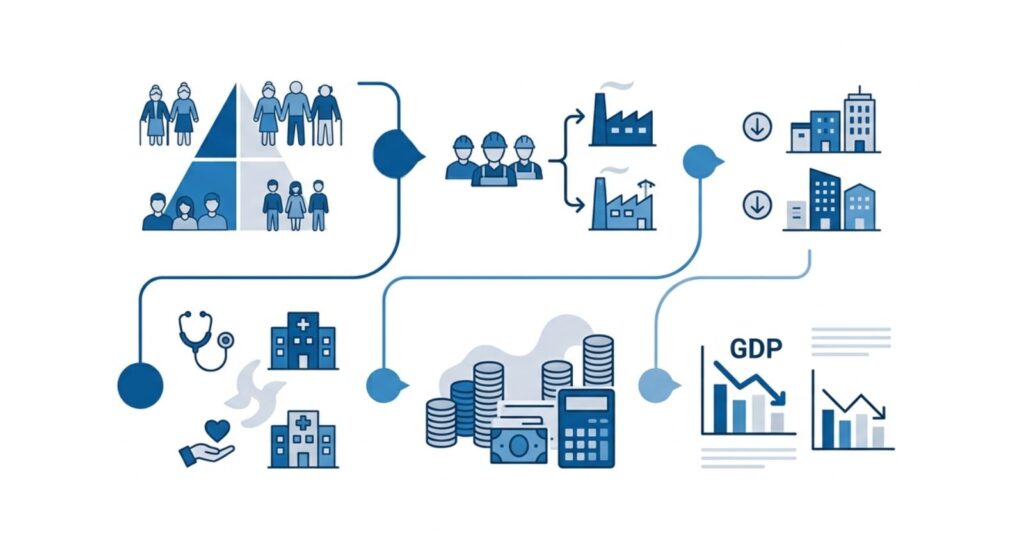
A shrinking working age population reduces tax revenue and labor supply, while rising numbers of retirees increase pension and healthcare spending. This combination can slow GDP growth and strain government budgets unless offset by productivity gains, immigration, or extended working ages.
Social Impact
Aging societies see increased demand for elder care services, changes in family caregiving structures, and shifts in housing and community planning to accommodate older residents. Younger generations often bear greater caregiving and financial responsibility for aging relatives.
Environmental Impact
Aging populations can indirectly reduce environmental pressure through slower population growth and consumption changes, though healthcare and elder care infrastructure demands can offset some of these effects.
Regional Comparison
| Region | Median Age (2024) | Aging Trend |
|---|---|---|
| Europe | 43 years | Rapidly aging |
| East Asia | 40 years | Rapidly aging |
| North America | 39 years | Moderately aging |
| South America | 32 years | Gradually aging |
| Asia overall | 32 years | Gradually aging |
| Africa | 19 years | Youngest region |
Country Comparison
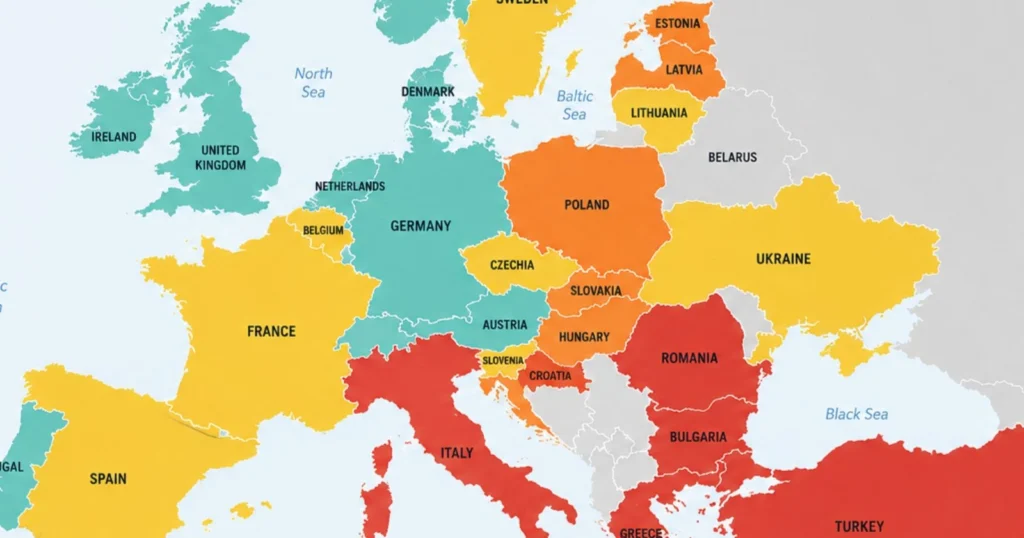
Japan represents the world’s most advanced case of population aging, with decades of experience managing workforce shrinkage through automation and selective immigration policy. Italy and Germany face similar challenges within the European Union, partially offset by immigration in Germany’s case. South Korea is aging faster than almost any nation in history due to its extremely low fertility rate. China’s aging population is accelerating rapidly following decades of the one child policy, creating significant future economic pressure.
Expert Opinions
The United Nations projects that population aging will become one of the defining global demographic trends of the twenty first century. The World Health Organization emphasizes the need for healthcare systems to adapt to rising chronic disease burdens associated with older populations. The OECD recommends pension reform, extended working ages, and immigration policy as key tools for managing aging related economic pressure.
Common Myths
| Myth | Fact |
|---|---|
| Only wealthy countries experience population aging | Many middle income countries are aging rapidly too |
| Aging populations always mean economic decline | Some countries maintain growth through productivity and policy adaptation |
| Aging happens suddenly | It is a gradual, multi decade demographic shift |
| Immigration cannot help aging societies | Immigration is a key tool many countries use to offset aging effects |
| All elderly populations require the same level of care | Care needs vary significantly based on health and support systems |
| Aging only affects pension systems | It also affects healthcare, housing, and labor markets significantly |
| Younger countries will never face aging | Fertility decline is spreading even to historically young populations |
| Automation fully solves workforce shortages from aging | Automation helps but cannot fully replace all lost labor capacity |
| Aging populations have no economic advantages | Aging populations can drive growth in healthcare and related sectors |
| Once a population starts aging, it cannot slow down | Some countries have modestly slowed aging trends through policy |
Future Outlook
By 2030, several major economies, including Japan, Italy, and South Korea, will see further increases in elderly population share. By 2050, the UN projects one in six people globally will be aged 65 or older, up sharply from one in eleven in 2024. By 2100, aging is expected to become a near-universal global phenomenon as fertility rates decline across virtually all regions, including currently young populations in Africa.
Conclusion
An aging population brings significant economic and social challenges, including workforce shrinkage, rising healthcare and pension costs, and slower economic growth, as clearly demonstrated in countries like Japan, Italy, and South Korea.
While aging also reflects positive gains in life expectancy and healthcare, managing its effects requires proactive policy, including immigration, pension reform, and productivity investment. The practical takeaway is that countries facing aging populations should act early to build sustainable economic and social systems for an older demographic future.
Frequently Asked Questions
What happens when a country has an aging population?
The country typically experiences a shrinking workforce, rising healthcare and pension costs, slower economic growth, and increased demand for elder care services.
Which country has the oldest population in the world?
Japan currently has one of the world’s oldest populations, with a median age near 49 years and about 29 percent of residents aged 65 or older.
What causes population aging?
Population aging results from falling birth rates combined with rising life expectancy due to improved healthcare and living standards.
How does aging affect the economy?
Aging reduces the working age population and tax base while increasing pension and healthcare spending, which can slow economic growth.
Can immigration help aging countries?
Yes, immigration can help offset workforce shortages and slow the pace of population aging in many countries.
Is population aging a global trend?
Yes, population aging is accelerating worldwide, with the UN projecting one in six people globally will be aged 65 or older by 2050.
How does aging affect healthcare systems?
Aging increases demand for chronic disease management, long term care, and specialized healthcare services, raising overall healthcare spending.
Do all countries age at the same pace?
No, aging speed varies significantly, with countries like South Korea aging much faster than historical patterns in Europe and North America.
Can pension systems handle aging populations?
Many pension systems face funding challenges from aging populations, prompting reforms such as raising retirement ages and adjusting contribution rates.
Will Africa eventually face population aging too?
Yes, though later than other regions, fertility decline is expected to eventually lead to population aging in Africa as well.
Sources: United Nations World Population Prospects 2024, World Health Organization, OECD, World Bank, Eurostat.