Scientific estimates of Earth’s sustainable population capacity typically range from 8 to 10 billion people under moderate resource use, though figures span from 2 billion under high-consumption Western lifestyles to over 12 billion under highly efficient, low consumption models. Current global population of approximately 8.2 billion sits near the lower to middle end of most sustainable range estimates.
Most scientific estimates suggest Earth can sustainably support between 8 and 10 billion people, though some studies place the range as low as 2 billion or as high as 12 billion depending on consumption levels and technology. This wide range makes sustainable population capacity one of the most debated questions in demography and environmental science.
Key Takeaways
- Most mainstream estimates place Earth’s sustainable capacity between 8 and 10 billion people.
- Estimates vary widely based on assumed diet, energy use, and consumption levels.
- Current population of 8.2 billion remains within most sustainable capacity ranges.
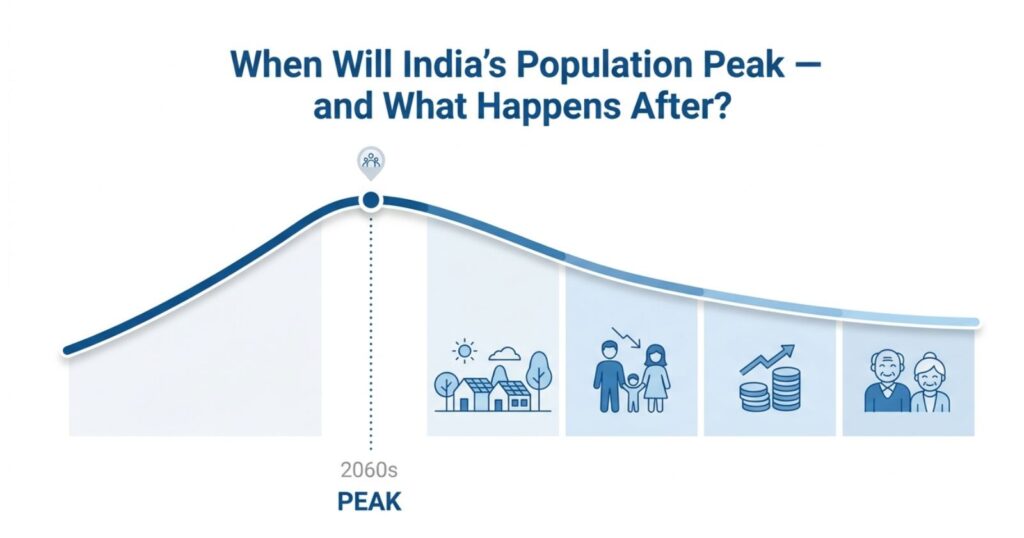
- The UN projects a peak near 10.3 billion around the 2080s, close to upper estimate ranges.
- Efficient resource use and renewable energy significantly expand sustainable capacity estimates.
- Food production today already exceeds nutritional needs for the entire global population.
- Freshwater and arable land remain key limiting factors in most capacity models.
Understanding Sustainable Capacity
Sustainable population capacity, often called carrying capacity, refers to the maximum population Earth can support indefinitely without depleting resources or causing irreversible environmental damage. A common misconception is that this figure is fixed. In reality, it shifts significantly based on technology, consumption patterns, and resource management practices.
Global Overview
Estimates of Earth’s carrying capacity have been debated since the 18th century, evolving from simple food based calculations to complex models incorporating energy, water, land use, and emissions. Modern estimates generally fall within a much narrower range than earlier, more alarmist projections from the mid twentieth century.
Latest Statistics
| Estimate Basis | Estimated Sustainable Population |
|---|---|
| High consumption lifestyle | 2 billion |
| Moderate global consumption | 8 to 10 billion |
| Efficient, low waste systems | 10 to 12 billion |
| Current global population (2024) | 8.2 billion |
| UN projected peak population | 10.3 billion around 2080s |
Source: Academic sustainability research and UN World Population Prospects 2024.
Main Causes Behind Capacity Limits
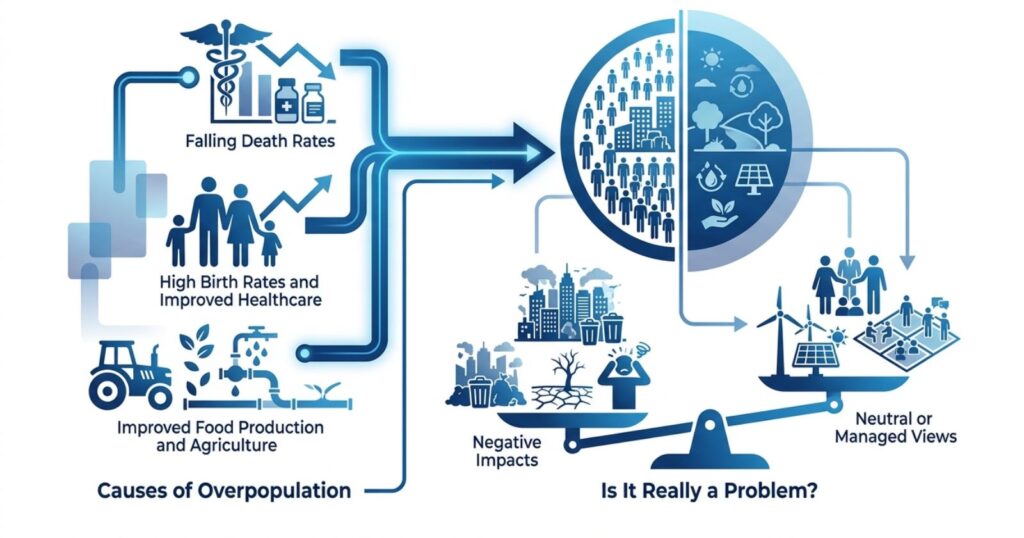
Key limiting factors include freshwater availability, arable land for food production, energy resources, and the capacity of ecosystems to absorb waste and emissions. Technology and efficiency improvements have historically expanded these limits significantly beyond earlier predictions.
Positive Effects of Understanding Capacity Limits
Understanding sustainable capacity helps guide agricultural planning, resource management, and climate policy, encouraging efficient use rather than assuming unlimited resource availability.
Negative Effects of Exceeding Estimated Capacity
Exceeding sustainable capacity in specific resources, such as freshwater or arable land, can lead to localized shortages, environmental degradation, and social or economic instability, even if global averages remain within broader estimates.
Economic Impact
Sustainable capacity considerations influence agricultural investment, energy policy, and resource pricing. Countries operating near local resource limits often face higher costs for food, water, and energy imports.
Social Impact
Resource capacity affects food security, water access, and living standards, particularly in regions already experiencing strain on local resources due to population density or climate factors.
Environmental Impact
Exceeding sustainable capacity in specific areas can lead to deforestation, freshwater depletion, soil degradation, and biodiversity loss, underscoring the importance of efficient resource management alongside population considerations.
Regional Comparison
| Region | Population Density Pressure | Resource Strain Level |
|---|---|---|
| Asia | High | Moderate to high |
| Africa | Moderate | Rising |
| Europe | Moderate | Low |
| North America | Low | Low |
| South America | Low | Moderate |
| Oceania | Low | Low |
Country Comparison
India faces significant freshwater and land use pressure due to high population density combined with agricultural demand. The United States, despite lower density, has a much higher per capita resource footprint. Nigeria’s rapid population growth is increasingly straining local water and agricultural resources. Germany illustrates how high income countries can maintain sustainability through efficiency despite dense population.
Expert Opinions
The Food and Agriculture Organization maintains that current global food production already exceeds nutritional needs for existing population, pointing to distribution as the primary challenge rather than absolute scarcity. The World Bank emphasizes water and energy efficiency as critical factors in expanding sustainable capacity. Academic ecological economists generally agree that consumption patterns, not population size alone, determine whether growth remains sustainable.
Common Myths
| Myth | Fact |
|---|---|
| Earth has already exceeded its sustainable capacity | Most estimates place current population within sustainable ranges |
| Sustainable capacity is a fixed number | It shifts significantly based on technology and consumption |
| Food scarcity proves overpopulation | Global food production already exceeds nutritional needs |
| Freshwater scarcity affects all regions equally | Water stress varies significantly by region and management |
| Higher population always means lower sustainability | Consumption patterns matter as much as population size |
| Technology cannot expand sustainable capacity | Historical evidence shows technology significantly expands capacity |
| All scientists agree on one capacity figure | Estimates vary widely based on differing assumptions |
| Sustainable capacity ignores economic factors | Economic and resource management factors are central to estimates |
| Population capacity limits are the main climate change driver | Consumption and emissions per capita are more significant drivers |
| Reducing population is the only path to sustainability | Improving resource efficiency is equally, if not more, important |
Future Outlook
By 2030, global population is expected to reach approximately 8.5 billion, remaining within most sustainable capacity estimates. By 2050, projections point to 9.7 billion, approaching the upper range of some moderate consumption estimates. By 2100, population could range between 9 and 11 billion, testing the boundaries of sustainable capacity unless resource efficiency and technology continue improving significantly.
Conclusion
Earth’s sustainable population capacity is not a fixed ceiling but a range shaped heavily by consumption patterns, technology, and resource management. Most mainstream estimates place sustainable capacity between 8 and 10 billion, close to or above current global population levels. The practical takeaway is that improving resource efficiency and reducing waste matters as much as, if not more than, limiting population growth itself.
Frequently Asked Questions
How many people can Earth sustainably support?
Most estimates place sustainable capacity between 8 and 10 billion people, though figures range from 2 billion to over 12 billion depending on consumption assumptions.
Is current global population sustainable?
Current population of approximately 8.2 billion remains within most sustainable capacity estimates, particularly under moderate to efficient consumption models.
What factors limit Earth’s carrying capacity?
Freshwater availability, arable land, energy resources, and ecosystem waste absorption capacity are the primary limiting factors.
Does diet affect sustainable population capacity?
Yes, plant-based diets generally support higher sustainable population estimates due to lower land and water requirements compared to meat heavy diets.
Can technology increase Earth’s carrying capacity?
Yes, historical agricultural and energy technology advances have significantly expanded sustainable capacity beyond earlier predictions.
Is food scarcity caused by overpopulation?
No, current global food production exceeds nutritional needs, with scarcity primarily driven by distribution and waste rather than absolute shortage.
Will the world exceed sustainable capacity by 2100?
Projections suggest population could reach 9 to 11 billion by 2100, potentially testing upper capacity estimates unless efficiency improves.
How does water scarcity relate to carrying capacity?
Freshwater availability is a key limiting factor, with some regions already experiencing significant water stress independent of global population totals.
Do wealthy countries have lower sustainable capacity per person?
Yes, higher per capita consumption in wealthy countries generally reduces the sustainable population capacity associated with their lifestyle.
Can Earth support 10 billion people sustainably?
Many studies suggest Earth can support 10 billion people or more under efficient resource use, reduced waste, and sustainable agricultural practices.
Sources: United Nations World Population Prospects 2024, Food and Agriculture Organization, World Bank, OECD, peer reviewed ecological economics research.