Quick Answer
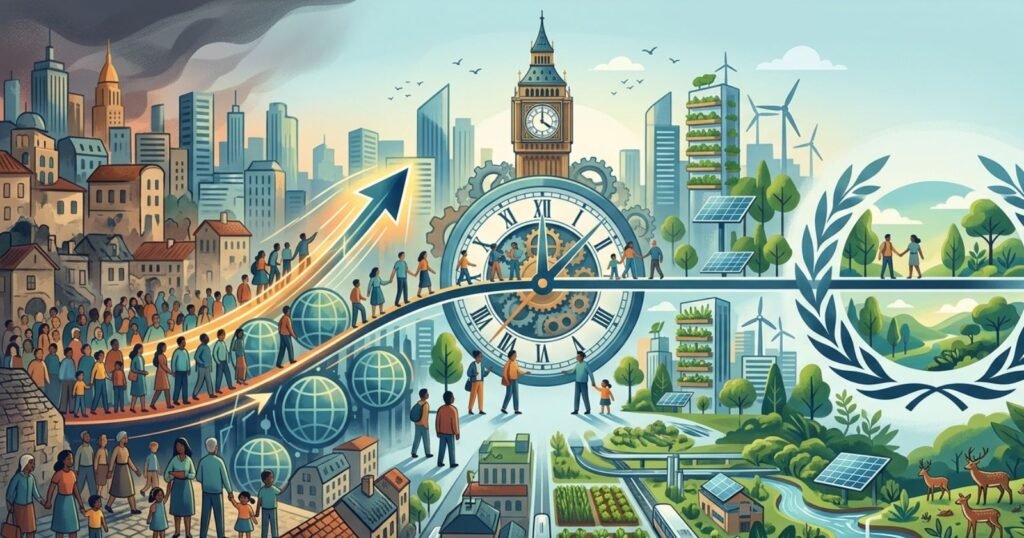
According to the United Nations World Population Prospects 2024 Revision, global population is projected to peak at approximately 10.3 billion people around the 2080s before beginning a slow decline. Growth is expected to continue mainly due to population momentum and higher fertility in parts of Africa, even as most other regions approach or fall below replacement level fertility.
The world’s population is projected to stop growing around the 2080s, peaking near 10.3 billion people before beginning a gradual decline, according to United Nations projections. This slowdown reflects decades of falling fertility rates worldwide.
Key Takeaways
- The UN projects global population will peak near 10.3 billion around the 2080s.
- Global population growth rate has already fallen below 1 percent annually.
- Africa will account for most remaining global population growth through 2100.
- Population momentum, not high fertility alone, drives continued growth in many regions.
- Some UN scenarios suggest the peak could occur earlier if fertility falls faster than expected.
- More than 60 countries already have below replacement fertility rates.
- After the peak, gradual global population decline is expected to continue into the next century.
Understanding Population Growth Deceleration
Population growth deceleration occurs when the rate of increase slows even as total population continues to rise, eventually leading to a plateau and decline. A common misconception is that population growth will stop abruptly. In reality, it is a gradual process driven by falling fertility and population momentum from previous generations.
Global Overview
Global population growth peaked at over 2 percent annually in the late 1960s and has steadily declined since. Today’s growth rate stands under 1 percent, with most future growth concentrated in a small number of high fertility countries, primarily in Sub Saharan Africa.
Latest Statistics
| Year | World Population | Annual Growth Rate |
|---|---|---|
| 1970 | 3.7 billion | 2.1 percent |
| 2000 | 6.1 billion | 1.3 percent |
| 2024 | 8.2 billion | 0.9 percent |
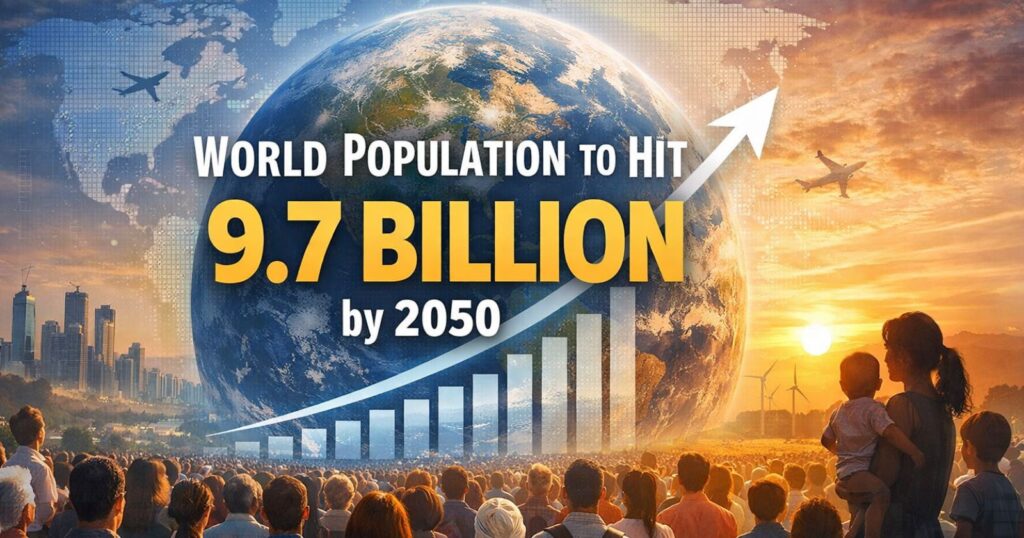
| 2050 (projected) | 9.7 billion | 0.5 percent |
| 2084 (projected peak) | 10.3 billion | near 0 percent |
Source: UN World Population Prospects 2024 Revision.
Main Causes of Slowing Growth
Global growth is slowing due to falling fertility rates nearly everywhere, driven by rising education levels, urbanization, expanded access to family planning, and delayed childbearing. Improved child survival has also reduced the incentive for larger families in many regions.
Positive Effects of Slowing Growth
Slower growth eases pressure on infrastructure, natural resources, and public services, allowing more time for sustainable development planning and investment per capita.
Negative Effects
Slower growth eventually leads to aging populations and shrinking workforces in many countries, creating economic challenges tied to pension systems and labor supply.
Economic Impact
As growth slows, the demographic dividend associated with a young, expanding workforce fades in many regions, while aging societies face rising healthcare and pension costs alongside slower labor force expansion.
Social Impact
Slower population growth affects education planning, as school age populations stabilize or shrink in many countries, while demand for elder care services rises steadily.
Environmental Impact
A stabilizing global population could ease long term pressure on resources and emissions growth, though the environmental impact will still depend heavily on consumption patterns during the transition period.
Regional Comparison
| Region | Growth Rate (2024) | Projected Peak Timing |
|---|---|---|
| Africa | 2.3 percent | After 2100 |
| Asia | 0.5 percent | Around 2050s |
| Europe | Negative | Already peaked |
| North America | 0.4 percent | Around 2050s |
| South America | 0.6 percent | Around 2050s |
| Oceania | 1.1 percent | Around 2060s |
Country Comparison
China’s population has already begun declining, having peaked around 2021 to 2022. India’s population is expected to peak later this century as fertility approaches replacement level. Nigeria and other high fertility African nations will continue growing well beyond 2050, delaying the global peak. Japan and several European nations have already passed their population peaks by decades.
Future Outlook
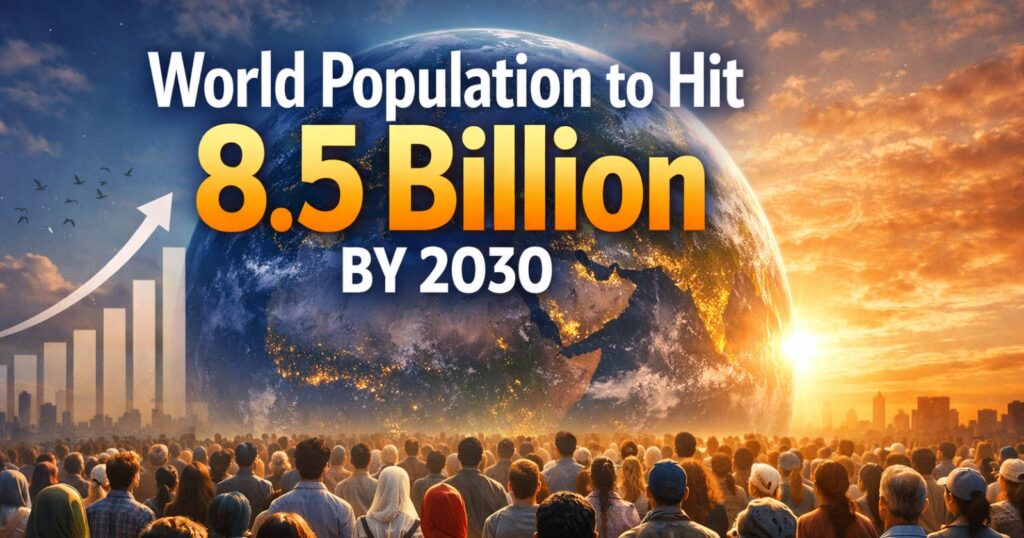
By 2030, global population is projected to reach approximately 8.5 billion, still growing steadily. By 2050, growth will slow further to around 9.7 billion, with Africa accounting for most of the increase. By 2100, UN scenarios range from roughly 9 to 11 billion, with the central projection showing population beginning to decline after peaking in the 2080s.
Common Myths
| Myth | Fact |
|---|---|
| Population growth will stop suddenly | Growth is slowing gradually over decades |
| The peak has already happened | The UN projects the peak around the 2080s |
| All countries will peak at the same time | Peak timing varies dramatically by country |
| Population will keep growing indefinitely | Most projections show growth eventually stopping and reversing |
| Only fertility rate determines peak timing | Population momentum and migration also matter significantly |
| Africa’s growth means the world will never stop growing | Even Africa’s growth rate is expected to slow significantly by 2100 |
| Once population peaks, it will crash quickly | Decline after the peak is expected to be gradual |
| All projections agree on the exact peak year | Estimates vary from the 2060s to the 2080s depending on methodology |
| Population growth is accelerating today | Global growth rate has been declining for over 50 years |
| China’s population decline means global decline has begun | Global population is still growing due to other regions |
Expert Opinions
The United Nations Population Division projects the global peak around 2084 under its medium fertility scenario. Some independent research groups, including the Institute for Health Metrics and Evaluation, have projected an earlier peak, closer to the 2060s, based on faster than expected fertility decline. The World Bank emphasizes that the exact timing remains sensitive to fertility trends in Africa and South Asia.
Conclusion
Global population growth is slowing steadily and is projected to stop around the 2080s, reaching a peak near 10.3 billion before beginning a gradual decline. The timing depends heavily on fertility trends in Africa and South Asia, the last major regions with above replacement fertility. The practical takeaway is that policymakers worldwide should prepare now for a future defined by slower growth, aging populations, and eventual global population decline.
Frequently Asked Questions
When will the world’s population stop growing?
The United Nations projects global population will peak around the 2080s at approximately 10.3 billion people before beginning to decline.
What is the projected peak population of the world?
The central UN projection estimates a peak of approximately 10.3 billion people, though estimates range between 9 and 11 billion.
Which region will drive population growth until the peak?
Sub Saharan Africa is expected to account for most global population growth through the remainder of this century.
Has any major country’s population already peaked?
Yes. China’s population peaked around 2021 to 2022 and is now declining.
Could the global population peak sooner than projected?
Yes. Some research groups project an earlier peak, closer to the 2060s, based on faster fertility decline than UN medium scenarios assume.
What happens after global population peaks?
Population is expected to decline gradually, driven by sustained below replacement fertility in most regions.
Is global population growth rate increasing or decreasing?
Global population growth rate has been decreasing steadily since peaking in the late 1960s.
Will population growth ever return to historic highs?
Most demographers consider a return to historic high growth rates highly unlikely given widespread fertility decline.
Does population momentum affect the timing of the peak?
Yes. Population momentum from previous high fertility generations continues driving growth even as fertility rates fall.
How reliable are long term population projections?
Long term projections carry uncertainty, particularly regarding future fertility trends, but they are grounded in observed demographic patterns and regularly updated.
Sources:
- United Nations World Population Prospects 2024
- World Bank
- Institute for Health Metrics and Evaluation
- OECD
- Eurostat