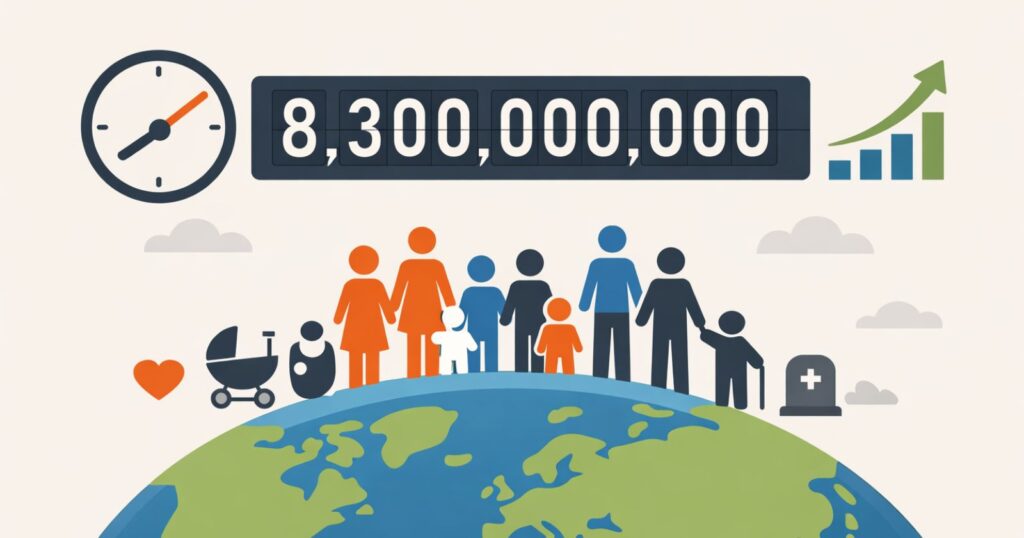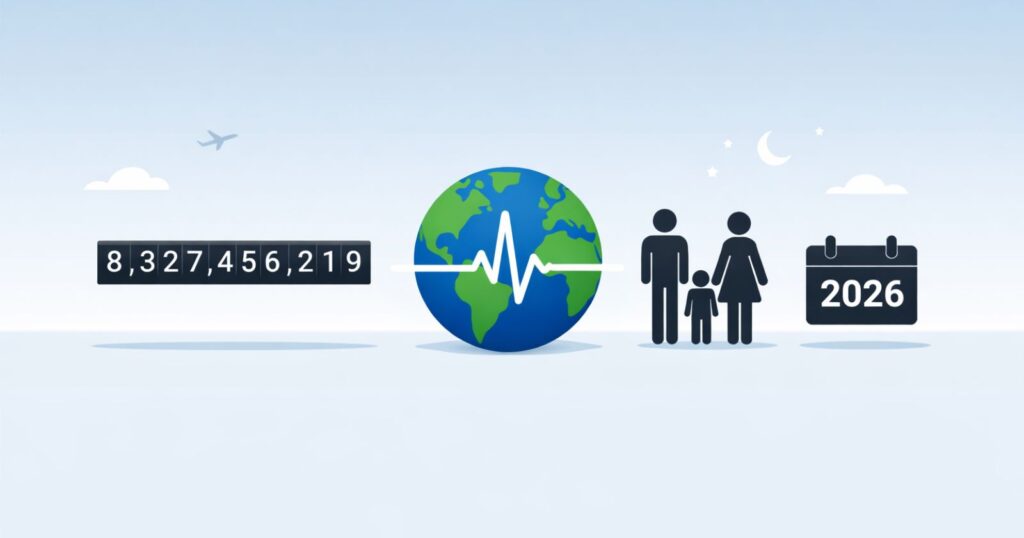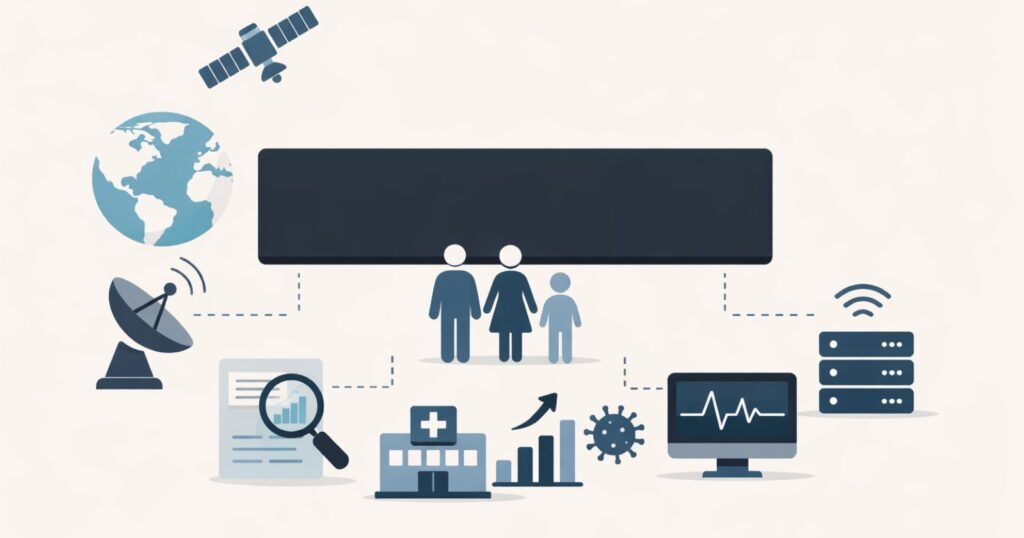
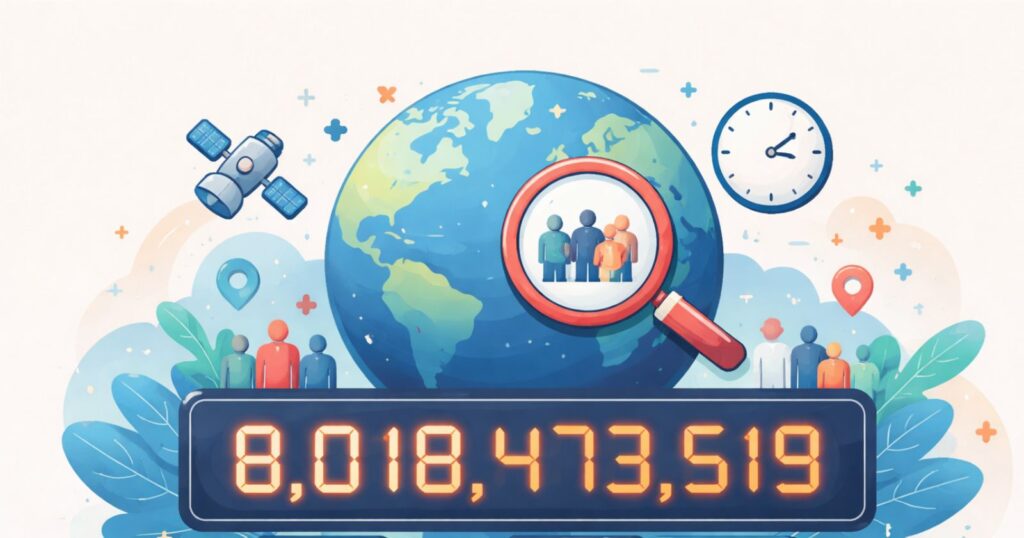
Every second, numbers tick upward on screens around the globe. Popular sites display the current world population, often surpassing 8.2 billion in early 2026. These dynamic tools capture births, deaths, and net growth in real time, drawing millions of viewers curious about humanity’s scale.
Such counters transform abstract statistics into vivid, moment-by-moment updates. They reflect ongoing demographic shifts, from rapid expansions in certain regions to slower changes elsewhere. Behind the scenes lies sophisticated modeling that blends historical records with forward-looking assumptions.
Yet questions persist about precision. After all, no system counts every individual instantly across continents. These displays offer educated projections rooted in rigorous analysis, providing valuable insights despite inherent uncertainties.
Mechanics of Population Clocks
World population clocks operate through algorithmic projections rather than direct tallies. Developers start with a baseline figure from authoritative sources, then apply calculated rates for vital events.
Births occur roughly every fraction of a second globally, while deaths follow closely behind. Net addition results from subtracting one from the other, adjusted for migration where relevant. Clocks update continuously, simulating smooth growth even as actual events happen discretely.
Some versions synchronize to a universal baseline, ensuring the same figure appears worldwide regardless of local time. Others might vary slightly based on visitor settings, though reputable ones prioritize consistency.
Key Data Sources
Reputable clocks draw primarily from two institutions. The United Nations Population Division releases comprehensive revisions biennially, incorporating censuses, surveys, and vital records from nearly every country.
The U.S. Census Bureau maintains its own international database, analyzing similar inputs independently. Both aggregate national data, making adjustments for underreporting or gaps.
For instance, the 2024 UN revision processed over 1,900 censuses and thousands of surveys to refine estimates. These form the foundation for mid-year benchmarks, from which daily increments derive.
Calculation Process
Daily growth divides into smaller units. Annual net additions, around 70 million recently, spread across seconds yield about two people per tick on average.
Rates evolve gradually. Current global growth hovers near 0.85 percent yearly, down from peaks decades ago. Clocks incorporate these trends, sometimes interpolating linearly between annual points.
Accuracy Assessment
No clock achieves perfect real-time precision, as global counting in exact synchrony remains impossible. Events register with delays, especially in remote or conflicted areas.
Estimates carry margins of error, typically plus or minus one to two percent for totals. That translates to tens of millions in potential variance for current figures around 8.2 billion.
Still, leading sources converge closely. Differences between UN and Census Bureau totals rarely exceed one percent, reflecting shared methodologies despite independent analyses.
Factors Limiting Precision
Data lags pose the biggest challenge. Many countries conduct censuses decennially, with vital registration incomplete in parts of the world. Projections bridge these gaps using trends in fertility, mortality, and migration.
Unforeseen events disrupt patterns. Pandemics, conflicts, or policy shifts can alter rates suddenly, requiring later revisions.
Regional variations compound uncertainties. High-growth areas often face greater data challenges, amplifying global margins.
Historical Reliability
Past milestones demonstrate solid performance overall. The UN symbolically marked 8 billion in November 2022, aligning well with subsequent validations.
Earlier benchmarks, like 7 billion in 2011, showed minor discrepancies across sources but captured trends accurately. Revisions refine history, yet core trajectories hold steady.
Long-term projections have adjusted downward recently, incorporating lower fertility observations. This adaptability strengthens credibility over rigid forecasts.
Major Providers Compared
| Provider | Base Source | Current Estimate (Early 2026) | Growth Rate Applied | Update Frequency | Key Feature |
|---|---|---|---|---|---|
| Worldometer | UN 2024 Revision | ~8.27 billion | ~0.85% annual | Continuous | Consistent global display |
| U.S. Census Bureau | Own International Database | Projected to mid-2025 | Variable by component | Continuous | Detailed country breakdowns |
| UN Data Portal | World Population Prospects | Annual/mid-year benchmarks | Medium variant | Periodic revisions | Probabilistic scenarios available |
| Other Live Counters | Varied (often UN-derived) | 8.26-8.36 billion range | Similar rates | Continuous | Visual births/deaths trackers |
This comparison highlights close alignment among top sources, with variations stemming from timing and methodological nuances.
Common Misconceptions
Many assume clocks reflect instantaneous global headcounts. In reality, they model expected changes based on averages.
Another view holds figures as wildly speculative. Evidence shows otherwise, with errors far smaller than popular alternatives might suggest.
Time zone effects confuse some users. Quality implementations avoid this by using fixed references, preventing hourly jumps in displayed totals.
Future Outlook
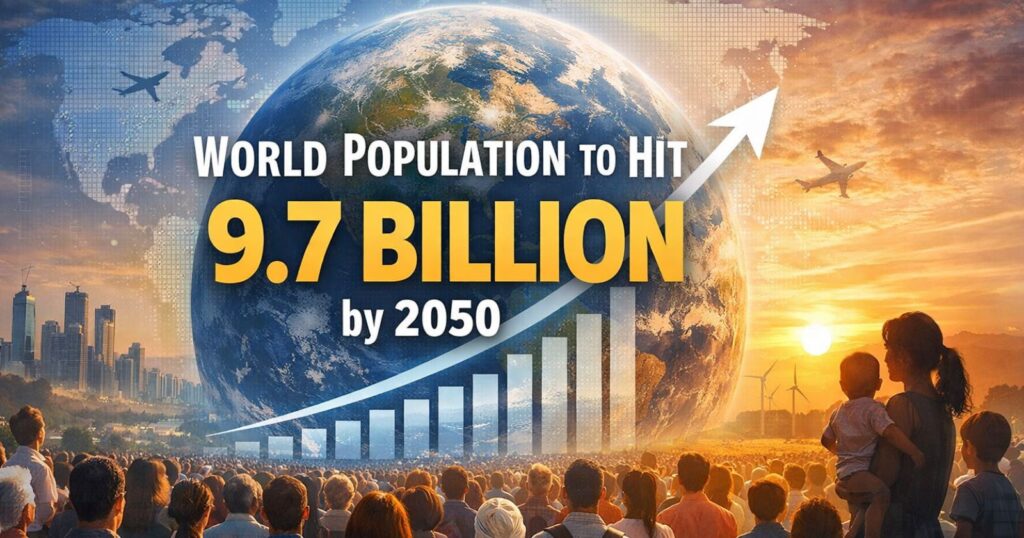
Growth continues slowing, with projections pointing toward a peak around 10.3 billion mid-century before gradual stabilization or decline.
Clocks will evolve alongside better data collection. Improved registration systems and surveys promise tighter estimates.
Demographic transitions reshape distributions. Aging societies contrast with youthful ones, influencing resource needs and economic dynamics.
Key Conclusion and Analysis
Demographic tools like population clocks illuminate humanity’s shared journey. They transform complex data into accessible insights, fostering awareness of growth patterns and challenges ahead. Reliable sources ground these displays in evidence, offering close approximations despite inevitable limits.
As methodologies advance and information flows improve, future iterations promise even greater clarity on our evolving world. Understanding these estimates equips societies to navigate resource demands, policy needs, and sustainable paths forward in an interconnected era.
Frequently Asked Questions
What exactly does a world population clock measure?
These tools estimate the total number of living humans at any moment, updating via projected vital events from baseline figures.
Why do different clocks show slightly varying numbers?
Variations arise from chosen baselines, rate applications, and update timings across sources like UN versus Census Bureau data.
How often do major organizations update population estimates?
The UN revises comprehensively every two years, incorporating new censuses and surveys for refined projections.
Can population clocks predict exact milestone dates accurately?
Symbolic dates like 8 billion serve awareness purposes; precise timing eludes due to estimation uncertainties.
What drives current global population growth?
Higher births than deaths fuel additions, concentrated in developing regions with elevated fertility rates.
How do migration factors influence these counters?
Most global clocks emphasize natural increase, though some incorporate net migration for fuller pictures.
Are live counters more accurate than static annual reports?
Both stem from identical underlying data; live versions extrapolate continuously for engaging visualization.
Why has the growth rate declined over the decades?
Falling fertility worldwide, improved education, and urbanization contribute to slower expansions.
Do clocks account for events like pandemics in real time?
Major disruptions prompt later revisions; immediate adjustments rely on emerging preliminary data.
What makes the UN estimate the global standard?
Comprehensive methodology, vast input integration, and neutral international oversight establish broad acceptance.