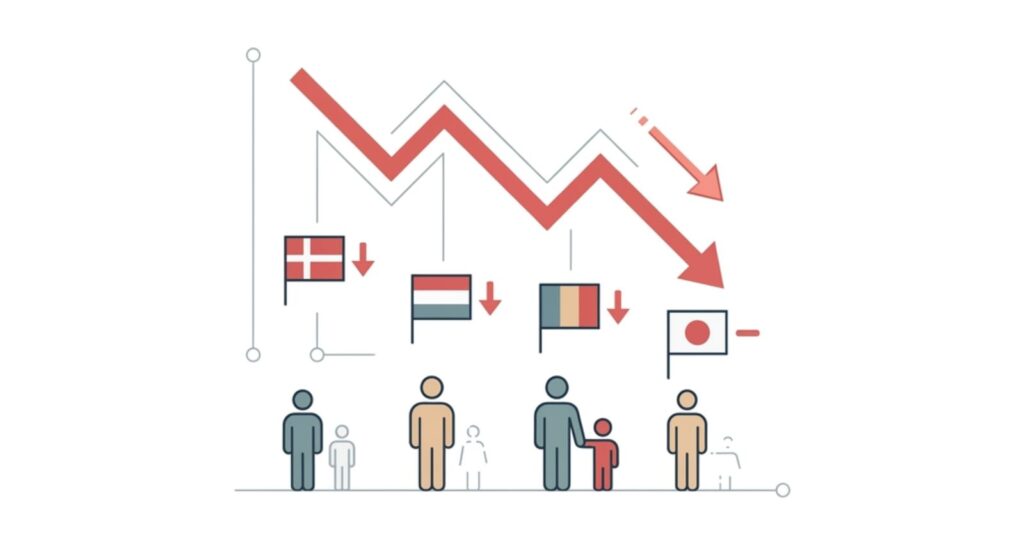
Population decline has shifted from a distant forecast to a present-day reality in many parts of the world. In 2025 and early 2026 data, countries across Eastern Europe and East Asia recorded more deaths than births, while net migration failed to offset the gap in several cases.
China alone saw a reduction of roughly 3 million people in a recent year, an absolute loss larger than the entire population of some smaller nations.
Japan continued a multi-year contraction, with annual drops exceeding 800,000 at points. These patterns reflect fertility rates well below the 2.1 replacement level needed for long-term stability without heavy immigration.
The stakes extend beyond raw numbers. Shrinking and aging populations strain pension systems, reduce the pool of working-age adults, and challenge economic models built on steady growth. Governments in affected nations grapple with labor shortages in key sectors, from manufacturing to healthcare.
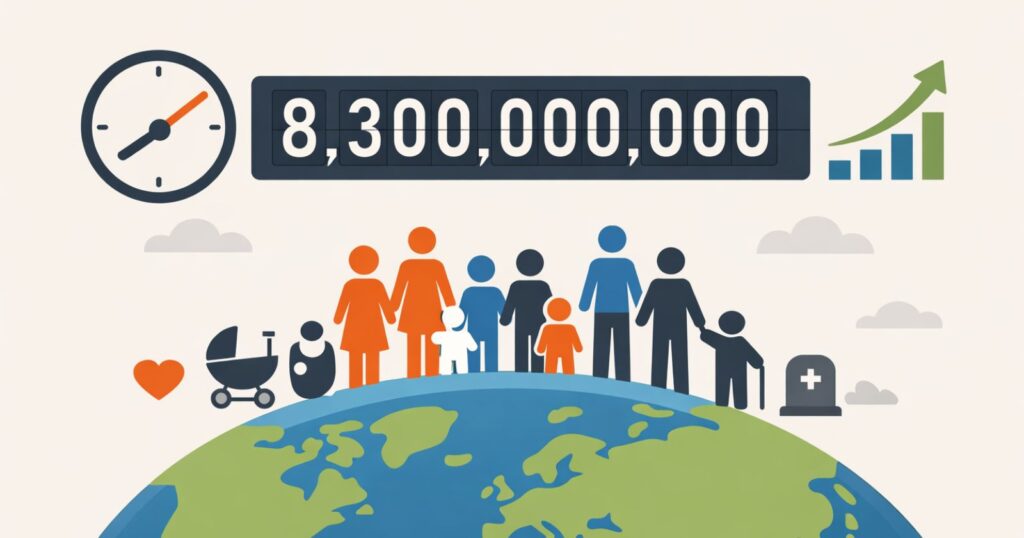
At the same time, the global population continues to rise overall, projected to peak around 10.3 billion in the mid-2080s before any sustained worldwide downturn, according to United Nations estimates. The divergence creates uneven pressures: some regions face resource strain from rapid growth, while others confront contraction.
Population decline in these contexts stems from intertwined factors. Decades of low fertility trace to higher education levels, urban living costs, delayed marriage and childbearing, and shifting social priorities.
In many advanced economies, women’s expanded workforce participation coincides with persistent gender gaps in pay and career advancement, influencing family decisions. Economic uncertainty and high housing expenses further discourage larger families. Migration can temporarily blunt the effects, yet it rarely reverses underlying demographic momentum once fertility stays sub-replacement for generations.
Drivers Behind Current Population Decline
Fertility rates provide the clearest signal of sustained decline. South Korea recorded one of the world’s lowest rates in recent years, hovering near or below 0.8 before modest upticks in preliminary 2025 figures. Japan’s rate sits around 1.2, with births falling to record lows.
Italy and Spain post rates near 1.3. In Eastern Europe, countries such as Bulgaria, Lithuania, and Latvia show the steepest natural decrease rates, compounded by the emigration of younger adults seeking opportunities elsewhere.
These low rates create momentum. Smaller cohorts of young people enter adulthood, leading to fewer potential parents in subsequent decades. Longer life expectancies amplify the shift toward older age structures. The dependency ratio — the proportion of non-working-age people relative to the working-age population — rises, placing greater burdens on fewer workers to fund social services.
Migration patterns interact with these trends. Some nations with natural decline still register overall stability or slight growth through inflows. Others, particularly in Eastern Europe, experience net outflows that accelerate losses.
Post-Soviet transitions in the 1990s triggered sharp fertility drops in the region, with rates falling from around 2.1 to below 1.2 in many places within a decade. EU accession later enabled a significant westward movement of labor.
Urbanization plays a consistent role across contexts. Higher living costs in cities, longer education timelines, and competitive job markets delay family formation. Cultural shifts toward smaller households and dual-income necessities reinforce the pattern. In East Asia, intense academic and professional pressures on young adults add layers of hesitation around parenthood.
Which Countries Experience an Active Population Decline
Several nations show a clear contraction in recent annual data. China leads in absolute terms, with reductions in the millions annually in recent years. Japan has lost millions since its 2008 peak, with prefectures across the country registering losses. Russia and Germany appear in projections for notable drops, though migration influences net figures.
Eastern European countries often post the sharpest percentage declines. Bulgaria, Lithuania, Latvia, Ukraine, and Moldova feature prominently in long-term forecasts, with projected losses of 20 percent or more by mid-century in some cases. Smaller territories and island nations sometimes record even steeper short-term rates, though their scale differs.
Southern European nations such as Italy and Greece face combined pressures from low fertility and limited net migration gains. In the 2024–2025 period, Italy saw births dip below 400,000 annually for the first time in modern records. These trends align with broader European patterns where fertility remains below replacement across nearly all countries.
East Asia stands out for both scale and speed. South Korea’s extremely low fertility has drawn attention, though early signs of a slight rebound appear in the 2025 birth data. Taiwan and Singapore share similar ultra-low rates. The region’s rapid economic development in prior decades compressed the demographic transition, moving from high to low fertility faster than historical precedents in the West.
To illustrate comparative trends, the following table organizes select countries by recent characteristics tied to population dynamics:
| Country | Approximate Recent Fertility Rate | Notable Annual Population Change Insight | Primary Contributing Factors |
|---|---|---|---|
| China | Below 1.2 | Largest absolute losses (millions) | Legacy policy effects, urbanization, economic pressures |
| Japan | Around 1.2 | Consistent annual drops exceeding 700,000–900,000 | Legacy policy effects, urbanization, and economic pressures |
| South Korea | Near 0.8 (with minor 2025 uptick) | Negative natural increase | Aging society, low births, and limited migration |
| Italy | Around 1.3 | Among the steepest projected % losses to 2050 | Low fertility, aging population |
| Bulgaria | Below 1.5 | Intense work culture, high costs, and gender dynamics | Emigration, post-transition fertility drop |
| Lithuania | Below 1.5 | Significant projected contraction | Youth outflow, low births |
| Latvia | Below 1.5 | High relative decline | Emigration and demographic momentum |
Data drawn from the United Nations and national statistical sources reflect medium-variant projections and recent reported figures. Actual outcomes vary with policy shifts and unforeseen events.
Economic and Social Impacts of Shrinking Populations
Labor shortages emerge as an immediate concern. Fewer working-age adults mean a tighter supply in industries reliant on consistent inflows of new workers. Japan has already adjusted through higher participation among women and older citizens, yet gaps persist in caregiving and technical fields. Similar dynamics appear in South Korea and parts of Europe.
Pension and healthcare systems face mounting pressure. With more retirees drawing benefits and fewer contributors paying in, fiscal balances shift. Japan’s ratio of workers to retirees has narrowed dramatically over the decades. Projections for other nations point to comparable strains, potentially requiring adjustments in retirement age, contribution rates, or benefit structures.
Productivity growth becomes critical to offset smaller workforces. Economies may need faster innovation, automation, or capital deepening to maintain output per capita. Historical links between population growth and certain economic indicators, such as inflation or demand patterns, suggest adaptation challenges. Slower consumer base expansion can affect sectors from housing to retail.
Social services adapt to inverted age pyramids. Schools in rural or declining areas consolidate. Healthcare systems reorient toward geriatric care. Urban planning shifts as demand for family-oriented infrastructure changes. These adjustments carry uneven regional effects, with some cities or regions stabilizing through internal migration while others empty out.
Geopolitical dimensions surface over time. Nations with contracting populations may see altered influence in international forums tied to market size or military-age cohorts. At the same time, countries with youthful demographics gain relative weight in global labor and consumption trends.
Policy Responses and Adaptation Strategies
Governments in affected countries have tested various measures. Child-related financial supports, parental leave expansions, and affordable childcare initiatives appear in Japan, South Korea, and parts of Europe. Housing subsidies or work-life balance policies aim to lower barriers to family formation. Outcomes remain mixed, with fertility responding slowly even to substantial spending.
Immigration serves as a partial counterbalance in some contexts. Targeted skilled-worker programs or broader inflows help sustain labor forces. Yet public attitudes and integration challenges limit scale in certain societies. Long-term cultural acceptance of diversity influences effectiveness.
Productivity-focused investments gain emphasis. Education reforms, lifelong learning, and technology adoption seek to extract more output from existing populations. Healthcare advancements that extend healthy working years also factor in. Some analyses highlight potential for extended careers or flexible arrangements to ease dependency pressures.
Regional variations matter. Eastern European nations often prioritize retaining or attracting back emigrants through economic development. East Asian strategies lean toward domestic incentives and technological solutions, given historical preferences around homogeneity.
No single approach has fully reversed entrenched low fertility once it takes hold across generations. The experience of multiple countries indicates that broad societal shifts in values, gender roles, and economic security play larger roles than isolated policies.
Long-Term Outlook for Global Demographics
Population decline in select nations coexists with continued growth elsewhere, particularly in parts of sub-Saharan Africa and South Asia. This contrast has shaped global migration, trade, and resource dynamics for decades. By 2050, projections show notable contractions in several large economies, while others maintain or expand.
Adaptation rather than reversal may define realistic paths forward. Societies can redesign systems around smaller, older populations through higher productivity, inclusive labor participation, and sustainable fiscal models. Innovation in automation, artificial intelligence, and eldercare technology offers tools to manage transitions.
Key Conclusion and Analysis
The topic invites broader reflection on what constitutes societal vitality. Metrics beyond headcount — such as health, education, equity, and environmental balance — gain relevance when numbers stabilize or contract. Countries navigating these changes today provide case studies for others approaching similar thresholds later.
Population decline signals a profound shift in human demographic history. Nations experiencing it confront practical challenges around workforce sustainability, public finances, and service delivery.
Yet the same trends also open space for reimagining economic and social structures less tethered to perpetual expansion. How societies respond will shape the quality of life for current and future generations amid these evolving realities.
Population decline in leading nations underscores a transition toward stabilized or contracting human numbers in many advanced economies. The patterns observed today highlight the need for forward-looking adjustments in labor, fiscal, and social frameworks.
Countries that address these shifts thoughtfully stand to preserve prosperity even as demographic structures evolve. The coming decades will test institutional resilience and creative problem-solving on a global scale.
FAQ
Which countries currently have declining populations?
Multiple nations show population contraction through natural decrease or net losses. China, Japan, Italy, and several Eastern European countries, including Bulgaria, Lithuania, and Latvia, feature in recent data and projections. Absolute losses reach millions annually in the largest cases, while percentage declines hit hardest in smaller or higher-emigration settings.
What causes population decline in developed countries?
Low fertility rates below replacement level form the core driver, often linked to urbanization, education costs, housing expenses, and career priorities. Aging populations increase deaths relative to births. Emigration of younger workers accelerates losses in some regions. These factors compound over decades once smaller birth cohorts reach reproductive age.
Is China’s population declining right now?
Recent annual figures indicate net reductions in the millions for China, placing it at the forefront of absolute population losses globally. Sustained low fertility and shifts from prior policies contribute. The trend marks a reversal from decades of rapid growth.
Why is Japan’s population shrinking?
Japan has recorded consistent annual declines for years, driven by a fertility rate of around 1.2 and a large elderly population. Births have fallen to lows not seen in modern records. Limited immigration and cultural patterns around family size sustain the momentum despite policy efforts.
Which European countries face the fastest population decline?
Eastern European nations such as Bulgaria, Lithuania, Latvia, and Moldova often rank high in projected percentage losses through 2050. Southern European countries, including Italy and Greece, show a notable natural decrease alongside aging societies. Emigration and low birth rates combine in these contexts.
How does low fertility rate lead to population decline?
When women average fewer than 2.1 children over a lifetime, each generation becomes smaller than the previous one. Over time, the base of potential parents shrinks. Even with stable or rising life expectancy, fewer births eventually result in more deaths than births once momentum fades.
What are the economic effects of population decline?
Labor shortages can slow growth and raise wages in certain sectors, while straining pension and healthcare funding. Dependency ratios rise as fewer workers support more retirees. Productivity gains through technology or extended careers become essential to maintain living standards. Consumer markets and infrastructure demand may contract in some areas.
Can immigration stop population decline?
Targeted immigration helps offset the natural decrease by adding working-age adults. However, sustained low fertility means inflows must continue at scale to prevent eventual contraction. Integration capacity, public policy, and economic needs determine long-term effectiveness in individual countries.
Are any countries successfully reversing population decline?
No large nation has returned fertility to replacement levels after prolonged sub-replacement periods through policy alone. Modest upticks occur in places like South Korea in preliminary data, yet broader reversal remains elusive. Combinations of support measures and cultural shifts show partial influence at best.
What does population decline mean for the future?
Societies may adapt through higher productivity, later retirements, and restructured social systems. Global contrasts between shrinking and growing regions could reshape migration and economic power balances. Long-term outcomes depend on innovation, policy creativity, and societal willingness to adjust expectations around growth.