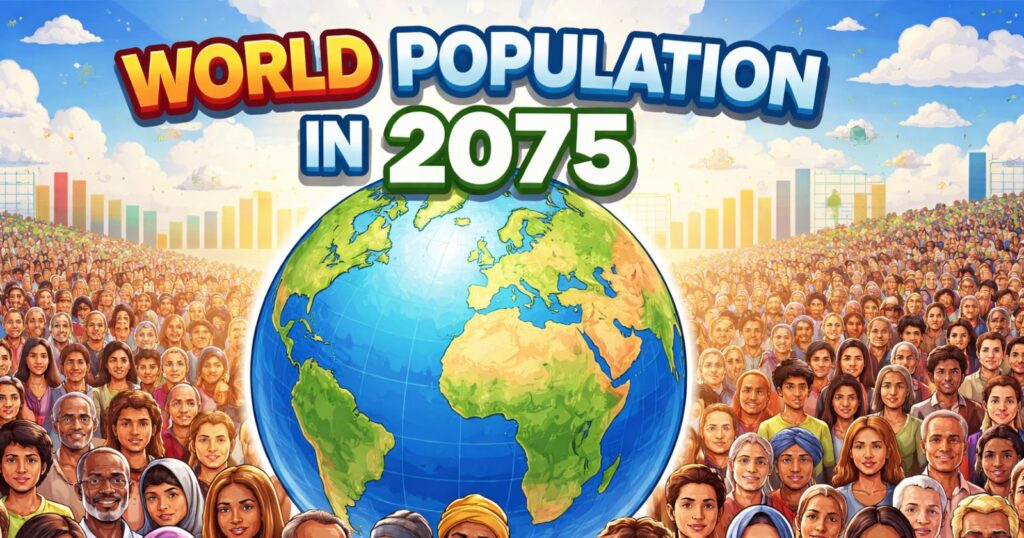
Demographic shifts shape the future of societies, economies, and environments. By 2075, the world stands on the cusp of a major milestone. Current estimates from the United Nations indicate the global population will climb to approximately 10.25 billion people. This figure reflects steady growth from today’s 8.2 billion, fueled by regional differences in birth rates and life expectancy.
Africa emerges as a central force in this expansion. Sub-Saharan Africa anticipates continued population increases well beyond 2075, potentially doubling from current levels in some areas. High fertility rates in countries like Nigeria and the Democratic Republic of the Congo drive this trend. Meanwhile, Asia and Europe experience contrasting patterns, with declining births and rising longevity creating a more balanced but aging world.
These changes stem from decades of advancements in healthcare, education, and women’s empowerment. Fertility rates have fallen globally, from over four children per woman in the 1970s to around 2.3 today. This decline, combined with longer lifespans, sets the stage for a transformed demographic profile by mid-century.
Peak Population on the Horizon
The world population is not expected to grow indefinitely. United Nations projections point to a peak around the mid-2080s at about 10.3 billion, followed by a gradual decline. This represents a notable adjustment from earlier forecasts, which anticipated higher numbers and later peaks. Lower fertility in major countries like China contributes to this earlier and lower high point.
In 2075, the population will hover near this ceiling, with growth slowing significantly. Many nations have already seen their populations stabilize or begin to shrink. Over 60 countries, including China, Japan, Germany, and Russia, have peaked in recent years. Their combined populations are set to decrease by 14 percent over the next few decades.
This trajectory offers potential benefits for sustainability. Reduced growth could ease pressures on resources, though individual consumption patterns remain a critical factor in environmental outcomes.
Regional Growth Patterns
Diverse growth rates define the global picture. Sub-Saharan Africa leads in expansion, with countries like Nigeria projected to reach nearly 447 million people by 2075. Pakistan follows closely, with an estimated 466 million. These regions benefit from youthful populations and higher birth rates.
India holds the top spot, with a population approaching 1.67 billion. This positions India as the most populous nation, surpassing China, which faces a decline to around 935 million due to low fertility rates below 1.5 children per woman.
Developed regions show contraction. Europe and parts of East Asia experience negative growth, driven by fertility rates well below the replacement level of 2.1. North America maintains modest increases through immigration, while Latin America sees slower but positive growth.
The Most Populous Countries in 2075
| Rank | Country | Projected Population (millions) |
|---|---|---|
| 1 | India | 1,671 |
| 2 | China | 935 |
| 3 | Pakistan | 467 |
| 4 | Nigeria | 447 |
| 5 | United States | 379 |
| 6 | Indonesia | 322 |
| 7 | Ethiopia | 318 |
| 8 | Democratic Republic of Congo | 310 |
| 9 | Brazil | 205 |
| 10 | Bangladesh | 202 |
This table, based on United Nations medium-variant projections, highlights the shift toward African and South Asian dominance. The top 10 countries account for over half the global total.
Drivers of Change: Fertility and Longevity
Fertility rates continue their downward trend. Globally, the average stands at about 2.3 children per woman, with many countries below replacement. Ultra-low fertility prevails in places like South Korea, Italy, and Spain, where rates dip under 1.4.
Education for girls and delayed childbearing play key roles in this decline. In low-income regions, early pregnancies persist, but investments in education and health services show promise in moderating growth.
Life expectancy rises steadily, reaching 73.3 years in 2024 and continuing upward. By the late 2050s, over half of deaths occur at age 80 or older. This longevity extends working years and alters family structures.
The Aging Population Challenge
By the late 2070s, more people aged 65 and older exist than children under 18. The number of individuals over 80 surpasses infants by the mid-2030s. This inversion marks a profound shift from historical norms.
Aging affects economies through workforce shortages and increased demand for healthcare and pensions. Developed nations face acute pressures, but even growing regions like Africa will age rapidly in the coming decades.
Policies focusing on lifelong learning, flexible work, and intergenerational support can mitigate impacts. Healthier aging allows older adults to remain active contributors.
Implications for Society and Economy
Demographic changes influence everything from labor markets to urban planning. A larger working-age population in some regions boosts productivity, while aging societies adapt through technology and immigration.
Resource management becomes essential. Sustainable development goals emphasize education, health, and gender equality to balance growth and well-being. Urban centers in fast-growing areas require infrastructure to support expanding populations.
The transition also presents opportunities. Innovation in healthcare, renewable energy, and education can address challenges and foster inclusive progress.
Looking Ahead to a Balanced Future
The journey to 2075 reveals a world in transition. Population growth concentrates in specific regions, while others grapple with decline and aging. These patterns reflect broader successes in health and education, alongside ongoing efforts to address inequalities.
As the global population nears its peak, attention turns to quality of life rather than sheer numbers. Investments in sustainable practices and equitable policies ensure that future generations thrive amid these changes. The demographic landscape of 2075 underscores the importance of proactive planning today, paving the way for a more balanced and resilient world.
Frequently Asked Questions
What is the projected world population in 2075? The United Nations estimates the world population at approximately 10.25 billion in 2075, based on the latest projections.
When will the global population reach its peak? Projections indicate a peak around the mid-2080s at about 10.3 billion, followed by a slow decline.
Which country will have the largest population in 2075? India is expected to remain the most populous, with around 1.67 billion people.
How does Africa’s population growth compare to other regions? Sub-Saharan Africa drives much of the global increase, with several countries seeing rapid growth through 2075 and beyond.
Why are fertility rates declining globally? Factors include greater access to education, women’s empowerment, urbanization, and improved healthcare.
What is the replacement level fertility rate? The replacement level is 2.1 children per woman, needed to maintain population size without migration.
How will aging affect the global population by 2075? The number of people over 65 will surpass that of those under 18, leading to more elderly than young individuals.
Which countries have already peaked in population? Over 60 countries, including China, Japan, Germany, and Russia, have peaked and are projected to decline.
What role does immigration play in population trends? Immigration supports growth in regions like North America, offsetting low birth rates in some countries.
How might lower population growth benefit the environment? Slower growth reduces pressure on resources, though sustainable consumption remains essential for environmental health.